Showing posts with label werewolves. Show all posts

Tuesday, February 13, 2018

Can I do it until I need glasses?

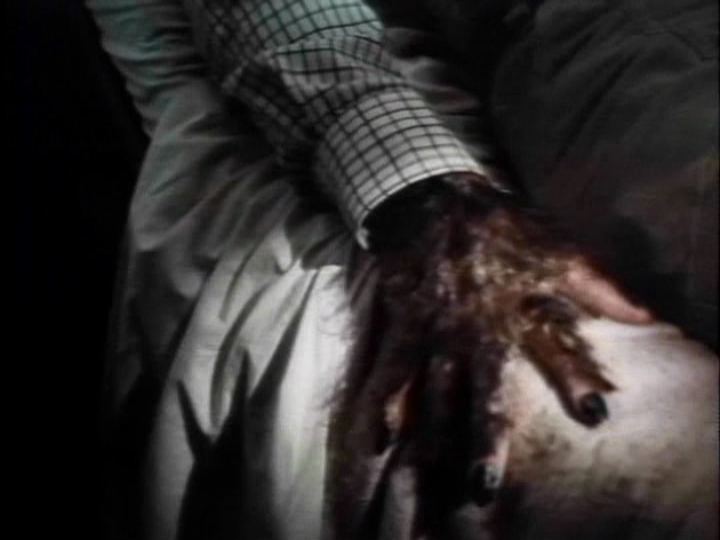
And now, a pair of films where the growing hirsuteness of a character's hands -- and the rest of their body, too -- is a major plot point:


Moon of the Wolf (1972)

Grade: C


Doesn't take long to figure out this one was made for TV -- and if the lack of graphic violence wasn't enough to clue us in, we certainly knew once it started fading to black at regular intervals.

Even so, this slight but amiable look at lycanthropy avoids most of the usual TV-movie traps. It's not too bland, not too pat, and occasionally even has a crisp edge to its dialogue or set pieces.

Moon of the Wolf leans heavily -- maybe too much so -- on atmospheric (i.e. muggy) shots of rural Louisiana, where it was filmed. Then again if the crew had to put up with that miserable-looking weather, more power to them for documenting what they went through. Friends of ours were victims of extortion by that state's infamously corrupt justice system, so we have no urge to visit that neck of the woods to begin with, and Moon of the Wolf did nothing to make a road trip seem more appealing.

Of course the thing about Moon of the Wolf is that the number of whodunit possibilities is really quite small -- two, by our count. It's the kind of movie where you pretty much know the identity of the werewolf from the start, but then you wonder if you aren't being tricked: maybe the whole scene (and it's a good one) with the sulfur and asafetida was a red herring, and it's really that other person.


Sadly, though, the filmmakers chose to go with the less interesting option. On top of that, if you speak French -- or are familiar with certain middling 1970s prog-folk bands -- then the film's suspense takes a hit, since the phrase that le Grandpa Joe keeps mournfully repeating in his sickbed (and other characters mangle as "lou-kah-rouk") is easy enough to break down.


Also, "AWARD"! That's right up there with a giant can that just says "FOOD" on it, or "POISON/SLEEPING TABLETS" for that matter. But after all, this is on the wall of a doctor who gets this gem of a line:

Sheriff: "How come you didn't tell me [she] was pregnant?"
Doctor: "I knew she was pregnant...I was third in my class."

If he'd gone on to recite his SAT scores, we wouldn't have been a bit surprised.


Having seen Moon of the Wolf -- which we actually watched after Queen of the Amazons and before Kong Island, but who's counting -- we've also furthered our progress in the Drive-In Movie Classics box set we plan to take on after the 250-pack. Why? Because it's on that too!

(At least it's not Shock or Snowbeast, which made their way onto both of those box sets plus the Chilling Classics set as well. Bo Svenson and Vincent Price, thrice? Seems Mill Creek likes 'em tall.)

Oh, and these dogs are dead now. Poor dogs; we hope you caught the squirrel at least once, each.


Bride of the Gorilla (1951)

Grade: D

We had to be a bit coy in our review of Moon of the Wolf to avoid spoiling the identity of the werewolf, but there's no doubt here: Raymond Burr is a gorilla.


Or he's a man who becomes a gorilla. Or a man who thinks he becomes a gorilla, à la Nicolas Cage in the wonderful Vampire's Kiss. Whatever, he'll take anything that isn't yet another fat joke or Perry Mason reference.

Burr plays Barney Chavez, a plantation foreman in Brazil who -- as Homer Simpson once observed -- dares to live out the (South) American dream by killing his boss (Paul Cavanagh), marrying his wife, and taking his stuff. In the business, we call that "the triple".

Chavez's perfidy is quietly observed by Al-Long (Gisela Werbisek), a loyal old servant with a witchy side. This gets us curses, dangerous plants -- and Werbisek's astonishingly strong resemblance to Geoffrey Palmer in drag.

(Sorry, old girl, but it had to be said. Please don't curse us.)

In 1951, Burr's star was ascending about as quickly as Lon Chaney Jr.'s was falling, though their respective highs and lows were still five or six years away. Here, the affable old fellow plays a police commissioner who feels pretty sure that Chavez did the deed, but doesn't have quite enough evidence to arrest him.


Chaney's Brazilian cop speaks perfect English, upon which Bride of the Gorilla hangs a lampshade by having him give the following hilarious speech about halfway through:

"I sometimes regret that I went to university, and then returned to this jungle with its superstitions. It only served to confuse me...How could I help being confused? My native mind is filled with these superstitions. My legal mind was developed through books, written by people without emotion."

Coming from a different actor -- say Raul Julia, or Klaus Kinski -- it might almost be plausible, but from Chaney's lips, these lines play like ground beef dropped onto a concrete floor.

The most interesting thing about Bride of the Gorilla is that it somehow feels about five years ahead of its time. Hard to pin down exactly why that is, but we were surprised to remind ourselves that it came out as early as 1951.

It also has a few loopy moments, like when the genteel Dr. Viet (Tom Conway) wants to warn Chavez's coneboobiferous wife Dina about his deterioration. (Dina is played by Barbara Payton, and boy, her life is a cautionary tale if one there ever was.)

Servant girl Larina (Carol Varga) opens the door for Dr. Viet and is hanging around, eavesdropping. But when he asks to speak with Dina alone, she abruptly gets an "Oh, what the fuck!" look on her face, smashes an object on the ground, apologizes -- and leaves, never to be seen again.

Now, we know Larina and Barney had a thing before he threw her over for Dina -- but why would a private conversation between Dina and Dr. Viet make her explode with rage? If anything she might hope that Viet, whose attraction to Dina is obvious (and unrequited), would somehow drive a wedge between them. Oh, well.

Anyway, that's Bride of the Gorilla: yet another "jungle" movie, it's not so goofy as to leave us embarrassed for anyone involved, but not compelling enough to graduate beyond the doldrums. Still, we've certainly seen worse, and Burr has a sort of smoldering, dark-eyed presence that makes him a pretty plausible antihero (even if the only "heroic" thing he does is making time to be nice to goats).

So, welcome to the jungle, Raymond -- but somehow we suspect you've been here before.


Tuesday, August 8, 2017

Back to the Slaughterhouse

Up next are two* more Tod Slaughter movies from the Night Screams subset of the Mill Creek box set.*

Plus, as a bonus, we review a feature film* of his that hadn't been seen for decades, until it resurfaced last year.

(*Well, sort of -- on all counts! -- see below.)


The Ticket of Leave Man (1937)

Grade: B-


Traffic in human depravity though he may, there's something oddly comforting about knowing you're about to watch a Tod Slaughter film. Partly it's the familiarity of seeing the same faces over and over again, until they blend together in a pleasantly delirious haze, wherein names become less important than structural functions.

So it doesn't matter that Marjorie Taylor is called "May Edwards" in this particular film, because it's just another instantiation of her archetypical role as "the woman Tod Slaughter wants to sleep with, thereby making her very uncomfortable".

(Someone should start a Tumblr called "Tod Slaughter making women very uncomfortable.")

This film (The Ticket of Leave Man) and the next (The Face at the Window) blend together even more than most, since they both involve a lot of the same plot points. There's a mysterious criminal named for a dangerous animal, who hides in plain sight by masquerading as an affluent and upstanding citizen. There's a beautiful woman whose charms attract the unwanted attention of said murderer.

And there's an honest young man (John Edwards) employed at a bank -- and in love with said young woman -- who runs afoul of the law when he's falsely accused of one or more heinous crimes.

In this case, the honest young man even gets thrown in prison, though he's paroled before too terribly long. This makes him the titular "ticket of leave man", a phrase totally unfamiliar to us before this film.

To help us differentiate it from other Slaughter films, The Ticket of Leave Man has some striking secondary characters, like this creepy, cigar-smoking child-man...

...or this unambiguously anti-Semitic caricature:

We're hardly the sort to grasp at straws in the name of self-righteousness, but it's not as if there's a scintilla of doubt when it comes to Frank Cochran's portrayal of counterfeiter Melter Moss, or what stereotype it's meant to evoke. Given that he only had three IMDb credits -- one of them for the role of "Ho Tang", we kid you not -- we're guessing Cochran may have been mainly a stage actor, who apparently specialized in ethnoculturally insensitive roles.

The Ticket of Leave Man is a close cousin to It's Never Too Late to Mend, and probably a notch better than that preachier effort. And we get Slaughter with and without mustache, which is always a plus. But we're docking a few points for Melter Moss: OK, we don't know from 1930s Britain, but we want they should do better than that, no?


The Face at the Window (1939)

Grade: C-

So, when we pulled out Disc 46 of our 250-movie box set to watch The Face at the Window, we were greeted by this:

And this:

Yes, it seems that instead of giving us Disc 46 of the Horror Collection, Mill Creek accidentally gave us Disc 46 of the Western Legends Movie Pack. Oh, well.

Fortunately, all four films on Disc 46 are available for viewing on YouTube and other sites -- which means that, for our next few posts, the screenshots you see won't be from the Mill Creek box. Unfortunately our downloaded source for The Face at the Window is by far the worst of the four, yielding blurry, artifacted results like this:

It was still watchable (barely), but the poor video quality probably detracted from our enjoyment of The Face at the Window -- though, don't get us wrong, we're grateful to the uploader nonetheless. 

Another demerit is the supernatural element in this tale, first hinted at in the opening text crawl:

Then, later, we get a bunch of flasks and beakers, and you know what that means. That's right: science.

Somehow, the inclusion of lycanthropy (sort of) and galvanism dampens the fun -- perhaps because the necessary pseudo-scientific handwaving undermines the classical purity, if you will, of Slaughter's Grand Guignol act.

Or then again, maybe it's that the protagonists too often act like blithering idiots, repeatedly contriving to make the stupidest possible choice in order to serve the needs of the plot? That made it hard to care much about their fates.

But hey, at least we have another entry for our Tumblr.


King of the Underworld (1952)

Grade: C+


This "movie" is actually an edited compilation of the first three episodes of a British TV series, Inspector Morley Investigates -- aka Inspector Morley (Late of Scotland Yard) Investigates, depending on whom you ask.

However, Inspector Morley was never actually broadcast in Britain: though a full run of 13 episodes was wrapped, the producers were apparently unable to sell the show to the BBC.

Instead, they sold it to the American market -- where it was apparently broadcast for at least one run -- but also took six of the episodes they'd filmed and combined them into two features, King of the Underworld and Murder at Scotland Yard, which were shown in the U.K. (Confused yet?)

The latter feature, and the majority of the episodes, remain lost as of this writing -- but may yet lurk in someone's vault or collection.

You can find more information about the series, including the three other surviving episodes, here. In any event it was a very pleasant surprise when King of the Underworld was unexpectedly shown last year on a British TV station, and we're very grateful to the colleague who was kind enough to provide us with a DVD of the broadcast.

Slaughter plays Terence Reilly, an irrepressibly evil criminal mastermind, and it's nice to see that age hasn't robbed him of his panache or physical presence. Though Inspector Morley solves a fresh case in each episode, some aspect of the crime will inevitably reveal Reilly's sinister fingerprints.

And unlike Slaughter's other characters, Reilly doesn't generally let his wang overrule his brain -- making him far more dangerous.

Opposing Reilly's schemes are Inspector John Morley (Patrick Barr), naturally, as well as his crackerjack assistant Eileen Trotter (Tucker McGuire). Quick-witted and sharp-tongued, Eileen bears no small resemblance to Harriet Sansom Harris (best known for her recurring role on Frasier as Machiavellian agent Bebe Glazer).


In actuality, King of the Underworld doesn't "read" as a feature film at all. The edits (and voiceover narration) that combine the three episodes aren't crude, but certainly aren't seamless, and even contemporary audiences unaware of the film's origins could hardly have been fooled. Still, Slaughter's presence -- he was in every episode of Inspector Morley -- provides enough continuity to forge a reasonably plausible Holmes vs. Moriarty storyline.

That said, the quality of the writing isn't great, and leans too heavily on a handful of gimmicks -- especially disguises -- whose plausibility stretches thin with reuse. Also, Morley himself isn't really as clever as he ought to be, sometimes letting slip information that can only harm him or his colleagues: after Eileen successfully tricks Reilly, why on earth would the Inspector then reveal her identity to him? What purpose does it serve, except perhaps to gloat?

We've seen the other, later episodes of Inspector Morley Investigates that survive, and we're sorry to say that in those, Eileen is woefully underused and dumbed-down. Here, though, she's a real firecracker. Independent-minded, and (ahem) oddly sexy, she's arguably a better foil to Slaughter than Morley himself. Certainly, she's almost as responsible for solving their cases as Morley is.

So naturally, the writers ensure that Eileen eventually gets into deep trouble and has to be rescued. Così fan tutte.

Tod Slaughter fans will be this film's main audience, but Tucker McGuire's fun portrayal means there are two good reasons to seek out King of the Underworld. Otherwise it's largely a standard affair and a period piece -- but as fresh documentation of a great actor's career, it's like rediscovering a home movie you'd forgotten about.

Saturday, January 2, 2016

Frost / Nixon

THESE movies . . . also known as films . . . don't have anything in common.


A Strange Adventure (1956)

Grade: C-


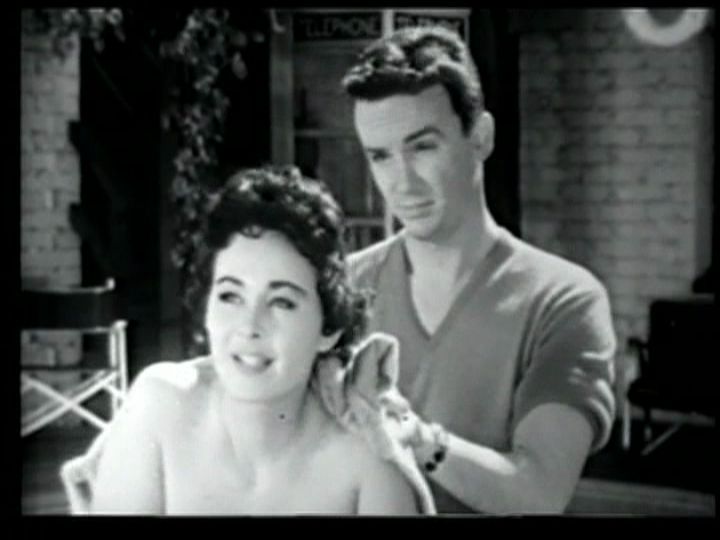
If you've seen at least one low-budget, mid-1950s noir, then you'll have a handle on the first third of A Strange Adventure, which is neither strange nor particularly adventurous. Busty Lynn (Marla English) lodges at a small-town motel and catches the eye of the owner's hot-rodding-yet-clean-cut son Harold (Ben Cooper). Backrubs and picnics ensue.


Lynne's shady associates arrive from Omaha -- the sharp-faced, short-tempered Al (Jan Merlin), and the perpetually congested Phil (Nick Adams). Harold figures out the men are bad news, but naturally still thinks Lynn is pure as the driven snow. Robbery, murder, kidnapping, and car chases ensue.


At the 30 minute mark, things take an unexpected and chilly turn, as the escaping criminals drive into the Sierra Nevadas and end up stranded at a gas company snow survey cabin staffed by brother and sister Luther and Terry (Peter Miller and Joan Evans).


A snow survey cabin! Usually we'd expect a yeti or other beast at this point, but sadly it's not that kind of movie; we're still in a noir, just one that's transitioned from heisting to hostaging. The strangest thing on offer is Phil's choice of outdoor headwear.


And if you're wondering, "Hey, how did they know to bring their winter clothes?", the film has you covered -- the crooks, arriving from Nebraska, make an off-hand comment early on about the unexpected mildness of the California winter. Take that.

As is the rule, sisters need to be someone's love interest, and dark-haired Terry fits right in where Lynne left off. And hey, Harold could do a lot worse -- Terry is much cuter, and turns out to have brains, brawn, and no shame in using either.


Between the sabotaged radio, hobby Geiger counter, and giant motorized snowmobile, the plot is full of literal devices that add interest in an otherwise by-the-numbers crime drama.


Overall not terrible, yet nothing particularly special. The ending is rushed and pat, and there's one huge loose end left dangling (Woody, anyone?) However, a few clever deceptions and the wintry setting give it a slight edge over other, less differentiated fare.


(An interesting footnote: Emlen Knight Davies, who plays the blink-and-you'll-miss-her role of motel owner/mom, is the daughter of former Soviet Union ambassador Joseph Davies, of Mission to Moscow fame. Emlen accompanied her father and stepmother -- wealthy cereal heiress Marjorie Merriweather Post -- to Moscow from 1937-38, and has published a series of photographs from her trip. Why she decided to go into acting in her mid-30s, after a young life spent globetrotting, meeting royalty, and marrying an MIT-educated Belgian engineer, the internet seems to know not.)


Держитесь подальше от плохой девочкой!


The Werewolf of Washington (1973)

Grade: B-
Quadruple Bathroom Upgrade: B


We don't get too many black comedies in the box -- our beloved Terror at the Red Wolf Inn is really it. Anything else qualifying as "funny" is either unintentionally so, or else a poverty row non-horror movie tossed in by Mill Creek as filler -- and usually, when all is said and done, not all that humorous anyway.


Now we can add The Werewolf of Washington to that short list, and it ticks all the boxes. We love the 70s aesthetic, and this has it in spades -- the whole movie is a send-up to the most laughable parts of Watergate era Nixon and his administration, right down to the Black Panther hating buffoon of an Attorney General.


Interesting protagonist? Check -- Dean Stockwell gives a wonderful off-the-rails performance as the anxious Jack, who gets himself bit by a you-know-what while stationed in Hungary, then watches his life fall apart spectacularly when he returns to D.C. as the President's new press secretary.


Life lessons? Oh sure, those too -- it's important that films be educational, as well as entertaining. We learn all about how to conduct ourselves in true 70s style, with demonstrations of bathroom etiquette...


...and home decor...


...not to mention commentary on gender roles...


"Jack, will you please stop scratching the palms of your hands? It's . . . it's just not manly."

...asserting oneself...


"This is not the thing I want! I don't want him here!"

...sports skills...


"Jack, will you throw the ball! Throw the ball down the aisle!"

...and kindness to animals.

"Are you real? Are you really real?"

The movie's strong in geometry -- eventually we'll learn to distinguish Pentagons from pentagrams -- but not so hot with astronomy. Four or five full moons within a two-week span? Who knows, maybe 1973 was an astronomical anomaly.


With the random midgets, prank phone calls, ludicrous political caricatures, eye-gouging wallpaper, and snarling aplenty, there's so much to recommend The Werewolf of Washington as the featured terrible entertainment at your next gathering. There's no gore to speak of, so even the kiddos might get a kick out of Stockwell's wacky werewolf makeup and shenanigans, though most of the Nixon satire will probably sail right over their heads. (And if it doesn't, send 'em over here -- there's a kid named Sascha Segan we'd love them to meet.)