Showing posts with label Ed Wood. Show all posts

Tuesday, February 21, 2017

Are we a pair?

We don't doubt that some of the themes we use for our posts seem a bit contrived. Truth is, with very rare exceptions, we try to review these movies in the order we watch them, so we'll seize upon anything -- no matter how slight -- to link a pair, trio, or quartet of films together for our purposes.

That said, these next two films have so much in common, you'd almost think you'd queued up the same movie twice in a row. It surely can't be a coincidence that Mill Creek paired them on one side of a disc, for both of them:
  • have capital punishment as a central theme;
  • open with an execution, including a radio broadcast that announces it;
  • have a central character consumed by the injustice he believes he's suffered;
  • have a sweet-natured dullard as a prominent secondary character;
  • show a main character getting slashed by a broken bottle;
  • and involve the framing of an innocent man who's ultimately slated for the electric chair unless something can be done.
We're sure there are more parallels to be had -- courtroom scenes! forbidden love! -- but we trust we've made our case.


Anatomy of a Psycho (1961)

Grade: C-


Angry young man Chet (Darrell Howe) is convinced his brother was wrongfully executed (he wasn't), and seeks revenge on those responsible. But -- what a twist! -- his sister (Pamela Lincoln) is in love with the son of the man whose eyewitness testimony put their brother away. What to do?

Something about Anatomy of a Psycho reminded us of Ed Wood's The Violent Years, so we were pleasantly surprised to learn that Wood may have had a hand in the script of this one too (though the connection is speculative). Of course Anatomy of a Psycho is a better film, but it's also less fun, though at least it has a real edge to its social commentary (unlike Wood's laughable subplot in The Violent Years about communist subversion via schoolroom vandalism).

As Chet, Howe certainly paints a reasonable picture of a man so fulminating with rage as to endanger his sanity -- not to mention his chums.

And there's a cruel logic to Chet's random acts of senseless violence, all of which seem targeted at a world that views him with disdain; though Anatomy of a Psycho is ostensibly a film about an unjust execution and the ensuing paroxysms of revenge, there's clearly a class warfare element in the mix as well.

But something about Anatomy of a Psycho never really engaged us. Maybe the protagonist is too unsympathetic, or the supporting cast too interchangeable; maybe the plot is just too predictable, without enough commitment to see its premise through to a more disturbing end; or maybe we should just watch Rebel Without a Cause or The Wild One again, for a reminder of what a good film about angst-filled hoods can be like.


Buried Alive (1939)

Grade: C+


Another site refers to Buried Alive as a "prison melodrama", and that's about right. Unlike Anatomy of a Psycho -- in which characters living on the outside spend much of their time thinking about those inside -- Buried Alive is set behind bars. Though many of its setpieces happen elsewhere, the prison is the nexus of all the film's activity.

Most of the film's major characters aren't prisoners, however, but prison staff -- among them a kindly chaplain, a friendly doctor, a tormented executioner, and an enlightened warden. All are committed to the penal system and want to see it work as a means of rehabilitation, not merely punishment.

For most of the staff, only one thing occupies their mind more than the prison and its workings, and that's Nurse Joan (Beverly Roberts). Nearly every major character turns out to be in love with her, though we struggle to see the charm -- she has one of those "12-year-old boy boasting about his Pokémon" voices that suggest fried dough sold via an unpowered vehicle, if you catch our drift (and unless you're us or Andrew, you probably don't).

Of course, with all those plum specimens of upstanding bachelorhood drooling over her, Nurse Joan insists on falling for the local bad-boy-with-a-heart-of-gold, Johnny (Paul Wilcox), instead. Convicted of some unspecified crime, he's in for a couple years but is a model prisoner due for imminent release.

And does he like her too? Well, you be the judge:

To the film's credit, not one of the heartbroken also-rans try to undermine Joan and Johnny's love: each recognizes when he's been licked, or at least loves Joan too much to want to sabotage her happiness. 

Or maybe they're just offended seeing such a silly hat aboard a female who's only marginally spunky and certainly isn't a reporter -- who knows.

Instead, the drama in Buried Alive comes from a few unfortunate turns of events that -- coupled with the animus of an unscrupulous reporter and the jealous hatred of a sociopathic inmate -- threaten to ruin everything.

The anti-capital punishment, pro-prison reform message in Buried Alive is hard to miss. But as we've noticed in other films with a political subtext (Our Daily Bread comes to mind), it's otherwise quite optimistic about human nature. True, there will always be snakes in the grass --

-- but the film seems confident that, with the aid of courage and a little ingenuity, basic human decency will win out in the end. (Easy to do, and believe, when you're the one writing the script.)


Unfortunately the film's closing minutes are implausible enough (especially on second viewing) to risk squandering all the goodwill it's built up to that point. But Buried Alive is clearly a cut above the likes of Anatomy of a Psycho, and -- even if it takes a few missteps along the way -- its affirming vision of the world feels reasonably well-earned.

Sunday, December 27, 2015

Getting out of the Woods

The first step to getting caught up with our enormous backlog is to get through the Woods. The Ed Woods, that is.

And fortunately -- as the old riddle says -- once you've walked halfway in, you're already getting out. Ergo:


Trick Shooting with Kenne Duncan (1953)


Grade: N/A

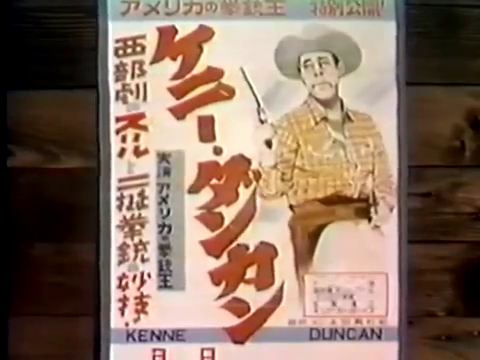
This is...pretty much what it says on the package, i.e. 9 minutes of trick shots by the perennially tired-looking Duncan, aka Dr. Acula from Night of the Ghouls, who clearly knew his way around a rifle.


There's nothing particularly Woody about the production, though the incongruous background music -- and an odd Japanese interlude -- add a hint of that freezer-burned flavor we associate with Ed's work. But maybe that's just the 1950s, which were weird enough on their own.


Otherwise, what's to say? It's, uh, trick shooting. With Kenne Duncan.


The Sun Was Setting (1951)


Grade: D-

Pointless tearjerker about a terminally ill woman who wants to go clubbing and, after 13+ minutes of conversational platitudes, almost does.

Other than serving as an interesting footnote to Wood's biography, the existence of this unreleased short contributes nothing to the world.


The Violent Years (1956)


Grade: C-

Now this is more like it. Scripted by Wood and directed by other, more capable hands, this trashy exploitation romp could be summed up as "poor little rich girl turns bad, thanks to parental neglect".


Or as the protagonist's mother says, the blame is all theirs for giving her "a new dress, instead of a caress". Ah, millinery, that well-known path to juvenile delinquency.


And as you might expect from Akdov Telmig, it's got long stretches devoted to hand-wringing, soul-searching, stern lectures, and other forms of "socially conscious" moralizing.


All this, no doubt, to justify all the sex and violence on display -- right? Well, neither nudity or blood is on the menu, nor anything else particularly graphic...


...but then again, can you name another movie with a 4-on-1 gang rape scene where all the perps are women? (No, that one episode of Law & Order doesn't count.) Well, OK, they don't actually show it, but there's zero doubt as to what that cutaway is, er, cutting away from.


One peak of absurdity comes thanks to the delinquent girls' liaison to the underworld -- the type of woman who wears high heels and tight belts while lounging around on the couch, and who serves as one part fence, one part criminal mastermind, one part Madame Blavatsky, one part cream of tartar.


She assigns them the task of trashing the local high school. Why, you might wonder -- what profit is to be had? Maybe an insurance payout?

No, instead we learn that "a certain organization" is behind the operation and, if "a few flags get destroyed in the process", they'd be more than pleased: "Let's just say it's part of a well-organized foreign plan."

Yes, friends, it's those damned Commies behind juvenile delinquency. Who knew?


Anyway, it's talky and not terribly titillating, and despite running under an hour it manages to include a montage of itself near the end of the film. But it's entertaining enough to watch once, and then watch again at double speed for the sake of getting a review done.

Sunday, May 2, 2010

Lost in the Woods: or, the peripatetic angora sweater

This afternoon we had a long telephone conversation earlier in the day, and asked the question: does the world really need another blog entry about the films of Edward D. Wood Jr.?

Well, here at the Umbrellahead Review, our answer is a resounding "Maybe!" Especially since, with one exception, we're mostly covering his lesser-known films today. So if your mind's in a muddle -- like a thick fog -- then clarity awaits:

Crossroad Avenger: The Tuscon Kid (1953)


Grade: C-

Glen or Glenda (1953)

Grade: C- (C+ without the added exploitation footage)

Jail Bait (1954)

Grade: F

Night of the Ghouls (1959)

Grade: B-

Crossroads of Laredo (1948, completed 1996)

Grade: F

Most people know Ed for his horror films, but he started out in Westerns, most of which seem to have Crossroads in the title. Of the two mentioned here, Crossroads Avenger is by far the more watchable, and gets bonus points for its unusual premise: the hero is an insurance investigator! Gee, I wonder why that pilot failed, eh? Otherwise it's mostly by-the-numbers, neither egregiously bad nor particularly good throughout its 20-odd minutes. We enjoyed Harvey B. Dunn as Zeke, the wheezy old prospector (or whatever he was supposed to be).

Crossroads of Laredo, on the other hand, is pretty much unwatchable. Originally filmed in 1948, the soundtrack was either lost or never recorded, and so it gathered dust for almost 50 years. When Ed's movies came back into fashion, the producer (Crawford John Thomas) wisely saw an opportunity, and so we have this "restoration", with voice-over narration and music added by Dolores Fuller and company, which comes as a bonus on the Haunted World of Edward D. Wood Jr. DVD.

It was a nice idea, but the problem is, there's just about nothing to the original footage, which just seems like a series of half-realized sketches that, as one IMDB reviewer put it, might have passed for a movie in 1918. There may be a way to wring a viable film out of it nevertheless, but Fuller's additions -- cheesy synthesized music, hopelessly banal commentary, and Elvis Presley Jr. -- don't exactly improve matters. The result is 23 minutes of sheer tedium, relieved only by our bittersweet reflections on canine longevity.

We don't really need to say anything about Glen or Glenda, do we? Except maybe that P. enjoyed it a lot more this time around...but it still drags like hell in the second half. Getting rid of the spliced-in exploitation footage would help (poor Béla!), but even without that, it's 10 minutes too long. Still, it's a hard movie not to like, and it's kind of sui generis anyway, or ne plus ultra, or some other expression in a foreign language that makes us sound pretentious.

Not so for Jail Bait, which is Ed's attempt at film noir (more or less), but fails disastrously in almost every respect: the thuddingly obvious plot, the threadbare acting, the obnoxious soundtrack...even the title (which refers to a gun, of all things) is a fraud! Pour a glass out for Herbert Rawlinson, who died the day after shooting was completed -- which is easy to believe: the poor guy sounds short of breath in every scene. He deserved a better end to his career than this piece of dreck.

By any objective standard, Night of the Ghouls is also dreck, but it's a million times more fun -- and since it doesn't feature Béla Lugosi at the end of his rope, it's the only "Kelton trilogy" movie whose bathos comes 100% guilt-free. Here, the fallen star is Kenne Duncan, who plays a mysterious psychic named...uh...Dr. Acula. Yeah. In his nefarious schemes, he's aided and abetted by a hideously disfigured Tor Johnson, among others.

As always in Ed's movies, the third act drags a bit, but the first 30 minutes or so offers the biggest laughs of any Wood film, hands-down: the séance sequence is downright mind-blowing. This is a must-see for anyone who likes to laugh at things. And you like to laugh at things, don't you?