Showing posts with label shipwrecks. Show all posts

Sunday, October 28, 2018

Tales of Bacchus and Uranus

It's no revelation that peplum films recycle a lot of the same props, actors, plots, and so forth. Still, it was kind of astonishing how much these two had in common -- and we're not just talking about the usual stuff, e.g.:
  • the evil queen who falls in love with Hercules after he survives a test of strength;
  • the soldier who reports a failed mission and is summarily executed;
  • the natural disaster that overtakes the kingdom once Hercules inevitably wins.
Yes, those things are present, but so are more idiosyncratic things like:
  • hidden sanctums harboring glowing objects that serve as centers of occult power and empower the evil queen -- at a severe price;
  • drugged wine that Hercules is, for once (or twice!), too smart to imbibe;
  • close female relatives of the evil queen whom she sacrifices to preserve her power;
  • giant gongs whose beater Hercules briefly uses as a weapon;
  • scenes where almost everything onscreen is blotted out by dust, wind, and storms;
  • soundtracks heavy on electronic sound effects;
  • ...and long strings of dialogue involving "Uranus" that, after some initial resistance, eventually had us in stitches.
(Yes, we're twelve.)


Hercules Against the Moon Men (1964)
[aka Maciste e la regina di Samar]

Grade: C-

This is one of those titles that immediately makes you think "camp". Hercules Against the Moon Men? How can this be anything other than a ridiculous mash-up of cheap fantasy and cheap sci-fi, a contrivance that makes Bela Lugosi Meets a Brooklyn Gorilla seem like the most natural thing in the world?

(Note: we haven't actually seen Bela Lugosi Meets a Brooklyn Gorilla, at least not yet. We're sure it's lovely.)

Well, the narration sets it up for us:

"That fatal night, a fiery mass dropped from the sky onto Earth, causing the mountain of Samar to erupt and burn everything around it, leaving nothing but a wasteland. Within the bowels of the mountain, a new and monstrous life was formed. From that day on the people of Samar, in order to survive, were forced to offer their children as a sacrifice to the hungry Mountain of Death."

Heavy duty.


From that prologue -- and ours at the start of this post -- you already know the deal, and can safely assume that evil Queen Samara (Jany Clair) is just fine with the status quo. Actually, that's not quite so: she wants to go further, and establish complete dominion over the world (the same thing we do every night, Pinky).

We find out early on that Samara is in touch with a weird alien apparition that, above all, wants her to kill Hercules (Sergio Ciani). Could this have anything to do with the mysterious mountain of death? Will Samara somehow capture Hercules and put him through a test of...?

OK, that's a yes. And will she become smitten with...?

Huh, OK, that's kinda kinky, but whatever. (Whatever she says, Jany's not done with Sergio -- and given how she guides his hands to her neck, apparently the ragdoll thing is her kink.)

And will she spike his wine with...?

...OK, then.

So it's not the basic plot of Moon Men where the interest lies, but one thing we really liked is that every time we had a suggestion for Hercules, he went and did it. For example, we asked: why bend two bars at once when you could focus on pulling one bar to the side with both hands?

"Done," says Sergio Ciani. Or, when confronted by a linebackers' wall of slow-moving golems, we said aloud "Why not just wait for an opening and dive between them?" And what do you know, the clever li'l cuss went and did that too!

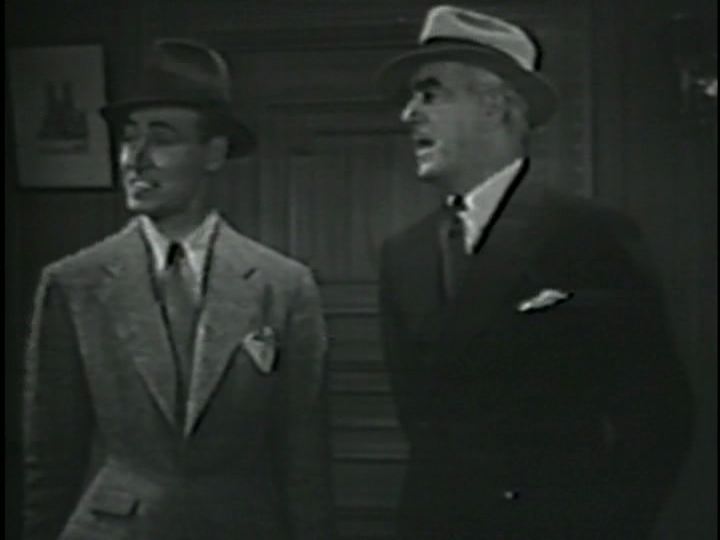
One liability in Hercules Against the Moon Men is love interest Agar (Anna Maria Polani), daughter of the nobleman Gladius who was pictured a few screenshots back (and who gets Britney'd in the early going).

If you're playing the love interest of a man who can have any woman he wants, you'd better bring some serious charisma to the table. But Ms. Polani just doesn't have enough to pull it off --

-- which is a genteel way of saying that one of us was really bothered by her chin cleft, and the other wasn't exactly smitten either. Alas, we just couldn't get AMPed for this young woman.

Still, the movie hums along nicely until the final act, where the inevitable assault is mounted against the Mountain of Death -- and we suddenly get bogged down in shot after shot of windswept wastelands. The color gel lighting and dry ice fog look cool in still shots, but -- we're not exaggerating here -- ten minutes of people shouting unheard dialogue and stumbling around aimlessly? That doesn't make for an exciting climax.

Also, this is one of those movies where Hercules never seems to kill anyone. Whenever he's attacked by multiple enemies, they obligingly clasp hands with him and get thrown into the air, like some sort of pre-game ritual gone wrong.

Maybe they should just shoot him with an arrow for a change?

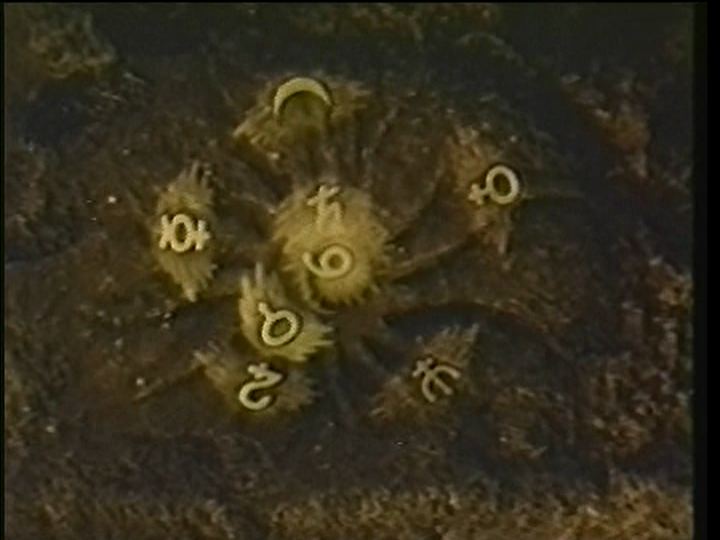
By the way, we liked the cool zodiac graphic that comes in about two-thirds of the way through the movie -- and we weren't above a chuckle at the line about coming under "the evil influence of Uranus". (Paging James Seay!)
One wonders why Queen Samara would take part in a plan designed to make the Earth unfit for human life. OK, "the fairest of them all" is just as applicable with a sample size of one, but then why is she devoting her energies to reviving Selene, Queen of the Moon Men? None of this really computes.

In conclusion, here's a screenshot of Sergio Ciani having a lie-down.

Speaking of which...


Hercules and the Captive Women (1964)
[aka Hercules Conquers Atlantis, Ercole alla conquista di Atlantide]

Grade: B-

"Please don't be a comedy, please don't be a comedy, please don't be a comedy," we said to ourselves as the opening minutes of Hercules and the Captive Women unspooled. After our traumatic experience with the utter garbage that was Colossus and the Amazon Queen, we simply couldn't stomach a repeat of that experience.

And disturbingly enough, the beginning of Hercules and the Captive Women bears no small resemblance to Colossus and the Amazon Queen. We've got a bar fight, followed by a betrayal from someone close to the big guy (Reg Park), who ends up unconscious aboard a ship bound for distant lands.

For all his might, Hercules spends one hell of a lot of time in this movie lying down, reclining, or otherwise in a state of repose. Whether he's listening to speeches about a mysterious threat to his homeland...

...or getting lectured by his comrade, King Androcles of Thebes (Ettore Manni)...

...or chilling out after a shipwreck...

...or hanging out with the treacherous Queen Antinea (Fay Spain)...

...or cleverly spitting out drugged wine...

...he often takes it lying down, literally.

Of course, like a male lion, he can easily rise to the occasion when necessary -- as when he drags an entire shipload of convicts back to shore after they try to strand him and Androcles on an island (once again, with echoes of Colossus and the Amazon Queen).

In fact, Androcles's expedition is astonishingly half-assed. Inflamed by a prophetic vision from the heavens -- depicted with the aid of a red filter that almost completely obliterates the onscreen visuals --

-- he goes on a voyage to confront the threat to Greece. Not only does he force Hercules to come with him, he secretly brings Hercules's son Illus (Luciano Marin), specifically against the big guy's wishes. 

But Androcles seems to have no idea who or what they're looking for, or even where they're going: as far as we can tell, he just sets sail and hopes for the best.

How serendipitous that when they inevitably shipwreck, Hercules just happens to wash up on the lost continent of Atlantis -- after receiving a vision of Androcles, begging for rescue.

On arrival, Hercules discovers a young girl (Laura Efrikian) half-embedded in rock. She's midway through the process of being sacrificed to Proteus, the shape-changing protector of Atlantis.

Naturally, Hercules can't stand for this, and defeats Proteus in lizard form by ripping off his horn (which really does look rather painful).

The young girl turns out to be Ismene, daughter of Queen Antinea, and her sacrifice is meant to forestall a prophecy of the "Birnam Wood to Dunsinane" variety. In fact, Ismene seems to spend half the film getting sacrificed in one way or another.

This also explains the inclusion of Illus, as Hercules is just too old -- and too married -- to consort with this puellam nubilem. (One of us thinks she's kinda hot, the other doesn't; we can't imagine Ms. Efrikian is too heartbroken about it either way.)

You can guess much of the rest of what happens, especially if you know about the secret glowing temple of Uranus where men are transformed into mighty warriors -- or leper-like untouchables.

And speaking of Zeus's dad, this is where we really lost our shit, because once Hercules reaches his temple, the inadvertently double-entendre one-liners just kept coming nonstop:
  • "Uranus! Betrayed by his own son, Uranus was struck down." (twitch)
  • "Only a few drops fell on Atlantis, making us the heirs to all the powers of Uranus." (smile)
  • "Now, after much searching, Antinea has found the missing secrets of Uranus." (snicker)
  • "I was the last high priest dedicated to Uranus, and I still worship here at his sacred shrine." (this is about where one of us lost it)
  • "Uranus was a just god, not a god of revenge!" (struggling to hold on...)
  • "The blood of Uranus can never be destroyed!" (...aaaaand, now we both lost it completely)
  • "Only the rays of the sun can destroy the rock of Uranus." (trying to catch our breath, you're not helping!)
Like we said before, we're twelve.


None of this makes Hercules and the Captive Women (that title is bullshit, BTW) sound like anything more than a run-of-the-mill peplum. Yet, despite the familiar themes (and poor print), this was probably the most engaging Hercules film we've seen so far. Why? Well, it's not for nothing that Arnold Schwarzenegger holds Reg Park in such high esteem: this Hercules is perfectly suited for the role.


Add to that a plot with genuine momentum (and several subplots), a solid supporting cast, and stronger-than-average production values, and we're doing well. Maybe above all, Hercules and the Captive Women maintains a balanced tone that keeps things light and brisk, with moments of seriousness and of comic relief, but never taking itself too seriously or drifting into an unfunny schtick.

And that's not easy to do in a movie that drops a pile of Uranus jokes -- or in which the ultimate adversary is an army of albino Amish clones. (Seriously.)

Sunday, October 15, 2017

Paging Dr. Cuddy

No bonus points for guessing the theme: someone at Mill Creek no doubt felt very clever when they noted all three of these films' titles have Hugh Laurie in a genitive construction, and so grouped them together on a single DVD side (Disc 48, Side B, if you're keeping count).

That DVD side also represents a milestone, since it marks the end of Night Screams -- or at least the Horror Collection 250-pack's incorporation thereof -- which means we only have one subset left to review, 50 Sci-Fi Classics.

(Of course, a good 25% of those "sci-fi classics" are actually peplum, but we'll cross that bridge...)

Anyway, on to the Houses!


House of Danger (1934)

Grade: C+


In a nutshell, House of Danger is basically House Dark the at Crimes -- that is, Crimes at the Dark House in reverse.

Instead of an evil-minded, mustachioed impersonator seeking to usurp the place of a man he murdered while working thousands of miles from home, we have a benevolent, mustachioed impersonator (Onslow Stevens) desperately trying to avoid usurping the place of the man whose life he saved (James Bush).

And it's not as if House of Danger is coy about any of this; as another reviewer points out, this is a crime story, not a mystery story. But House of Danger is also a romance, as -- unlike The False Sir Percival Glyde -- the false Ralph Nelson most certainly inspires the passion of Sylvia (Janet Chandler), the woman who's been waiting for "him" ever since they made a half-serious promise of engagement a decade ago.

Now, this requires some serious suspension of disbelief, since Onslow Stevens and James Bush don't resemble one another to any meaningful degree. Here's Stevens:

And here's Bush:

So it's hard enough to believe that Sylvia is fooled, let alone all of Nelson's family and friends. But to the film's credit, one person immediately smells a rat:

As Mr. Weatherby, Nelson's uncle (by marriage) and attorney, Howard Lang is one of the film's jewels. Clever and droll, he reminds us a tiny bit of the intrepid Captain McVeigh from City of Missing Girls, though Lang never has occasion to be as spry as H.B. Warner. But he gets off a few good one-liners of the I-guess-you-had-to-be-there variety, as when the two leading men inevitably bicker over Sylvia and he intervenes:

"Well, why not let the girl decide what she wants to do? She will anyway! Bet you hadn't thought of that."

When paired with a chagrined look on both men's faces and a perfectly timed fade to black, it got a big chuckle from us. (Shades of Vernon, Florida too.)

The crime in House of Danger is offscreen, and is also the engine that sets the plot in motion: Nelson's father recently fell off a cliff, and Mr. Weatherby thinks it was murder. Again, it's not as if there's any doubt about who did it; the question is just how to prove it.

There's a certain amount of cleverness in how this unfolds, but the ensuing narrative isn't exactly taut with suspense -- and the ultimate resolution turns out to be something of a deus ex machina.

You may have detected a whiff of stock footage in a couple of these screenshots, and that's one of House of Danger's flaws, though a very minor one. More jarring is the set-piece in which Sylvia serenades a gathering, with strange, dubbed contralto vocals and obviously-pantomimed piano playing that make the sequence teeter dangerously into the realm of the ridiculous. Perhaps we ought to praise the scene for its modest realism, but since Ms. Chandler is already treading in DT territory as it is, it's too big a risk.

Still, House of Danger is -- by our steadily-lowering standards -- a likable little film that neither insults our intelligence nor wastes our time. Tightly plotted and thoughtfully directed, it's two minutes longer than the next movie in this post, yet seemed to go by twice as fast. It's just a pity the image is so dark and unstable, leaving some scenes almost unintelligible, while others teeter on the edge.


House of Mystery (1934)

Grade: F


Graze through reviews of House of Mystery and you'll find the usual stock lines: "Fans of the old dark house genre will certainly enjoy this one" says one reviewer, while another dubs it a "definite recommendation for all Poverty Row fans", and a third opines that "the screenplay is rather good". We just need someone to call it a "fun romp" and it'd make for a complete set of received opinions.


All this reminds us of our observation a few entries back -- that many people watching 1930s movies don't actually seem to see the actual movie in front of them, but instead the signifier that it represents: old-dark-house-ness, or old-timey-ness, or (less charitably) when-men-were-men-and-minorities-were-servants-ness. Whatever it is.

You see, House of Mystery is utter garbage -- a loveless, mirthless exercise in the laziest sort of filmmaking. It's cynical enough to pull the worst kind of bait-and-switch, opening with a pair of scenes in an Indian dive bar and temple that lead us to believe we're in for a "Hindoo" adventure. And to be fair, these sequences, whatever their flaws, are not unatmospheric.


But the script endeavors to lie, to tease the viewer. (See what I didn't not do there?)

For, after the first 10 minutes, House of Mystery reveals itself to be the worst sort of old dark house movie -- with thick servings of talky exposition, thoroughly unlikable characters devoid of humanity, pointless hints at backstory that never get fulfilled, and "comic" relief that leaves us staring at the screen in shell-shocked dismay, wondering how something so joyless and empty ever got made.

Oh, and it's got gorillas.

The most aggravating thing about House of Mystery is probably its tone-deaf stupidity, particularly when it comes to other cultures. Look, we're hardly the sort of people to be quick on the trigger with Tumblr denunciations, but would it have killed them to find out the name of the Hindu goddess of death isn't pronounced "Kay-lie" -- as though Elmer Fudd, having just completed his speech therapy class, decided to buy some lube and overcorrected?

Worst of all is the séance scene that repeatedly invokes the spirit of...Pocahontas. No, we're not kidding! Strangely the offensive absurdity and over-the-top stupidity of this seems to have escaped almost everyone who's written about House of Mystery, with the only exception being the one reviewer who writes:

"Pocahontas? The Native American princess? Well, apparently one type of “Indian” is the same as the other back in the 1930s."

(Unfortunately that reviewer's credibility is a bit shot by his next sentence -- "Yet, silly as it sounds, the picture is complex and suspenseful". Err....)

And wait, holy shit, is that the exact same crystal ball from the screenshot we linked earlier? Too funny.

Anyway, you'd really have to stretch to find something to enjoy in House of Mystery. We suppose the cinematography isn't too bad, with a couple nice shots here and there; shame this print looks so much better than House of Danger, though a few early sections are ripped to shreds with little cuts.

And as the ill-used dancer/servant Chanda, Joyzelle Joyner does what she can with a thankless part. If her heaving shoulders and flashing eyes are more indicative of "acting" than acting, well...at least she's trying.

Otherwise, though -- wait, did we mention it's got gorillas? Two gorillas, for reals.


The House of Secrets (1936)

Grade: C


When it comes to this Anglo-American tale of conspiracy and hidden treasure, full enjoyment probably depends on one's ability to tolerate that creakiest of plot devices, the remarkable coincidence.

Two big coincidences feature in The House of Secrets, and it's quite upfront about the first. When toothy traveler Barry Wilding (Leslie Fenton) rescues a beautiful woman (Muriel Evans) from an awkward situation on a boat, she's appreciative but pointedly refuses to give her name before she departs, leaving him lovelorn and at a loss.

So isn't it remarkable --

-- that she turns out to be Julie Kenmore, a tenant in the spooky old English house he's just inherited? What a curious incident!


But this appears to have been standard practice for the author of the source material, Sydney Horler, who's unfamiliar to us but from all reports was a "nasty little man", racist and anti-Semitic and generally unpleasant.

(By the way, that link claims that Wilding rescued Kenmore from a "masher", but that's not quite true -- close attention to the dialogue reveals the man's interest had something to do with drugs.)

The House of Secrets uses another trope we recently encountered in The Midnight Warning -- namely, the close friend of the protagonist who also happens to be ace detective Tom Starr (Sidney Blackmer).

This kind of thing can be disastrous for a story -- the equivalent of dropping a Level 10 ranger into your entry-level D&D campaign -- but to its credit, The House of Secrets mostly keeps Starr out of the action, leaving Wilding to unpack things on his own.

It's hard to say much more about The House of Secrets without spoiling it, though quite frankly the basic outlines of the plot are pretty obvious before long: with early references to drugs, the sound of maniacal laughter, and portentous warnings from every corner about how Wilding can't possibly be allowed to know what's going on in the house he just inherited and really ought to sell it posthaste? Not too hard to put the basics together.

For most of its 70-minute running time, The House of Secrets is remarkably brisk -- so much so that at some point we looked at each other and were astonished by just how much had happened over the course of the movie: the film felt long in a good way, i.e. from its own cohesion and propulsion. OK, perhaps it has one too many IWGIHs, but the margin of excess is slim.

However, by the 45-50 minute mark, our destination had become obvious enough that other characters' endless evasions and deferrals started to get irritating: yes, we know all will be made clear in the final scene, but maybe it's better to put some pieces in place first, so it's more satisfying when those last few are snapped in.

We also can't claim the ultimate conclusion really grabbed us. Once again, we could tell a Midnight Warning-style denouement was more or less inevitable -- was there a vogue at one time for "So now you see, we had our reasons" plots? -- but everything's a bit too pat, with one-time adversaries turned newfound friends with no time to catch our breath. Can you really make fast friends with someone who recently held you at gunpoint?

Well, The Phantom thought so, and I guess The House of Secrets does too: must have been a 1930s thing.


Anyway, The House of Secrets is a fine way to wind up the Night Screams set -- not least because it actually has some night-time screaming, which is always nice. (It also has a fuzzy, VHS-dubbed print that makes some of the darker scenes more or less inscrutable in their details, but such is Mill Creek life.)

By the standards of this box, it's an above-average suspense tale that kept us more or less engaged throughout its running time -- even if our laughs at the end owed more to resigned incredulity than to real satisfaction.


And to our pleasure and astonishment, that brings us to the end of Night Screams. 12 months ago it seemed inconceivable that we'd ever work through our backlog, whereas now we're spoiled for choice:

Do we immediately continue on to 50 Sci-Fi Classics? (From which we've already reviewed 5-6 movies anyway, mind.)

Or take a detour into one of our other, shorter box sets, like Grit 'n' Perseverance from whence our beloved Beartooh [sic] hailed?

Or wrap up some unfinished business from the Nightmare Worlds subset that begins the 250-pack, and with which this whole project started out -- in more ways than one?

Dunno. But first we have an awards ceremony to convene!