Showing posts with label bela lugosi. Show all posts

Thursday, August 10, 2017

Sight unseen, laughs unlaughed

Our menu this evening features two films from 1943 that are so similar in some respects, we can't help but believe some producer at Mill Creek felt impishly clever by putting them together on Disc 46. Why? Well, let's see -- we have two "horror comedies" that include:
  • a pair of newlyweds who for some stupid reason plan to move into a country house, sight unseen (!!), immediately after their wedding;
  • a zany cast of characters (one of whom is black) who intrude on the just-married couple, thereby putting a major damper on the honeymoon, and end up wildly overstaying their welcome;
  • a group of hardened criminals who, when it comes to the old property, have an agenda all their own;
  • plus so much more:
    • confusion over addresses;
    • wacky, clueless cops;
    • menacing eyes staring out of hidden alcoves;
    • heavy objects with felonious content, the transportation of which becomes a major plot point;
    • repeated malapropisms for common words and phrases;
    • etc., etc., etc.
But just as two garments cut from the same cloth can fit very differently, so too did these movies elicit very divergent reactions from us.


The Ghost and the Guest (1943)

Grade: F


When we read a review of a film like The Ghost and the Guest that describes it as "harmless fun", or "an amusing comedy", or (God help us) "a movie that you just never get tired of", we can't help but speculate:

Are these people really describing their experience of this actual, specific film, The Ghost and the Guest, from 1943? Or are they actually responding to the signifier they think it represents? 

And by that we don't mean some uncharitable, Archie-and-Edith-Bunker-at-the-piano "Those Were the Days" longing for a time when everyone knew their place (and no one was, uh, uppity) -- at least not necessarily.

Rather, we simply mean to ask: do the people who watch this film, and claim to have the above reactions, really have those reactions, to this film? Or are they just saying what they think they're supposed to say, socially speaking? Did they really see the film, or just the idea of the film -- leaving them to vaguely recall a collection of signifiers that, in turn, prompt the automatic output of a pre-ordained set of phrases?

Because the thing is, The Ghost and the Guest isn't "fun" or "amusing" or "a movie that you never get tired of". It's a complete and utter piece of garbage. It's painfully unfunny, horribly written, insultingly stupid, and even downright offensive in places. Laboring through its 55 minutes was one of the most unpleasant tasks we've yet faced in our Umbrellahead journey. Every scene felt contrived, every plot point felt like it had just been extracted from a rhino's posterior, and every character's behavior was either stereotyped or arbitrary. As another reviewer points out, quite rightly:

"This film has been put together by someone who seems to know nothing about how people really behave. Look at the scene where the bride-to-be is yapping away on the phone with her friends; do people really stand around like that in real life as one of their number talks nonstop on the phone?"


From the very beginning, the motivation of our principals makes no sense. First, the wife (Florence Rice) is hell-bent on having them spend their honeymoon in the old house, though the reason she's so insistent is left totally opaque to us. Then, they swap places, and now it's the husband (James Dunn) who insists they stay. Are they both idiots? Yes, yes, they are.

Worst of all is the running gag about a retired executioner (Robert Dudley) who constantly chirps about how much he'd like their valet Harmony (Sam McDaniel) to try on one of his nooses, just for funsies. As we said last entry, we're hardly the sort to go looking for things to be offended by, but somehow it crosses a line to have a black man be the butt of a recurring, unfunny joke about lynching in 1940s America.

In short, there was nothing good about this film, unless you count a single half-smirk elicited by a line of dialogue from McDaniel -- and that's not enough, not remotely enough. We don't want to talk about The Ghost and the Guest anymore. It's a sad, dead film that doesn't deserve to be watched. Would that it were lost, so another, better film could be found instead.


Ghosts on the Loose (1943)

Grade: D

Well, that's more like it. Not that Ghosts on the Loose is a great film, or even a passable 1940s comedy: it's an inoffensive but dull piece of work that got, at most, two vague chuckles out of us. But the inclusion of Béla Lugosi immediately ups the ante, and more or less ensures that something onscreen will be worth watching.

That said, Béla doesn't get much screentime at all, as the real stars are the East Side Kids -- a bunch of not-so-lovable, well-meaning hooligans. Their 22 (!) films demonstrate that, like the Dead End Kids and Bowery Boys, they were quite a profitable film franchise.

And, now and then, they bust into an 18th-century song with organ accompaniment.

One odd thing is that Ghosts on the Loose -- which, to be clear, has no actual ghosts on the actual loose -- bizarrely spends about half its running time on wedding preparations and rehearsals. Somehow it's not really a problem, but from a formal perspective it's hard to fathom...

...unless, of course, they set out to make a wedding picture and only then found out Lugosi was available. (But we have no evidence of that.)

It's a pleasant surprise -- and a big contrast with The Ghost and the Guest -- that the film's lone black character, Scruno (Ernest Morrison), isn't really singled out or treated differently in any obvious way: he's just another one of the East Side Kids. Is there a faint whiff of the cowardly, wide-eyed stereotype that mars many black characters in horror films? Well, maybe -- but it also clings to several of the other Kids, so it's a wash.

This movie is probably most famous for Béla's sneeze, and without knowing anything about it beforehand, we sure looked at each other afterwards: "Didn't he just say 'Aw, shit?'"

Allegedly it was a joke on his part, done for what he assumed would be a throwaway first take -- leaving him stunned when the take was declared final, and used in the film. Maybe it's an apocryphal story, who knows, but the word itself is pretty unambiguous.

Wait, does that mean that -- outside of a few lip-readable expletives in silent films -- Lugosi was the first person to knowingly use one of George Carlin's "seven words you can't say on TV" in a feature film? If so, that's awesome. (And a split infinitive, but this ain't Latin.)


Oh, and then there's Ava Gardner. Not our type, but beats a screaming skull, I guess.

And boy, was she thrilled to be cast in a Monogram picture!

Monday, January 16, 2017

Warning! Attention! Achtung!

Before watching the next three films -- all of which, as it happens, revolve around criminal schemes that run afoul of the law -- be warned: each harbors a serious issue that, in the case of one of these films, can damage your television or even your health. (No, we're not kidding.)


Bowery at Midnight (1942)

Grade: C+

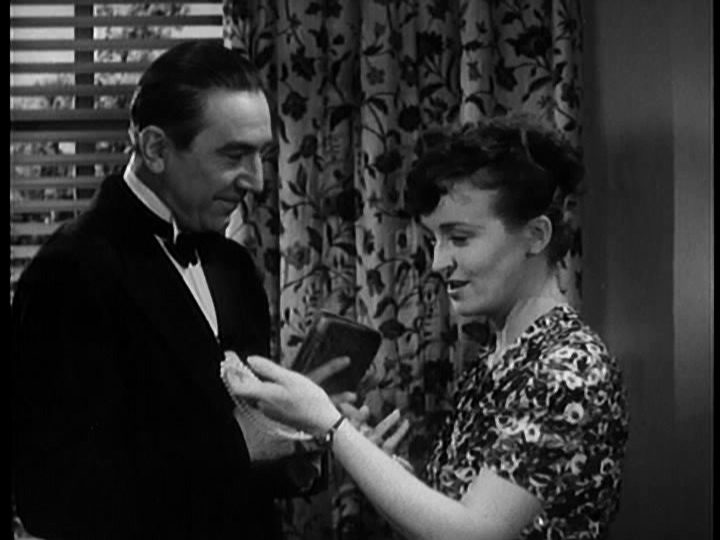
To see Béla Lugosi onscreen in a starring role is, alas, to know you've already spotted the villain. But for the first few minutes of Bowery at Midnight, Béla puts up a good front as Karl Wagner, the kindly operator of a soup kitchen/flophouse. Wagner doesn't ask a lot of questions, or try to save anyone's soul...

...because his is already long gone. Wagner leads a double life, you see, as the mastermind behind a series of particularly brutal robberies -- and his associates have a nasty habit of ending up dead.

And that goes double if they get the bright idea of talking smack about him while he watches on his secret TV (which, to our great pleasure, Bowery at Midnight makes no attempt whatsoever to explain).

Did we say Wagner leads a double life? Well, it's really more of a triple life --

-- for, by day, he's Professor Brenner, noted criminologist and devoted husband. While his criminal associates know that Wagner has a dark side, no one knows that Brenner is Wagner -- and he means to keep it that way.

Wagner/Brenner makes for a refreshingly evil character, and a part tailor-made for Lugosi. He has no compunction about killing anyone, and we mean anyone, who gets in his way. The movie's body count is impressively high, and as another site notes, it quickly establishes that any character can die at any time -- something that puts us in a completely different headspace, so to speak, from the usual "everything's OK in the end and only the bad guys get it" fare.

Of course there has to be an infusion of spunk somewhere along the line, right? And Bowery is no exception, though it distributes its moxie more or less evenly between Wagner's assistant Judy (Wanda McKay), a nurse who knows nothing of her boss's dark side --

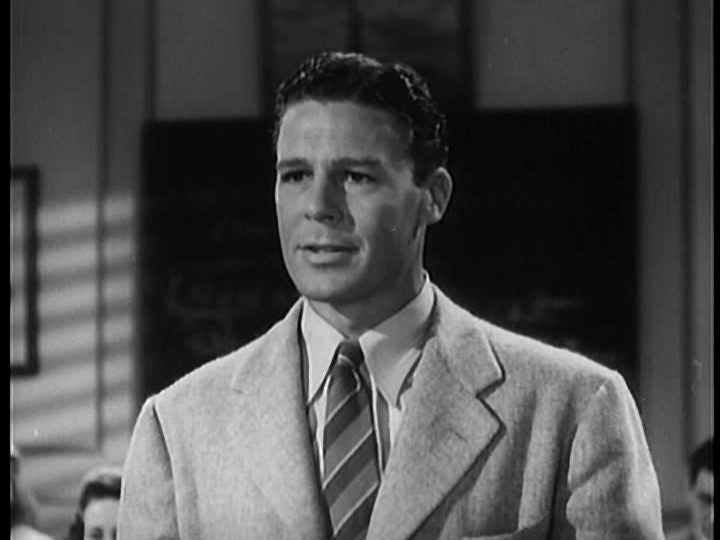
-- and her wealthy boyfriend Richard (John Archer), who -- quelle coincidence! -- is taking Brenner's criminology class. Annoyed and offended by Judy's long nights in the Bowery, Richard decides to scope things out for himself. This is not one of his better ideas.

Bowery suffers from a mild case of One Subplot Too Many, though other writers have overlooked one possible motivation for its bizarrely tacked-on zombie theme. Let's put it this way: if zombification is fully reversible, you can off as many people as you want without violating the Hays code.

Now, a very important warning: at approximately 55:41 into Mill Creek's print of Bowery at Midnight, the viewer is hit out of nowhere with an ear-splittingly loud noise (probably feedback of some kind) in one channel.

It's far louder than the surrounding audio, sounds like a cross between a siren and a Slinky from hell, and is more than capable of blowing out your speaker if you've got the volume turned up (and who doesn't when trying to make out the dialogue on these Mill Creek DVDs?). If you're listening on headphones, it could certainly cause hearing damage.

It also made us jump about 10 feet even though we had a vague idea it was coming (thanks to a warning on another site, and we're grateful for the solid), marking the first genuinely scary moment we've had on this box. And when we watched Bowery again for this review, K. spent the entire time cringing in apprehension.

So how will you know when it's coming, short of watching the counter on your DVD player? Well, watch out for this scene in which Judy is asking one of the flophouse residents to run an errand for her, and hands him some money:

Right after that, she leaves and walks into the next room, and that's when the noise happens. Turn down your volume in advance! You'll know you're clear when she begins to speak with this man, "Doc" Brooks:

If all this sounds overwrought, believe us, it's no joke. Consider yourself warned!


Midnight Shadow (1939)

Grade: F

Another Sack film with an all-black cast, Midnight Shadow poses the question: how do you stretch 25 minutes' worth of film into a 50+ minute featurette?

Why, with "comic relief", of course -- if you can use that term to describe the asinine and joyless antics of the two wannabe detectives who mug their way through this film. We remembered Midnight Shadow as one of the worst films we'd seen on this box, but for the first 15 minutes or so, we found ourselves questioning this assessment: did this silly but inoffensive murder-mystery really deserve that much opprobrium?

But once Buck Woods and Richard Bates show up onscreen, look out. It's not merely that they're unfunny, or that there's something embarrassing and painful about watching them carry on. They're just flat-out obnoxious, so insultingly stupid that it moves us to anger.

And it doesn't help that Richard Bates has a creepy, young-old face that makes his role as "Junior" somehow disturbing -- a bit like John Hurt's early scenes in Heaven's Gate, we suppose, but much, much worse. Ostensibly a young man, he certainly doesn't look much younger (if at all) than his onscreen parents.

So be warned: the presence of these two pretty much tanks any chance for Midnight Shadow to be what it could have been, i.e. a threadbare but mildly entertaining romp whose rough edges and incoherent script are almost forgivable in light of its brevity and circumstances.

Instead, it's just a big steaming pile of anhedonia. Sorry, Sack.


Torture Ship (1939)

Grade: C-


Let's get the warning out of the way upfront this time: Mill Creek's print of Torture Ship is missing the first 9-10 minutes of the film, give or take. And while you can infer the gist of the missing material pretty quickly -- these people are criminals on a boat, this person's a scientist conducting experiments on them, etc. -- it still has a major impact on the film's coherence and enjoyability.

It turns out that neither YouTube nor Archive.org can supply the missing beginning to the film, so we digitally "rented" a copy of Sinister Cinema's version, which seems to be the only place to get those opening minutes. The Sinister print is certainly better than Mill Creek's copy, but much as with The Ghost Walks several entries back, it also has some unexpected flaws. Among these are a scene that's been mysteriously replaced by an exact repetition of a later scene (which is confusing as hell), and a couple skips and audio dropouts that aren't present in the Mill Creek version.

If you choose to watch the Mill Creek version of Torture Ship (from which all of these screenshots are taken), you'll be a bit lost for a while, but you'll still be able to enjoy the film's wealth of interesting faces. And it sure has a lot of them, though there's a clear winner in the bespectacled fellow pictured at the very start of this review, Skelton Knaggs, a man who -- as you can see -- looks exactly like his name.

Our female protagonist, Joan, is played by Julie Bishop -- who, speaking of fah-chays, looks a bit like the young Arlene Francis (a cutie in her youth, if you didn't know that: certainly worth a Google, no need for a Bing).

An innocent secretary unwittingly mixed up in a murderous racket, her only lifeline is heroic Lt. Bob Bennett (the ever-redoubtable Lyle Talbot), nephew to the scientist we mentioned a while back. And boy, does she give him bedroom eyes when he saves her bacon.

And speaking of women of a certain age who work in quartets, the comic relief in Torture Ship is supplied by Ole Olson (Eddie Holden), a stereotyped Swede and spiritual grandfather of Sven Lindström. Cowardly but sweet-natured -- and full of gratuitous transformations of palato-alveolar affricates into palatal approximants, naturally -- he gets the film's best line, or at least its strangest:

"If a gun was even two feet in front of me, it would run like 'Hail, Columbia'."

In its Mill Creek-ified form, Torture Ship is a murky and unsatisfying affair; with the opening restored, it's a marginal but reasonably entertaining hour of plots and counterplots, with a little woo-woo science for added spice, and at least one unforgettable face.

If you're reading this and decide to assemble the best parts of the Mill Creek and Sinister prints into some sort of restoration project, drop us a line with the download link -- we'd love to see your new cut!

Sunday, October 30, 2016

Liquid solutions

Homer Simpson famously toasted alcohol as "the cause of, and solution to, all of life's problems". And as we ugly bags of mostly water know, you can't have a solution without liquid.

So while you're bobbing for apples this Halloween weekend, consider these two films in which nearly incompressible fluids play a problem-solving role:


Terror Creatures from the Grave (1965)

Grade: D+

Oh, God, not her again.

Look, we know Barbara Steele is revered among horror movie buffs, who seem thoroughly captivated by her unusual, vaguely mantis-like features. But it seems like every time she shows up in a film, it inevitably turns out to be a tediously murky effort that takes itself too seriously and doesn't make much sense.


Sadly, Terror Creatures from the Grave is no real exception. True, it manages to conjure a modestly creepy atmosphere, redolent with imagery of plagues, conspiracies, and spiritualism.

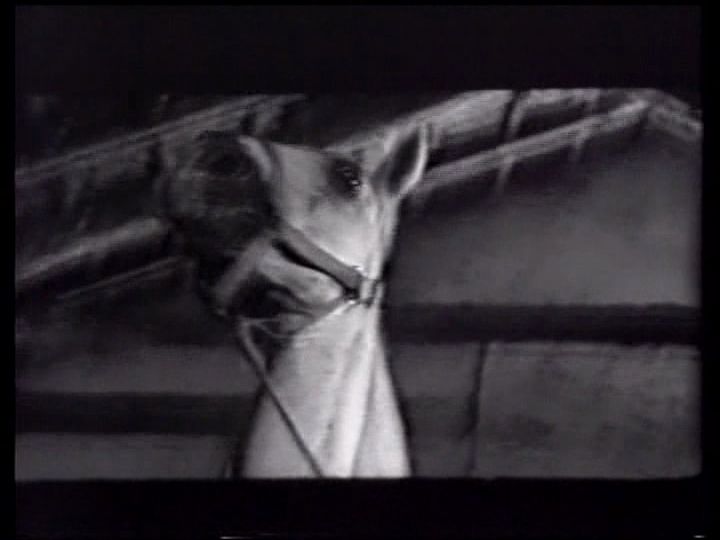
Plus the movie starts out with death by horse, always a nice touch.

But Terror Creatures suffers from the same syndrome that torpedoes -- dare we say, "plagues" -- so many similar films. Its symptoms include largely interchangeable supporting characters:

Long stretches of talky exposition:

And a protagonist who engages in lengthy voiceover soul-searching, but only figures out the meaning of the movie's biggest clue about 20 minutes after the viewer does.

In this case, that clue is an (ahem) "ancient lullaby" -- set to modal music that cribs heavily from the "two pretty children" bit in Night of the Hunter -- with the following lyrics:

Death is approaching
Approaching for you
Remember pure water
Pure water will save you
The water will save you
This warning's for you
Remember, remember, this warning's for you

Yes, the movie comes with its own walkthrough. It ain't subtle, folks.

Now, if you're looking for some barenaked ladybugs then, sure, Terror Creatures will hook you up, at least from the upper thigh down.

And the underutilized maid Louise -- Tilde Till, in her only film credit -- is sort of cute, certainly cuter than the leads (aren't they always?).

But all the practical effects or insectivorous flesh on display can't hide the fact that, for any but the most dedicated Steele fans, Terror Creatures from the Grave is a slog from which pure water can't save you: that particular salvation can only be given by the end credits.

Frankly, we're getting to the point where the only positive association we have with the word "Steele" is when it's prefaced by "Hands of".


The Devil Bat (1940)

Grade: B+

Here at the plush offices of The Umbrellahead Review, we sometimes worry. After all, this project of ours inherently means that we have to cover a whole lot of turkeys -- films that have no redeeming value, give us no pleasure, or simply blend into a sea of undifferentiated mediocrity (at best).

Inevitably, notes of snark, cynicism, or world-weariness creep into our writing. Might we be giving the impression that we've lost our love for second-tier cinema?


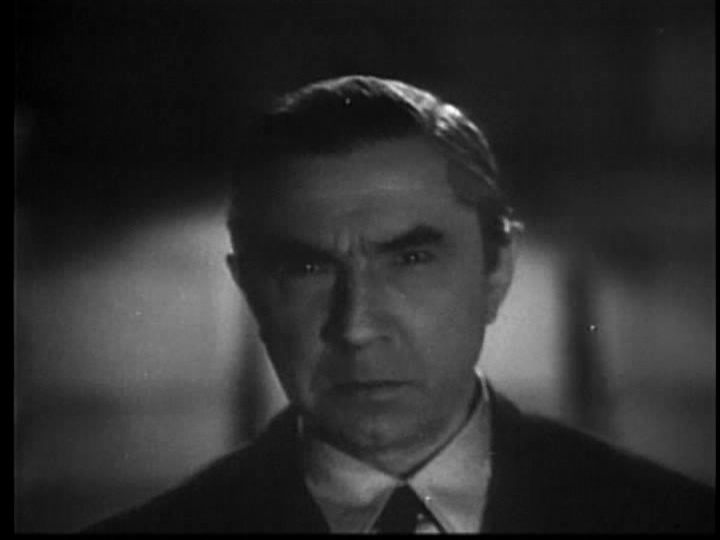
Well, if there's anyone who can cure those blues, it's Béla Lugosi. Even in the worst stinkers, his inimitable charm, unmistakable presence, and committed intensity always manage to make the experience worthwhile.

And the great news about The Devil Bat is that it represents Poverty Row at its best: filmmaking on a threadbare budget that nevertheless manages to entertain without insulting the intelligence of its viewers.

Tightly constructed, well paced, and full of amusing one-liners, The Devil Bat avoids all the usual pitfalls of low-budget filmmaking: the principals aren't idiots, the action actually follows a logical progression, and the criminal mastermind is motivated by a grievance that, whether or not it's justifiable, is certainly understandable.

(Not to mention that the other characters are kind of dicks about it. Well-meaning dicks, but still dicks.)

All the film asks in return is that you accept a single premise: that a vengeful (but brilliant) scientist can grow giant bats and train them to kill. With that in place, there are no additional leaps of faith or plausibility required -- everything else flows quite logically from that starting point.

If there's a major flaw in The Devil Bat, it's more in the vein of a missed opportunity. Before we know much of anything about Lugosi's Dr. Carruthers, he's already telling his bats that they "will strike to kill". In fact the opening text crawl specifically paints him in a sinister light:

But wouldn't it have been better -- and more tragic -- if instead of being Neutral Evil from the get-go, Dr. Carruthers started out Lawful Neutral, and his decision to seek revenge were a response to his treatment in the movie, rather than a fait accompli?

The method of dispatch in The Devil Bat is certainly novel. While in Terror Creatures from the Grave good ol' aitch-two-oh was your salvation, here it's aftershave, tinged with "an Oriental fragrance" from Tibet, that spells your doom.

Once the murders begin, a spunky male reporter -- Dave O'Brien, who famously starred in Reefer Madness -- picks up the scent of a good story and decamps for Heathville.


Accompanying him is photographer "One-Shot" McGuire (Donald Kerr), whose role as comic relief is mercifully limited to a few minor scenes, none of which overstay their welcome.

Naturally there's a beautiful young heiress (Suzanne Kaaren) on the scene, whose main suitor is quickly eliminated, leaving our correspondent to horn in on the charms of Ms. Mary Heath.

 
There's even someone for "One-Shot" -- a pretty French maid (Yolande Mallott) whom he easily persuades to show her knees for the camera. Why she takes a shine to him, one can only wonder.

Practical effects are seldom a strong point in a Poverty Row production. An uncharitable observer would probably describe the title character in The Devil Bat as a pretty laughable piece of work, and it'd be hard to argue the point.

Yet somehow it doesn't matter, perhaps because the bats are really a tool, rather than an end in and of themselves. They're not meant to be particularly horrible or terrifying; they're basically just the bat equivalent of a trained falcon.

And The Devil Bat even "hangs a lampshade on it" by having a subplot in which our hero and his sidekick, unable to snap a decent picture of the bat, decide to fake one instead...and end up getting caught, briefly making them a laughingstock (and royally pissing off Mary to boot).

Scriptwriter John Thomas Neville knew exactly how to write for Lugosi, giving him grimly funny dialogue that maps perfectly onto Béla's wry sense of humor. The most obvious example is Dr. Carruthers's habit of bidding a somber farewell to all of his intended victims:

Roy: "Good night, Doctor."
Dr. Carruthers: (pointedly) "Goodbye, Roy."

We also enjoyed this exchange when he asks his second victim to sample his (indirectly) lethal aftershave:

Tommy: "Oh, that feels great! Very soothing!"
Dr. Carruthers: "I don't think you'll ever use anything else."

Is The Devil Bat a masterpiece? Not at all, but that's hardly the point. As a showcase for what might be called "mid-period" Lugosi, it could hardly be bettered, giving him center stage without compromising his dignity (hi, The Ape Man) or wasting his talents (hello, Mark of the Vampire).

And the supporting cast pulls their weight without trying to steal the show: they know who's boss, and rightly so.

So if you too need a reminder of why you started watching these films in the first place, look no further than The Devil Bat. Karloff may crumble, Cheney may tumble, but our Béla's here to stay.

Just, uh, don't borrow his toiletries.