Showing posts with label ferry cherman. Show all posts

Sunday, December 30, 2018

Remembering

In our last entry we made some noises about "unfinished business with a few films" in our mammoth Horror Collection box set from Mill Creek. A careful count of our viewing habits would reveal that, of the Horror Collection's 250 films, we'd only watched 247 from the actual box set (counting the two halves of the The Lost City separately).

Will we be reviewing Night of the Living Dead -- a film we skipped in our first pass through the Nightmare Worlds portion of the box set, since we watched it on public TV on (gulp) Halloween 2009?


No, we won't -- though at least we finally watched the version on the box,. Even in Mill Creek's middling transfer it remains a taut, effective film.

Its only major flaw is a bit too much of the "hysterical/helpless woman" act from Judith O'Dea -- the film's decoy protagonist, so to speak. (Duane Jones is the true protagonist, obvs.)

Or will we be covering Metropolis, the 1927 epic that launched a thousand film studies classes -- and which we also skipped over, since we figured Mill Creek's print was probably crap?

No, we won't, though we realized neither of us had ever actually seen the film (K. thought she had, but hadn't), and so here too we watched the Mill Creek product. And even in a cut-down, grainy version that can't bring itself to fit the film's title on screen --


-- we enjoyed Metropolis and would like to see the restored version sometime. That said, the cuts in the 118-minute version we watched weren't at all obvious to us: it's hardly a hack job like some we've seen. (Looking at you, Planet Outlaws.)

No, the real unfinished business we have is with a third movie -- one that, in at least two different senses, is the thing that started this whole project. Of all the films on the box, it's the first one we ever watched together; of all the films on the box, it's (almost certainly) the first one either of us ever saw.

So, without further ado (and just shy of 2019), here's #250 of 250:


    Warriors of the Wasteland (1983)
    [aka The New Barbarians, I nuovi barbari]

    Grade: C-

    In retrospect, the 1980s seem like the transitional decade -- the period where we went from the way things were to, basically speaking, the way things are now.

    For instance, take entertainment: in 1979 you probably had a rooftop antenna, and you watched what was on TV or in the theaters. You read what you owned, or what the library had, or what a buddy would lend you.

    Come the early 1990s, we had cable TV, video rentals, and services like Prodigy that weren't so different from the modern Internet, where you could chat with other people interested in all the weird stuff you liked.

    OK, it cost money (and charged per minute), and it was your friend's father that had it, not your family. But at least you got to try it once or twice for a few minutes, whereupon you saw the future. (And hopefully your friend's dad didn't flip his shit.)

    Nowadays, almost nothing is out of reach. Nearly every childhood memory can be dialed up somewhere on YouTube; nearly every movie, song, video game, book you were ever curious about can be bought online, or even downloaded for free.

    Heck, even people can be found, if you're resourceful enough. One classmate's dead from suicide or smack, another has detestable political views, and that little blonde you had a crush on in 5th grade? She's happily married with a couple kids. Good for her.

    But back in the late 1980s, such things were still on the horizon (except video rentals, we had those). 

    And so, enter a childhood friend of P.'s: let's call him Dog Pound, though that wasn't his real nickname. Dog Pound was at least 5 years older than P., probably more, but only a couple years ahead of him in school.

    Picture greasy black hair, wide eyes enlarged by Coke-bottle glasses, thick lips, and a subtle limp. Now add to that shitkicker boots, a Canadian tuxedo, and a trucker hat.

    If you're imagining this guy as a redneck with mild special needs, you're exactly right.

    Dog Pound was awkward and a bit "off", but willing to be a friend when few others were. It was Dog Pound who stood with P. at the bus stop, and never once made a cutting or nasty remark about him, ever. It was at Dog Pound's house that P. first played Intellivision, and where he ate a dog biscuit on a dare from a mutual friend.

    And the first pornographic movie he ever saw? That was Dog Pound's VHS tape, which featured the sordid tale of an android who learns about sex by watching...well, you know the rest.

    And speaking of VHS, Dog Pound used to wax lyrical about a movie he called "The Templars". All these decades later it's impossible to recall exactly what he said, but it probably amounted to his version of "This movie is really bad-ass."

    So sooner or later, we sat down and watched it together. And not too long after that, Dog Pound and his family decamped for parts unknown (the rumor was Alaska).

    Even just a few years later, P.'s impressions of the movie would have been vague: something about a post-apocalyptic landscape akin to The Road Warrior, with a roving band of men determined to kill everyone, everyhere. And that was about it.

    Yet it stuck, somehow -- maybe because it felt like some bit of underground knowledge, of a piece with the Intellivision and the porn tape and everything else. Something illicit, hidden, and at risk of being forgotten.

    (He was interested in roots and beginnings..."There must be great secrets buried there which have not been discovered since the beginning.")

    The impression remained long enough to prompt P. to look it up in the Leonard Maltin book years later, and learn that it was named Warriors of the Wasteland and/or The New Barbarians. Cool.

    Then in 2008, in the course of chasing down a DVD of the haunting TV movie I, Desire (aka Desire: The Vampire), we start thinking about B-pictures, and Ed Wood, and Warriors of the Wasteland comes to mind again. (If you're keeping time, that's about 15 years later.)

    So we do our research, and find out about the Mill Creek 250-pack. In the weeks before it arrives at our door -- or the months before we order it? -- we download a copy of Warriors of the Wasteland  from Archive.org, and watch it on an iBook sitting on our coffee table, in our little apartment.

    For sound, we have the boombox P. salvaged from a dumpster, running off a car stereo adapter in one of the tape bays (which doesn't even spin), and which had the nasty habit of erupting into horrible static now and then.

    The audio is about a second ahead of the image, so we route it through a program that adds delay. Later, the sync error gets worse and worse, and we add more and more artificial lag, until we're processing it with about 4 seconds of delay just to keep the dialogue in sync.


    Maybe somewhere around that time, P. finds himself thinking about Dog Pound. So he looks him up and, sadly, finds out that someone with Dog Pound's (fairly common) name died about a decade ago. 

    Not definitive evidence, to be sure...but on some level he wants to believe things ended there. It makes a better story than a sad existence in some group home, with little to show for the past decades but a history of custodial jobs -- or, all too plausibly, a permanent place on the sex offender registry, thanks to some clumsy and utterly inappropriate attempt at seduction.

    (Sorry, Dog Pound, but that kind of thing does happen on the regular: just ask Brian Peppers.)


    And now, ten years later, we have a big flat-screen TV and a whole house to ourselves. We're watching Warriors of the Wasteland, the very last film in this box set that we haven't actually cued up yet (Disc 46 notwithstanding, and that'll come in time). With the click of a button, we could watch a hi-res transfer on Amazon Prime, but somehow that would defeat the purpose.

    You'll forgive us if we don't bother to opine on whether Warriors of the Wasteland is good, bad, or indifferent (it's all three), or talk about how it's really a Western in homoerotic Road Warrior clothing (which it is). Somehow, those things seem irrelevant right now.

    ("All the 'great secrets'...had turned out to be just empty night: there was nothing more to find out, nothing worth doing, only nasty furtive eating and resentful remembering.")

    Instead, we'll think about where we are: right on the cusp of a new year -- the very year in which Warriors of the Wasteland is set -- and at the end of a decade-long journey. And we'll think about Dog Pound, who turns out to be alive and well as far as we can tell, living just a handful of miles from where he and P. grew up.

    (And, we're pleased to note, he's not on the registry.)

    So here's to you, Dog Pound. You'll forgive us if we don't seek you out to reconnect, in what would almost certainly be a series of one-sided interactions made awkward by occasional flashes of bitterness -- or, worse, obvious signs of lust for some proximate woman whose kindness confuses you.


    But you were there at the beginning of many things that still matter. And you, too, still matter -- especially from a comfortable distance.

    Sunday, November 25, 2018

    Blinkenlights and dank synths

    Next up, two films that take pre-existing footage, and wrap it in new packaging to make a buck.

    Hard to resent them for it, though, when we consider what we get in return: delicious analog synth soundtracks, and huge panels full of old-school dials, knobs, and LEDs.


      First Spaceship on Venus (1960)
      [aka Der schweigende Stern]

      Grade: C-

      It's no secret -- it's so well-known as to be proverbial -- that America's troubled race relations (to put it euphemistically) were a focal point of Iron Curtain critiques: how could they not be?


      So when Poland and East Germany got together to make a spectacularly expensive film about an expedition to Venus in 1985 (sigh), it wasn't an accident that they cast black (Julius Ongewe) and Asian (Yoko Tani, Hua-Ta Tang) actors in prominent roles.


      It wasn't altruism either, of course: no doubt the intent was consciously propagandistic -- an attempt to gain an edge, however slight, in a global struggle.

      But because the makers of First Spaceship on Venus took a "show, don't tell" approach, and didn't foreground the blackness or Asianness of these characters, the net result is remarkably modern. The technician Talua, the physician Sumiko, and biologist/linguist Tchen-Yu are members of a team, characterized by what they contribute, not where they happen to come from.

      Of course, then they have a white guy (Kurt Rackelmann) play an Indian mathematician, so all bets are off.

      There's not much point to recapping the plot of First Spaceship on Venus, though the MacGuffin here is a bit different from Planet of Storms et al. Instead of receiving a message from another planet, or simply going there for its own sake, the Earth forces have discovered a message that was already here: spooky!

      Unearthed at an irrigation site in the Gobi desert, this magnetic spool appears to have originated from Venus, and clearly contains significant data -- expressed, of course, as a series of dank analog synth sounds.

      So we'd better check it out in person -- and send a cute robot too!

      Speaking of the robot, we owe First Spaceship on Venus an apology. In this scene we noticed, to our great irritation, that White couldn't possibly give mate after 1...Kh8 2. Kxe7, as announced by the computer. But that's almost certainly an error in the dubbed soundtrack, as the correct move is clearly made on the board: 2. Kf7, with the inevitable result of 2...e5 (or 2...e6) 3. Bg7#.


      If we were more literate chess scholars we'd know the study from which this was taken; maybe something by Rinck? Either way, they clearly did their homework, so everybody gets an A!

      "Iron Curtain film about an expedition to Venus" seems like a reasonable basis for comparing jabłka to яблоки. But ultimately First Spaceship on Venus, while fun, doesn't reach the same heights as Planet of Storms -- though some of the sets are kinda groovy.

      And no, we're not just lamenting the absence of Masha, whose equivalent here is certainly Sumiko. Yoko Tani shows herself to be perfectly capable of doing the whole "talking on the radio while crying" thing, which is no doubt someone's kink somewhere.

      We also get black goo that threatens to engulf the cast members, à la Tasha Yar. No doubt that's someone's kink too.


      The Lucifer Complex (1978)

      Objective Grade: F

      Holographic Hitler Helpout: D+

      More than once, over the course of this project, we've seen the opening minutes of a movie and felt unsure as to whether we were about to see a very good film, or a very bad one. Maybe it's because films at either end of the quality continuum tend to write their own rules, and construct sequences that don't seem bound by the predictable progression of genre norms.

      Or maybe it's because we particularly appreciate films that have a lot of space in them? Good films do this because they want to create a world that we, as viewers, can inhabit -- or because they understand how the "hard sell" can actually be a turnoff, inhibiting our emotional response -- or simply because they have dynamic range, incorporating loud and soft, fast and slow.

      Bad films do this to pad their running time. And for a while, the net result can be the same.

      The real test is whether you can follow up your understated intro with something that rewards, intrigues, and gratifies the patient viewer. If you've ever seen a film or TV show with a compelling premise that turns out to be a shaggy-dog story, you know the feeling of disappointment that hits you around the 85% mark, when you realize they're just going to cobble together some contrived, unsatisfying, bullshit explanation for everything that seemed so tantalizingly, explicably mysterious a few minutes ago.

      After this happens enough times, you develop a growing suspicion of mysteries that seem to be building layer upon layer of impenetrability -- because you no longer trust them to pay off.

      When it comes to nostalgic intros to 1970s productions, though, we're still trusting souls. Show us someone wandering a natural landscape, alone, as the camera films from overhead. Give us an enigmatic, contemplative voiceover. Follow it up with melancholy music as the credits roll. Put it all right at the edge of loss, of fading away -- a piece of film in a closet somewhere, alongside the Beartooths and Idaho Transfers of the world.

      In other words, these are our buttons: push them.

      And for the first 10 minutes or so of The Lucifer Complex, we wanted to believe. Oh, how we wanted to believe.

      Even when the nameless protagonist (William Lanning) started cueing up assorted footage from the past, each clip playing in a little window as if this were an elegiac Sega CD game from the early 1990s, we still hoped all this might amount to some sort of meditative piece -- call it The Library That Survived Armageddon -- from the National Film Board of Canada.

      (Or just Boards of Canada, that would work too.)

      Hell, we held out hope even after the film offered up endless, exploitative shots of real-world violence, including scenes of actual starving people...kind of like Commando Mengele/Angel of Death: funny how that film seems to be coming up a lot lately. 

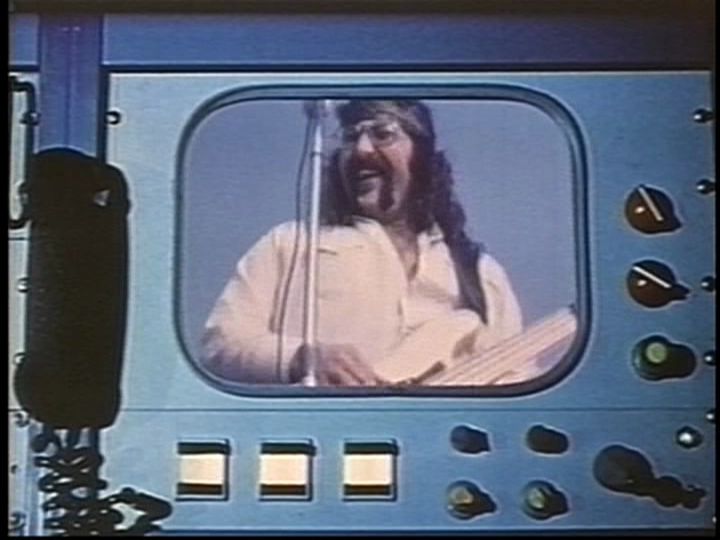
      In the midst of that, we get live footage of the Edgar Kelly Band, a regional act meant to represent the big rock concerts of the 1960s. Each shot is carefully curated to make a crowd of about 20 people seem like 20,000.

      So is this As I Watched: The Movie? Which would basically be The White Gorilla 2, minus the gorilla. Ergo, White Primate in a Cave, Watching Other People Do Things. Yes?

      Maybe we could live with that, I guess. But wait, what about this guy? Where's he?

      So, out with it: the first 20 minutes of The Lucifer Complex are nothing more than an elaborate intro for a shitty, unfinished movie about secret Nazis in South America, starring Robert Vaughn and Keenan Wynn.

      That's it. That's what all these nostalgic helicopter shots and edutainment clips are building towards: nothing. They're just padding. They just wanted to salvage the footage from a shitty unfinished Nazi movie -- Hitler's Wild Women was the working title, if that gives you an idea -- and make a buck.

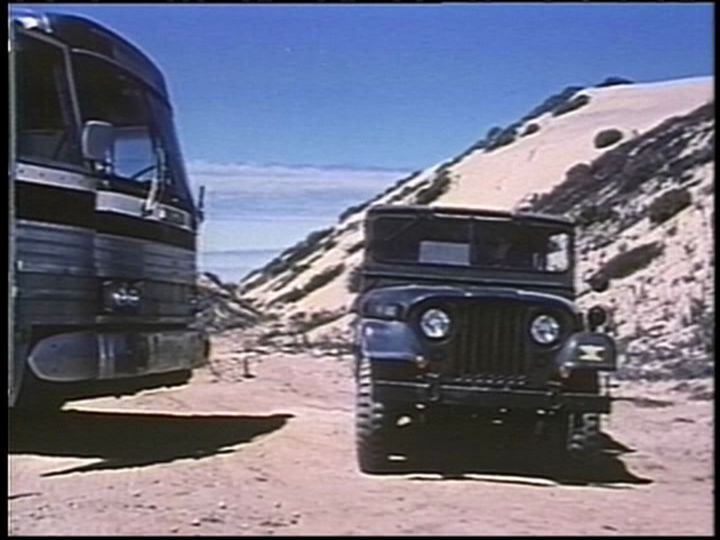
      Now, to be clear, this particular shitty Nazi movie is hilariously bad (though not nearly as fun as Commando Mengele). OK, it's almost intriguing for about 10 minutes, when it's not clear why a bunch of dignitaries have been gassed to death aboard a bus --

      -- or why Vaughn gets clocked when he goes to check the situation out.

      But soon enough, Nazis.

      And Robert Vaughn, looking pissed off -- does he ever not look pissed off? -- in an elevator, with men with ridiculous sunglasses and mustaches and head wraps.


      And a fetus in a vessel.

      And more Nazis. Lady Nazis.

      And long battle sequences in which Vaughn conveniently isn't visible, since he's allegedly inside a tank. That'll save some $$$.

      And Hitler also shows up -- 

      -- and he shoots lasers at people.

      And then the guy in the cave goes for a walk, because everyone else is dead. The end.