If you're a loyal Umbrellahead reader, you'll remember that a little while back we encountered a bit of a problem with Disc 46 of our 250-movie Horror Collection. Since this disc of "Western Legends" technically came as part of our beloved box, it seemed only right to give these next four films a proper viewing and an entry on the blog.
But westerns? Though we're grateful to other folks and their blogs for keeping them alive in our collective memories (and, on occasion, our interests do intersect), the oater isn't exactly our schtick. Certainly this was going to be a tedium of tumbleweeds, chiseled chins, drunken brawls, mob justice, and southern California being variously passed off as Texas, Colorado, Wyoming, or some other generic western locale.
Convinced that each movie would be a barely distinguishable carbon copy of the others, K googled "western movie cliches" and prepared a YEE-HAW bingo board (courtesy of buzzword/bullshit bingo) to add at least some measure of spice to the affair:

Ah, the best-laid plans. In went Disc 46, and out galloped:
But westerns? Though we're grateful to other folks and their blogs for keeping them alive in our collective memories (and, on occasion, our interests do intersect), the oater isn't exactly our schtick. Certainly this was going to be a tedium of tumbleweeds, chiseled chins, drunken brawls, mob justice, and southern California being variously passed off as Texas, Colorado, Wyoming, or some other generic western locale.
Convinced that each movie would be a barely distinguishable carbon copy of the others, K googled "western movie cliches" and prepared a YEE-HAW bingo board (courtesy of buzzword/bullshit bingo) to add at least some measure of spice to the affair:

Ah, the best-laid plans. In went Disc 46, and out galloped:
Grade: C-

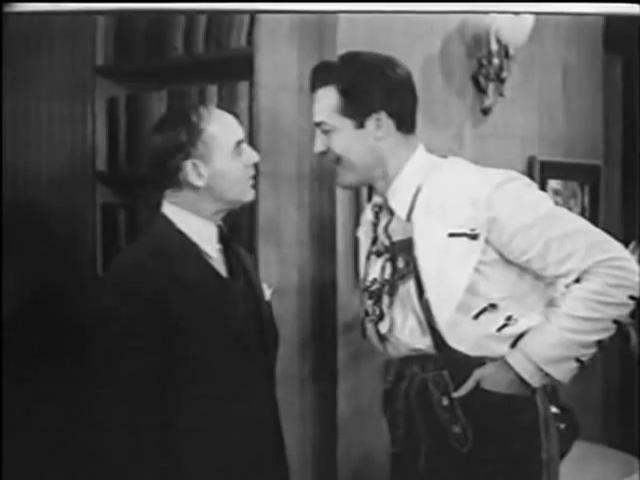
Mounties? Yes, Mounties, as in the Royal Canadian Mounted Police: Sergeant Renfrew (James Newill) and Constable Kelly (Warren Hull), cruising through the snow-capped peaks and lushly coniferous landscape of the Yukon.

Ha! It really is Southern California after all - Big Bear Lake, apparently.
So much for those tumbleweeds. But this Northwestern does tick a few of the boxes. There's a gold heist aboard the steamship, which is about as close as we're likely to get to a bank robbery in the Canadian wilderness.

Also, the inevitable unflattering native stereotypes, with characters named "Slant Eye"and "Eskimo Pete" alongside an old, pig-tailed, pipe-smoking First Nations woman, whose casting notice likely emphasized the word hag in boldface.

Not that we were still playing YEE-HAW bingo at that point; when Renfrew the Mountie started crooning his head off in a bid to woo the tricksy Ann 'Angel' Chambers (Jean Carmen), K. realized she'd been thinking John Ford or Clint Eastwood, when she should have channeled Gene Autry and Hopalong Cassidy. These are poverty row westerns, where the intentions are wholesome, the banter witty, and the cowboys (or Mounties) singing.

Anyway, considering it as a Monogram picture, there's nothing much to complain about with Crashing Thru. The plot has your standard elements -- the crime, the chase, the double-cross, the distressed damsel, the final showdown -- and they're dealt with in systematic and straightforward (and sometimes stylish) fashion.

The action is meted out judiciously between the more talky sequences, though the exposition never seems pointless. The piney wilderness setting is certainly a welcome change from the spooky old mansions or mean city streets of other '30s fare.

As heroes, Renfrew and Kelly are a bit of a goof -- the aforementioned crooning (to ladies, and to one another), plus an embarrassing hoodwink involving the boiler room -- but one must admit, there's something that's just inherently funny about Mounties.

Grade: D+
If Complete: C-

George O'Brien is an assface. Granted, half our Umbrellahead team is of the opinion that Mr. O'Brien is, in fact, just fine in the looks department, but that half is not the half that is writing this review.

If your ideal rugged western protagonist is a slightly paunchy middle manager with a stupid haircut and weird mixture of fey smugness and dull-witted confusion permanently etched on his stupid assface, then The Dude Ranger is ready and waiting.

OK, the paunchy part isn't quite fair -- Georgie was apparently quite the athlete in his day, with some (nearly) nudie photos to prove the point. The haircut and the silly expressions may be holdovers from his silent film days, when that look was the thing.

And true, the point of the film is that George's character Ernest Selby, aka Dude Howard, is an ostensibly inexperienced Easterner come to collect his ranch inheritance, and not a dyed-in-the-denim, whip-thin, leanly muscled, life-long grizzled mountain man.

Y'know, like these other guys around the ranch.
But if we can comment upon all the boot-fa-chays and handsome features of the women we regularly encounter in our watchings, then George O'Brien is going to get his turn in the firing line.

With all that out of the way, the film itself, then -- again, it's poverty row, and a serviceable example. It has the usual tropes -- the comic relief sidekick (Syd Saylor, another singing cowboy), the double-cross, and even a perennial favorite of the period, the pretty girl with a male relative in a wheelchair (Irene Hervey as Anne, and Henry Hall as her dad Sam, respectively).

Unlike Crashing Thru, this one was a bit harder to follow at times, at one point necessitating a rewind so that K, perhaps overly distracted by the abundance of assface, could grasp the finer points of a cattle rustling arrangement. As we later found out, some of the confusion wasn't entirely our fault. As with many other Mill Creek offerings, this version of The Dude Ranger had several scenes cut, ranging from the relatively minor (Anne does some banking) to near-critical (the entire backstory to Anne's dance ruse).

Despite the hacks to the plot and the assface on parade, The Dude Ranger had enough of a story and consequent action to keep things interesting up until nearly the end. The denouement did feel a bit like they ran out of runtime and wanted to wrap things up quickly, but given the scenery on offer during the final chase (for once it's not California!), we're willing to cut a bit of slack.

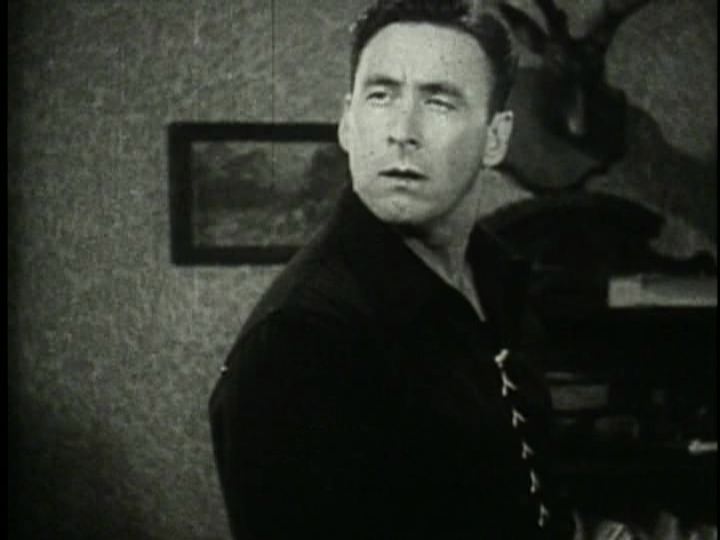
George O'Brien is an assface. Granted, half our Umbrellahead team is of the opinion that Mr. O'Brien is, in fact, just fine in the looks department, but that half is not the half that is writing this review.

If your ideal rugged western protagonist is a slightly paunchy middle manager with a stupid haircut and weird mixture of fey smugness and dull-witted confusion permanently etched on his stupid assface, then The Dude Ranger is ready and waiting.

OK, the paunchy part isn't quite fair -- Georgie was apparently quite the athlete in his day, with some (nearly) nudie photos to prove the point. The haircut and the silly expressions may be holdovers from his silent film days, when that look was the thing.

And true, the point of the film is that George's character Ernest Selby, aka Dude Howard, is an ostensibly inexperienced Easterner come to collect his ranch inheritance, and not a dyed-in-the-denim, whip-thin, leanly muscled, life-long grizzled mountain man.

Y'know, like these other guys around the ranch.
But if we can comment upon all the boot-fa-chays and handsome features of the women we regularly encounter in our watchings, then George O'Brien is going to get his turn in the firing line.

With all that out of the way, the film itself, then -- again, it's poverty row, and a serviceable example. It has the usual tropes -- the comic relief sidekick (Syd Saylor, another singing cowboy), the double-cross, and even a perennial favorite of the period, the pretty girl with a male relative in a wheelchair (Irene Hervey as Anne, and Henry Hall as her dad Sam, respectively).

Unlike Crashing Thru, this one was a bit harder to follow at times, at one point necessitating a rewind so that K, perhaps overly distracted by the abundance of assface, could grasp the finer points of a cattle rustling arrangement. As we later found out, some of the confusion wasn't entirely our fault. As with many other Mill Creek offerings, this version of The Dude Ranger had several scenes cut, ranging from the relatively minor (Anne does some banking) to near-critical (the entire backstory to Anne's dance ruse).

Despite the hacks to the plot and the assface on parade, The Dude Ranger had enough of a story and consequent action to keep things interesting up until nearly the end. The denouement did feel a bit like they ran out of runtime and wanted to wrap things up quickly, but given the scenery on offer during the final chase (for once it's not California!), we're willing to cut a bit of slack.

Grade: C

Literal assface
If, dear reader(s), you thought the negative reaction to George O'Brien in The Dude Ranger was a tad hyperbolic, then perhaps you'll understand why when you see who stars in the film immediately following:

Yup, here we go again with this assface playing yet another fresh-off-the-locomotive greenhorn -- this time Larry Knight, who's convinced his path to self fulfillment lies in the breaking of a charismatic bucking bronco.

Or wooing -- sometimes it's hard to tell.
After making an ass of his assface at the local ro-DAY-o (as in Drive) and missing his westbound train, Mr. Aw-Shucks bumbles his way to the ailing Cross Triangle Ranch, ingratiating himself with owner Dean Baldwin (Richard Carlyle), his conveniently of-age daughter Kitty (Dorothy Wilson), and inconveniently-in-love-with-said-daughter foreman, Phil Acton (Paul Kelly).

That last qualifier should clue you in to one of the major conflicts of this movie; the other concerns dastardly neighboring rancher Nick Gambert (Harry Woods) and his opportunistic water-hogging ways (score a point for YEE-HAW bingo).

The former of these conflicts is handled in rather gentlemanly fashion, with all parties having evidently graduated (with honors) from the school of No Hard Feelings.

And, without giving too much away, the latter conflict comes to an explosive head, thanks to Knight having also earned an advanced certificate from the Acme Corporation Academy in Suspenseful Deployment of Pyrotechnics.

meep meep
With an assist, naturally, from Chekhov's black stallion.

Despite being tired of looking at that face for two films in a row, we thought this one wasn't half bad. Production values seemed somewhat better than in Crashing Thru or The Dude Ranger, and there was the added benefit of no missing scenes (always a plus). And watching the final plan unfold -- complete with gun fightin', tunnel crawlin', and a very clever way of escaping blame -- was, ahem, simply a blast.

Grade: D

What does one say about a movie co-starring three grown-ass men whose real-life silly nicknames are also the names of their characters? A film where John "Dusty" King, Max "Alibi" Terhune, and Umbreallahead un-favorite Ray "As-I-Watched" "Ass-Faced Voyeur" "Always The Ape" Corrigan (modestly going by just "Crash") share top billing with a ventriloquist's dummy named Elmer Sneezeweed?

This was the western we'd been unconsciously bracing for from the outset. Hokier, jokier, and overall oatier, it's just one of two dozen Monogram-produced "Range Busters" films, the majority of which star the exact same trio, doing, we imagine, the exact same western-y things each time, with minor variations.

Y'know, western-y things, like light bondage.
So, what does one say? Not a whole lot.

And frankly, I'm just plain tired of writing about Westerns.
We've got some pretty typical stuff -- a lynch mob on horseback; the furniture-busting barroom brawl; Mr. Bad Guy attempting to pass as a law-abiding citizen (though maybe he should've reconsidered the black hat); and exactly one eligible spunky female in the 18-25 age range.

Alas, still no bingo.
Unfortunately, the ratio of talkiness to action is skewed in the wrong direction, without the benefit of a compelling plot. Yawn. Maybe the other Range Busters have something more exciting to offer, but if this one is a representative example, then we'd be dummies to keep watching.