Showing posts with label my eye. Show all posts

Thursday, January 14, 2021

Beat them drums

While Mill Creek now sells a 200-movie box called Tales of Terror, they used to sell a completely different 50-pack of the same name. That older Tales of Terror 50-pack was then incorporated, unchanged, into their Horror Collection 250-pack -- aka our ten-year project completed at the end of 2018.

However, as we've previously noted, an even older version of Tales of Terror had a few interesting movies that were later cut from the set, including a Tod Slaughter film we still haven't seen.

So we sat down to watch two of those films, with no other plan in mind, only to discover they had a huge theme in common. To quote Ice-T, poet of our time:

Way down in New Orleans, yeah
I met this old lady...

If you know what follows that incipit, you know what's coming. And -- wouldn't you know it? -- the first of these movies isn't just set in the Pelican State, it is the Pelican State.


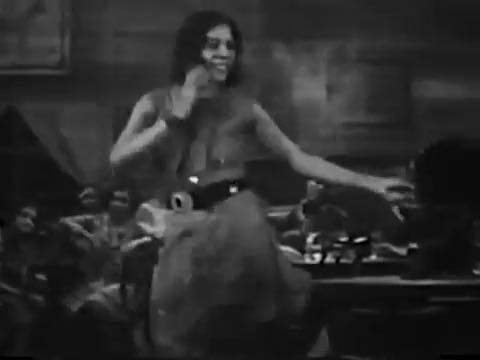
    Drums O' Voodoo (1934)
    [aka Louisiana, aka She Devil] 

    Grade: D-


    Well, when we see the Sack emblem, we know a few things about the film to come: it'll be short, and it won't be very good but will at least be interesting.


    That pretty well sums up Drums O' Voodoo, a morality play in the figurative sense, and just about the literal one as well: it was adapted from a stage work, Louisiana, by one J. Augustus Smith, and with a lead antagonist named "Tom Catt" it's clear the brushstrokes will be broad in this one.


    Smith also plays the preacher Amos Berry, also known as (sigh) Elder Berry. His checkered past becomes leverage for Mr. Catt in the latter's quest to bang nubile niece Myrtle (Edna Barr) --


    -- and since Myrtle's already started jookin' in those jook joints, the danger is clear and present. The power of Christ can't compel Tom Catt to back off, but maybe something else can do it? You remember how things ended for Ice-T, don't you?


    Thus enters Aunt Hagar (Laura Bowman, whom we know from Son of Ingagi), whose sonorous voice and foreboding manner -- "Leave everything to me...and the vooooo-dooooo" -- make it clear that this is a woman not to be trifled with. Does trifling ensue? You betcha!


    Another blog, Atom Mudman's A-List, has already covered Drums O' Voodoo with both greater depth and greater sympathy than we can offer, so no need to rehash his good work.

    Though Drums is certainly unusual in many ways (some of which Mr. Mudman details), we unfortunately found most of it excruciating, give or take. As a poorly-preserved document of a poorly-adapted screenplay, what we have here can't really be characterized as "cinematography", but more the equivalent of setting up the camcorder at the back of the auditorium to capture those precious moments of your kid as Tree #3. 


    When you put that together with amateurish acting, a cornball script, and a print in absolutely trash condition, there's not much left. However there's some documentary interest in seeing and, especially, hearing scenes of black American religious life in the early 1930s.

    That part is kind of neat and ought to be known to scholars -- and since apparently Drums O' Voodoo was included in the 2017 UCLA Festival of Preservation (under the She Devil title), maybe there's a copy out there that actually looks decent and includes an intact ending. (This one sure doesn't -- shortly after the film's climax, it unceremoniously Poochies back to its home planet.)


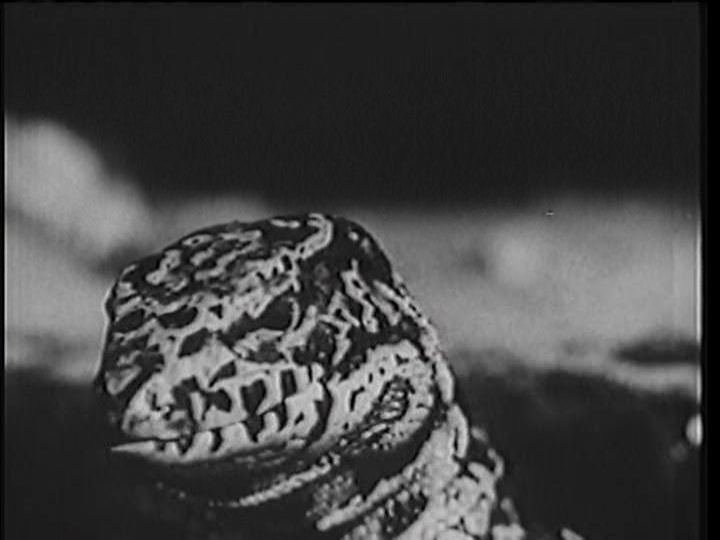
    And hey, Laura Bowman does get a few good lines at the expense of Tom Catt, observing that he's "not as human as the alligator, or gilly monster, 'cause even they don't tackle the females when they ain't willin'!"

    Preach, Aunt Hagar, in your witchy way, and with your one facial expression.


    And speaking of gila monsters:


      I Eat Your Skin (1971, filmed 1964)
      [aka Zombies, aka Voodoo Blood Bath, etc.]

      Grade: F


      Right away we note: yes, after the film sat on the shelf for 7 years, it was retitled I Eat Your Skin so that it could play on a double-bill with I Drink Your Blood. Fine.

      But the new title technically isn't deceptive, as some have claimed, since there is a skin-eating...condition...that plagues some of the characters in this film.


      OK, with that out of the way? Gosh, this movie sucks. Yes, regional filmmaking; yes, seven years on the shelf; yes, all of those things. But this film isn't fun in the way that The Giant Gila Monster or Teenagers from Outer Space is fun, nor in the way that Miami Connection or Troll 2 is fun.

      It's just a stupider, slower, duller version of a half-dozen movies we've seen already -- akin to Teenage Zombies or The Horrors of Spider Island, but not even as good as those. (And yet Mill Creek felt compelled to retain it on the Chilling Classics box set: the world wonders.)

      I Eat Your Skin tries to be funny, isn't; tries to be sexy, isn't; tries to be scary, isn't. This movie just isn't. It has an overarching lack of is-ness, you might say, except in the sense communicated by sentences like:
      • Watching this movie is exactly what I don't want to be doing right now.
      • This film is a dispiriting waste of time and celluloid.
      • Experiencing these 80 minutes is as titillating as a Dixie cup half-full of wet sand.


      Oh, I Eat Your Skin successfully "is" at least one other thing: disconcertingly racist even for a 1964 film, leaving one to wonder how it came off in 1971.

      In this film the black people are the bad people, full stop, while the zombified oafs that lumber around the island are uncomfortably reminiscent of the freakish giants in The Lost City. The whole thing is just icky.


      Watching Mill Creek boxes could easily give the impression that the early 1960s were an awful time for film: smutty and smirking, grotesque and heavy-handed, trashy yet still bound by prior norms and shortcomings, and subjecting viewers to a constant bombardment of sub-Mancini big-band "jazz" clichés.


      I Eat Your Skin does little to undermine that impression. It's the kind of film that pushes screeching people into pools and thinks that's funny -- 


      -- or sets the action in a place called "Voodoo Island" and thinks it's engaging in effective storytelling.


      It's got trombones, and tremolo guitars, and mad scientists, and voodoo ceremonies, and nothing we wanted. We rued its beginning and welcomed its end. We hope you appreciate our sacrifice in watching it.

      Wednesday, August 19, 2020

      Have a little Faith: or, here comes the choo choo anew

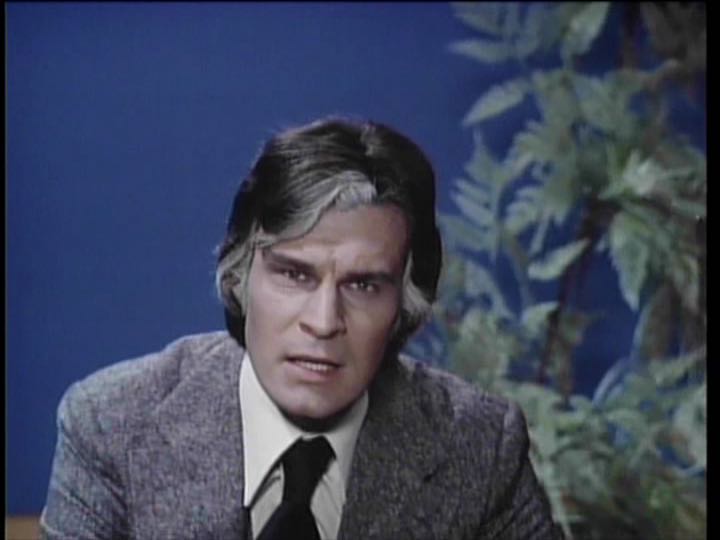
      If The Umbrellahead Review had to be represented by just one actress -- if our reasons for doing this could be summed up by one woman's cinematic oeuvre and its lasting effect on us -- then, naturally, that divine emissary would be Faith Clift, aka Faith Yordan.

      True, we haven't seen much of her work, but films like The Nightmare Never Ends and Savage Journey are the epitome of why we love to watch movies "from the wrong side of the tracks", so to speak. And her marriage to screenwriter Philip Yordan, why, how felicitous that it offered recurring opportunities to practice her craft!

      Now, we find ourselves here once more, summoned back to her warm and apple-cheeked embrace. And -- speaking of tracks -- it's all thanks to that steamiest form of transportation, the locomotive.


      Horror Express (1972)

      Grade: C+

      It's a lazy cliché to point it out, but lazy clichés are often true: the presence of actors like Christopher Lee and Peter Cushing pretty much ensures this tale of glowing eyes, smooth brains, and hairy hands will be at least watchable.


      In fact, the equation cuts both ways: having those two legends on board probably encouraged the film's screenwriters to make an extra effort beyond just saying "Hey, let's put a monster on a train!" 

      The extra drafts were worth it, as from the beginning, the script is noticeably more crisp and intelligent than your average, brainless horror fodder.

      True, there are occasional dud lines, as when the striking Countess Petrovska (Silvia Tortosa) greets Lee's character, Prof. Saxton, by reeling off a series of banalities about his home country:

      "Ah, yes, England. Queen Victoria, crumpets, Shakespeare."

      And Shakespeare this ain't.

      On the other hand, take the scene where Dr. Wells (Cushing) is enjoying the dining car's services with the mysterious Natasha (Helga Liné), who looks a bit too much like the Countess for the film's own good.

      (Things got confusing as hell when one of them got killed off: only then did we realize they were two separate characters. Isn't it a casting director's job to foresee this kind of thing?)

      When his pleasant meal is interrupted by a request for his medical services, he asks his colleague and assistant Miss Jones (Alice Reinheart) for help, and she gets off a nice one-liner at his expense:

      Wells: "Miss Jones, I shall need your assistance."
      Jones (glances at Natasha, then smirks): "Yes, well, at your age I'm not surprised."
      Wells (indignantly): "With an autopsy!" 
      Jones: "Oh, well, that's different."

      That said, at least one review of Horror Express describes the first half as banal, the second as riveting. We found it rather the other way around: the first half was intriguing, but after the all-important halfway point, the film's plot began to get mired in silliness.

      The second half is also marred by the abrupt arrival of a character who gets shoehorned in, hogging the spotlight for several minutes while adding little to the proceedings...

      ...but we don't mean Faith Clift! She does make her first appearance in the second half, true, as an American traveler. However she only gets a few lines of dialogue over the course of a few scattered scenes, and her delivery of those lines is -- dare we say it? -- utterly unremarkable. Competent, even.

      The only odd thing about Ms. Clift's performance is that she blinks so frequently that it's hard to get a screenshot that doesn't look like she's drugged, or half-asleep.

      Then again, in one of her scenes, she actually is asleep -- which is a very effective way to minimize awkward line readings.

      No, the unwelcome interloper is Telly Savalas as Captain Kazan -- an irreverent, sadistic martinet who spends most of his limited screen time chewing the scenery. Some reviewers seem to have thought highly of Savalas's work in Horror Express, but from our point of view, he's an annoyance whose boorish screen presence breaks the movie's spell.

      And -- speaking of irreverence -- Horror Express continues the trope, seemingly inevitable in Yordan-related films, of featuring a conflict between science/atheism and piety/religion. Our spokesperson for the latter group is mad monk Father Pujardov (Alberto de Mendoza), who bears a vague resemblance to the perennially put-upon Spanish tennis ace, David Ferrer.

      For further background on Horror Express, and all things Yordan, we warmly recommend Bernard Gordon's book Hollywood Exile: or How I Learned to Love the Blacklist. Many of the stories Gordon tells are illuminating or funny, but at least one is rather sad: apparently this was Peter Cushing's first film after the death of his wife Helen. Cushing always struggled with nerves right up until the start of shooting (after which he was fine), but in this case his depression was so crushing that he was determined to back out at the last minute.

      Some clever tactics from Christopher Lee rescued the situation, and shooting began the next day as scheduled. Still, one hopes that Cushing -- who outlived his wife by two decades, but once said that "the heart, quite simply, [had] gone out of everything" after Helen's death -- took some comfort, or at least found temporary relief, in his work and the company of his colleagues.

      Oh, and a word to the wise: if sharp things going into eyes make you uncomfortable, you might want to skip this one.

      You also might want to avoid ordering the whole fish, just in case the knife slips. (Pop!)


      Night Train to Terror (1985)

      Grade: F
      Variety Is the Spice of Life Bonus: D-


      And now the Class-O-Meter takes a precipitous dive -- which (once again) could be foreseen if you knew in advance that Night Train to Terror is essentially a salvage job. It takes two movies that had already been released, plus one unfinished project sitting on the shelf, and mashes them all together into a 90-minute anthology film.


      And how does it accomplish this? Why, with that freshest of devices, the wraparound story -- though at first it seems like a wraparound song, since Night Train to Terror starts proceedings by offering up this troupe of fresh-faced youngsters:

      You see, this is a family affair in more ways than one: young Byron Yordan (front and center above), son of Philip and Faith, is the leader of the "rock band" riding Night Train to Terror's titular locomotive.

      The band pops up again after each segment, gamely dancing and lip-synching their way in piecemeal fashion -- one verse at a time -- through the only song they know how to play, "Everybody But You".

      This number, a kind of 1950s throwback using 1980s instruments, deserves to have its lyrics documented in full somewhere on the Internet:

      Daddy's in the dining room, sorting through the news
      Mama's at the shopping mall, buying new shoes
      Everybody's got something to do -- everybody but you!

      Come on and dance with me, dance with me, dance with me, dance with me [x2]
      Everybody's got something to do -- everybody but you!

      Sister's on the telephone, gossiping again
      Junior's at the arcade, smoking with his friends
      Everybody's got something to do -- everybody but you!

      (chorus)

      Johnny's been a bad boy, staying after school
      Principal is working hard, making new rules
      Everybody's got something to do -- everybody but you!

      (chorus)

      It pretty much defines "incessant repetition". And splitting it up into a total of four discrete appearances over the course of the film? Not such a clever idea.

      His costuming may have zero continuity, but at least Byron Yordan is handsome enough in a clean-cut way -- and a passable enough breakdancer -- that he doesn't make an ass of himself.

      Anyway, the VIPs on this train ride are God and Satan, credited as "Himself" and "Lu Sifer" onscreen, but actually played by Ferdy Mayne and Tony Giorgio, respectively. They spend the ride arguing over the characters in the recycled segments, and whether their souls should go to Heaven, Hell, or Purgatory.

      All setup for an "As I watched..." routine, naturally.

      We've read that Mayne was, justifiably, embarrassed when he saw the finished film. No word on whether it was because the script required him to describe the band's music as "quite touching".


      We also get a serenely imperturbable and impeccably polite black conductor (Gabriel Whitehouse), which vaguely feels like a lazy racist trope, though it's hard to pin down exactly why.

      Then again, given that the only other black character in Night Train to Terror is named "Prince Flubutu" (Mark E. Ridley), maybe it's not that hard to figure out.

      He shows up in the second segment -- adapted from the 1984 film Gretta aka The Death Wish Club, which pretty much tells you the plot of that one -- and they don't even get his exit line right: "Excuse me while I smoke!" should clearly have been "I hope you don't mind if I smoke!", don't you agree?

      Some of the decisions that went into compiling Night Train to Terror go well beyond the bizarre. One of them is the inclusion of two different segments in which Richard Moll (here billed as "Charles") is a major character. Did they think we wouldn't notice that the murderous orderly in the first segment --


      -- is the same, incredibly distinctive-looking man who plays a strident atheist in The Nightmare Never Ends?

      Yes, we're blissfully reunited with that watershed film, though here it gets hacked down to about a third of its original length -- which still gives it a higher percentage of Night Train's running time than any other segment.

      As a result, the Nightmare narrative is largely undamaged, with all our favorite Papini moments intact. (Brigham Young sure is looking rough these days.)

      In fact, we get bonus content of a sort, as The Nightmare Never Ends has now been augmented by some seriously off-the-wall claymation sequences. They showed up earlier in Gretta, and we don't know if that film already had 'em, though it's hard to imagine how the scene with the killer fly played out otherwise.

      But they sure do add an odd twist to Nightmare -- even if the net effect is to make us expect a California Raisins cameo.

      The other weird thing about Nightmare is that several characters' lines have clearly been overdubbed by a different voice actor. Once again, this had already happened in Gretta, as whenever the loony Mr. Schmidt (William Charles) speaks, it's with a thick pseudo-Russian accent and a totally different acoustic from the other characters.

      But things strike much closer to home, for -- brace yourselves -- Faith Clift has had all her lines replaced by another actress! We were wondering why her performance seemed so un-cervine and cortically intact.

      Given that a few tweaks were made to the Nightmare plot, maybe it was necessary for continuity purposes. But still, is there no justice? Is there no exemption for family?

      Comfort her, "Charles". Comfort your apple-cheeked truelove.


      Saturday, October 27, 2018

      Mom, I want my own production!

      Mention "director William Wilder", and people will think you're referencing the man behind Some Like It Hot, etc., while being weirdly formal about it for some reason. Right?

      But no, Billy's real name was...Samuel! Meanwhile, his elder brother was also a director, whose first name was indeed William -- but he went by W. Lee Wilder.

      To recap, then: Samuel is Billy, whereas William is W. Lee. And there's no Bimmy, but Mark Dacascos is lurking around here somewhere (holding up a sign saying "Will 'BE-E-E-ER!' for food").
      So, it's a case like that of George Waters and Roger Barrett, wherein two closely related artists swap names for some reason (to annoy their biographers, probably).

      That said, Roger and Syd have roughly equal claims to fame, while -- as we'll see in this next pair of films from spa-a-a-ace -- one of the Wilder brothers was the dramatically more accomplished of the two. Still, the "other brother" had his charms!


      Killers from Space (1954)

      Grade: D

      It became a dire cliché within a few years, but it's forgivable for a 1954 film to begin with stock footage of a nuclear test. Certainly it was timely, and how else to depict such a thing without CGI (or water tanks and upside-down cameras)?

      Still, having your main title come out of the mushroom cloud is probably gilding the lily:


      So we have Dr. Doug Martin (Peter Graves), a scientist aboard the unfortunately-named Tarbaby Two, whose job it is to take aerial radiation measurements near the test site. Things are going fine when suddenly, his plane loses control and plummets straight into the ground.

      There's no way Dr. Martin could live through a crash like that. When his wife asks if there's any hope, Col. Banks (James Seay) has to tell Mrs. Martin (Barbara Bestar) -- and her unfortunate nose (also Barbara Bestar) -- that there isn't.

      But his body is nowhere to be found in the wreckage: what gives? And wait, who's that stumbling up to the guard house?

      Yes, it's the man who survives the unsurvivable, revives from the unrevivable, but (to paraphrase one of the greats) "comes back different". A bunch of movies in this box set have already used this trope -- Night of the Blood Beast and The Man with Two Lives come to mind -- but the approach in Killers from Space is a bit more Manchurian Candidate meets Freejack, if you catch our drift.


      Either way, as his friend and doctor Major Clift (Shepard Menken) notes, "Your plane was completely demolished, the pilot burned to death -- and you show up, the picture of health!" In fact, the only outward evidence that anything at all has happened to Dr. Martin is a brand-new, yet well-healed surgical scar on his chest. 

      One nice thing about Killers from Space is that the other characters aren't idiots. They haven't even seen The Twilight Zone, yet only 10 minutes into the film, they're already asking questions like "Did you ever stop to think that perhaps...this Dr. Martin isn't really the Dr. Martin?"

      How many times have we seen movies -- or episodes of Star Trek -- where we tore our hair out at characters' contrived obliviousness to such things? Not so with Killers from Space.

      Still, Doc Martin seems like himself, knows all the right things to say, and is one of the two key men on this nuclear test project. Couldn't we just reinstate him? What do you think, mysterious googly eyes that just materialized on Venetian blinds for some reason?

      The best part of Killers from Space happens over the next 20 minutes or so, as Dr. Martin's behavior becomes more and more erratic, starting with night terrors...

      ...and ending in acts that could easily be prosecuted as treason, or at least espionage.

      In another film, or a half-hour Twilight Zone episode, Dr. Martin's spiral of self-destruction would take up most of the running time. But we're not even halfway through Killers from Space when Dr. Martin is cornered, captured, given sodium amytal, and asked to recount the events before and after his plane crash.

      Now, if you call your movie Killers from Space and don't want to get hunted down by angry filmgoers, sooner or later you're obligated to fulfill the equation. You could throw in meteors, alien microbes, UFOs, whatever you like, even total and obvious nonsense. But it has to be "from spa-a-a-ace".

      So, what do F. Lee Wilder and his scriptwriter son Myles have in store for us? Check it:

      It's the Marty Feldman family reunion...in spa-a-a-ace!

      Well, no, it's actually underground, and (if you haven't guessed it already) this is where things get very silly. At first it's the good kind of silly, because you get things like the above, or this:

      Or this:


      And heck, if all this amounted to Googly Eyes: The Movie!, then fair enough. By this point the film's already put googlies on a car accident, so doubling down on the proposition would seem reasonable.

      But instead, Killers from Space decides to throw its lot in with another, less noble trope of 1950s science-fiction movies...

      ...the "let's use close-up footage of a common animal or insect, and pretend it's a giant beast" one.

      We've seen this sort of thing before, of course (sad little mushrooms that we are), but Killers from Space provides the most interminable example we've ever seen. It's hard to believe the core sequence only lasts about 5 minutes -- because those were some long, long minutes.


      In many ways the second half of Killers from Space bears an odd resemblance to Teenagers from Outer Space. Just as in Tom Graeff's film, we've got hospitals, giant arthropods, and power stations as keystones in our plot.

      But without charismatic leads or a sweet sensibility, there's nothing to sustain Killers from Space once its plot deflates. It's far from the worst, but just doesn't pay off on what could have been an intriguing premise.

      By the way, anyone notice that W. Lee Wilder (or his cinematographer) really has a thing for Venetian blinds? They're literally in the last shot of the film, which makes for a nice symmetry with its beginning.


      Phantom from Space (1953)

      Grade: C-


      OK, we complained about the "giant" footage in Killers. But Phantom from Space begins with 20 of the most unpromising minutes we've ever encountered in a film, at least since our Umbrellahead journey began.

      Once again, we start out with stock footage and voice-over narration -- the perennial sign of a director whose acquaintance with "show, don't tell" is limited to strip joints -- and then throw in some compasses pirouetting around maps, for kicks.

      The MacGuffin, such as it is: an unidentified UFO has streaked across the Pacific Northwest, and is now interfering with radio and TV reception. Send out the mobile units with their detector dishes!

      Show their parked cars at bizarre angles for absolutely no discernible reason!

      One of the mobile units is flagged down by a distraught woman, Betty Evans, whose aging husband and (ahem) "friend" were just attacked by a mysterious, helmet-wearing man.

      Mr. Evans dies, but the friend, Pete, pulls through with merely a bump on the head...and investigators suspect that sketchy extracurriculars are going on between him and Mrs. Evans.

      And maybe they are! To the film's credit, it never does rule that one out -- and, if they hadn't been already, there's pretty much no chance they don't start banging after this.


      The cops go after Pete aggressively, especially once he claims the occupant of the helmet appeared to have no head. Handed a fish story like that, they feel comfortable writing the whole affair off as "one of those things...pretty girl, older husband, young boarder."

      But then new bodies turn up, and new testimonials confirm Pete and Betty's story. Hmmm, could all this have anything to do with the UFO? And what are "Ten-Ring Tips", anyway?

      (Answer: it's a Smith & Wesson poster, apparently very collectible nowadays.)


      What's the logical next step? Bring in the military and the scientists, so they can speculate at each other in claustrophobic rooms with (once again) lots of Venetian blinds, and offer up lines like "This guy's walking around in a monkey suit...killing people."

      All this had us groaning in dismay, and bracing ourselves for yet another mind-numbing cheapo with tons of talky exposition and very little action -- you know, like The Snow Creature (also a W. Lee Wilder joint).

      But then something happened that was totally unexpected: Phantom from Space became...engaging. Not good, exactly, but taut enough to hold our interest and keep us from guessing exactly where the narrative was going next.

      And the dialogue had a few crisp moments, like the moment when scientist Dr. Wyatt (Rudolph Anders) introduces sexy scientist Barbara Randall (Noreen Nash) to Lt. Bowers (Harry Landers). Noting Bowers's Tex Avery-like response, Dr. Wyatt adds a quick and pointed addendum:

      "I don't believe you have met my assistant, Barbara Randall...(pause)...it's Mrs. Randall, Lieutenant!"

      And that's the end of that: no subplot, no sexual tension, no convenient killing of Mr. Randall by the monster. Who knows if Bowers had a chance if things were different, but they're not, and that's kind of refreshing.

      On the other hand, Major Andrews (James Seay again!) certainly doesn't have a chance if -- as IMDb's "Goofs" page suspects -- he unleashed a silent tide of flatulence on-camera. That would explain why, in the middle of an innocuous scene, Noreen Nash suddenly shoots him a series of very dirty looks. James Seay, disappointer of women and their noses.

      Unfortunately most of Phantom's intriguing threads turn out to be little more than shaggy-dog stories...

      ...like the rhythmic, coded tapping of a pair of scissors, which had us guessing: is it the atomic number of an element? A known mathematical series? A mangled version of the intro to "YYZ" by Rush?

      Alas, the film never bothers to tell us -- which adds an element of realism, we suppose, but also makes for a less satisfying story.

      Still, at least we get some more weird-ass camera angles.