Showing posts with label edited serial. Show all posts

Sunday, December 16, 2018

No such place

We can muster enough suspension of disbelief to get through most movies, no matter how thoroughly science may have refuted their premises. No one will be walking around on Venus anytime soon; wasps don't make royal jelly; there isn't an island where tigers and lions coexist; you can't freeze a turtle in ice and bring it back to...

...uh, never mind on that one.

Still, these next two films -- which also happen to be the last two black-and-white movies we watched in 50 Sci-Fi Classics -- really pushed our limits by setting their action in places that literally, paradigmatically don't exist. (At least you can land on Venus.)


    Planet Outlaws (1939/1953)

    Grade: D+

    Planet Outlaws isn't just the last of the B&Ws, it's also the last example on the 250-movie pack of that beloved format, the edited serial. Sigh.

    At least it's not coy about its origins:

    Someday we'll learn to keep Buck Rogers and Flash Gordon straight -- and it doesn't help that Buster Crabbe played both roles, of course.

    At least now we've got the basics down, and know that Buck was the one who got hit with knockout gas in the 20th century and woke up in the 25th: hence Duck Dodgers.

    We first encountered Sherman S. Krellberg when he brought us The Lost City via his company "Super-Serials", which now sounds like a line from an episode of South Park but whatever. To freshen up this 14-year-old release, Krellberg decided that a wraparound narration would be just the thing -- isn't it always? -- and that he was just the guy to do it.

    (IMDb doesn't make it 100% clear that it was him, but here's a picture of Krellberg with, we kid you not, Budd Rogers. Looks like the same guy to us.)

    So there he sits, intoning banalities about UFOs, Jules Verne, da Vinci, and atomic power on the way in, while wrapping things up with a rousing "God bless America!" at feature's end. Heavy duty.

    It's not really fair to judge a serial that's been hacked down from nearly 4 hours to 71 minutes -- and "hacked" really is the word: Planet Outlaws moves along at a pace so blistering that transitions are sometimes botched completely, as if the film were skipping forward (but it's not).

    End of a music cue from the previous scene left in? Dialogue chopped out mid-sentence? No problem!

    Even in this chopped-down form, though, it's evident that the original Buck Rogers serial had one hell of a lot of repetition. Some of that is inherent in the format (since people need to catch up), while some was no doubt done to save money.

    The most amusing sign of the film's economizing ways: we don't just get scenes where actors watch previously filmed material on a screen, as recently seen in The Lucifer Complex. We get scenes where actors watch screens that show actors watching other actors on screens.

    Yes, it's literally a case of "As I watched 'as I watched'..." -- which we don't envy Google Translate in its attempt to render for our non-English-speaking visitors.

    In Planet Outlaws, Buck's main task is to broker an alliance with the Saturnians, in hopes that they'll help the beleaguered forces of the Hidden City to defeat evil dictator and "super-racketeer" Killer Kane (Anthony Warde).

    Among Kane's many crimes, perhaps his most heinous is placing his enemies under permanent mind control, using specially designed helmets to turn them into "living robots, men robbed of all willpower". He pronounces it ro-bits, natch.

    So Buck flies to Saturn, dodging blockades and security forces along the way...

    ...and then, later, he flies back to Earth...

    ...and that's pretty much how this thing goes. Back and forth, back and forth, back and forth, with every trip bringing a new stratagem to evade Kane's goons -- except the stratagem is usually just "steal a ship and hope they let you through the perimeter".

    If we were ten years old in 1938, and seeing Buck Rogers in its original format, this might be exciting. Compressed down to a little over an hour and seen in one sitting, the formula becomes painfully repetitive, like one of those video games where you spend 75% of your time backtracking through landscapes you already know well.

    Speaking of landscapes, apparently Saturn has a surface that looks a lot like a California state park, and you can live and breathe there without protection. Who knew?

    In fairness, we're not sure when it became clear that Saturn was a gas giant, or that there was no solid surface to stand upon. Were these things known in 1938? We don't know. (This book, though interesting, doesn't help much.)

    On the other hand, the Saturnian Prince Tallen doesn't carry any ethnic stereotype baggage, even though he's portrayed by Korean-American actor Philson Ahn. He's just a good guy from another planet. So in that way, Planet Outlaws is refreshingly not of its time, whether you define that time as 1939 or 1953.

    Even knowing this version is hopelessly compromised, we can't say we're too excited by what the Buck Rogers serial appears to have offered. We probably shoulda just played it on the Co-lee-co, but we were too busy with a certain boy and his pancake. $500 and it's yours.


    Unknown World (1951)

    Grade: D

    Look, we know Unknown World means well. We're sure it does. But before committing this particular journey to the center of the earth (ahem) to the screen, couldn't you people have talked to a geologist -- or a coal miner?

    Even if the screenshot above were referring to 2500 meters below sea level (and it ain't), we'd be talking about one hell of a temperature increase. The TauTona mine goes to about that depth (from a starting point of 1500 meters above sea level), and it's over 130°F down there without air conditioning.

    So, Dr. Morley (Victor Kilian), if your mission is to find a place where people can live and thrive while a nuclear holocaust goes on somewhere over their heads --

    -- then 2500 meters underground isn't the place to do it. And 2500 miles underground certainly isn't the place to do it, not even if you're a Horta.

    Funding denied! There'll be no saving civilization for you!

    The end!

    ...well, except it's not, since Unknown World uses the Citizen Kane trick of starting out with a lengthy newsreel item about its own characters.

    So when the cash runs out, who do you turn to?

    Why, everyone's favorite, of course: the good-looking, dissipated heir with a heart of gold (Bruce Kellogg). Always up for a lark, millionaire playboy Wright Thompson Jr. sponsors Morley's expedition -- as long as he gets to come with. He's got a buck or two to spare, and after all, having adventures is exactly what the buck is for, right?

    So it's off to the fictional Mt. Neleh, which is apparently near Mt. Lefat...and the cryptic crossword solver in us immediately wonders: did screenwriter Millard Kaufman have a crush on a woman named Helen Tafel?

    There seem to have been a number of Helen Tafels out there, and we found at least one obituary with an age-appropriate birth year attached. So maybe she was the one: ah, lost love!

    Even though we're sympathetic to tales of subterranean exploration, we don't feel especially inclined to recap the slow, dull journey that Morley's team makes as they progress from the chilly surface -- see, it's windy --

    -- into the bowels of the earth. Spoilers would be inevitable, you see, and we'd prefer to evit them.

    At least their vehicle is a wacky combination of tunnel-boring machine (bet you wish you had that Horta now, huh?) and submarine -- though it looks more like someone hybridized a kitchen implement with a particularly baroque sex toy.

    The tedium is alleviated here and there by a few decent scenes -- like when the contamination of the team's water supply makes them exceedingly grateful for some drippy stalactites.

    By the way, the actor playing Dr. Morley is uncredited thanks to the blacklist, making it NO KILIAN I for him.

    Nuclear wars that have no victor, and blacklists that assuredly did have a Victor: these were some of the threats facing the American 1950s, when everything so often seemed to be hanging by a thread.

    Isn't it nice that we've moved past those days of political persecution and pointless saber-rattling?

    Haven't we?

    ...oh, James Seay, did you do it again?

    Friday, August 17, 2018

    Study abroad

    In these films the hero has a long way to go (such a long way to go). Heck, he even uses air currents to get there.

    However -- unlike Christopher Cross's beloved anthem -- he "rides like the wind" not to ditch the girl and "be free again", but to win her heart and loins.


    The Lost Jungle (1934)

    Grade: D+


    Now this was a weird one -- though once we discovered The Lost Jungle was actually an edited serial, things made a whole lot more sense. Even before we got into the thick of it, we knew something was up, as not every day does an animal troupe share top billing:


    Yes, The Lost Jungle is an entry in that niche genre, "animal trainer as action hero". Have we seen more of these in the box? It feels like we must have, but 220+ movies later it's hard to be sure.


    We don't know too much about Clyde Beatty, whose act seems to have become the template for all lion tamers and big cat performers. (He didn't originate the whole chair-as-defensive-weapon thing, but it became indelibly associated with him.)

    Onscreen he's portrayed as a decent sort by the standards of the time. For one, he's a fervent supporter of animal welfare, willing to use fisticuffs against anyone who brutalizes his performers -- as we learn right away: when evil trainer Sharkey (Warner Richmond) brandishes a 2x4 and tells a tiger "Don't you start with me or I'll knock every tooth out of your head!", Beatty reminds him of the categorical imperative.


    Beatty gets close-up shots, White Zombie-style, to signify the mesmeric power (animal magnetism?) that lurks in his eyes...


    ...though these days, it draws more attention to his hairstyle, whose meaning as a signifier has seen some changes in the last 85 years or so, from "manly man" (we guess) to "skate punk" to "Tom Villard". At least it keeps this jolly good Obergefella from being another IWGIH.


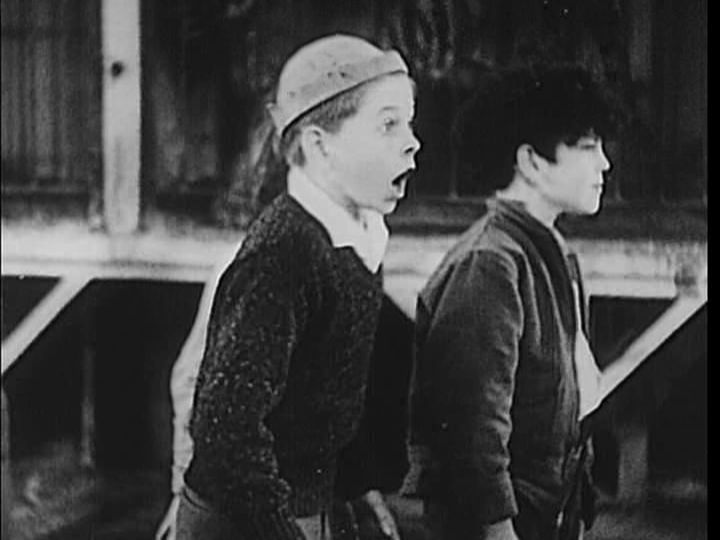
    Of course you can't dedicate an entire feature, let alone a serial, to animal training and haircuts -- not even if you throw in a gang of gee-whiz kids ready to applaud Beatty's every move. Not even if one of them is Mickey Rooney!


    So soon enough we get the MacGuffin, in the form of Beatty's girlfriend Ruth (Cecilia Parker). The two of them clearly love each other, no doubt bonding over their shared admiration for comically wide men's belts.


    Even so Ruth, despairing of his obsession with the animals and failure to propose, decides to go on an expedition to the "South Seas" with her father (Edward LeSaint), a sea captain, and Professor Livingston (Crauford Kent). This expedition is in search of Kamor, a lost island that's allegedly the "real cradle of civilization" -- and the Professor will know it's the right place when he finds, we kid you not, "an island bearing the fauna of both Africa and Asia".


    In other words: lions and tigers, in the same place. How conve-e-e-enient, as the Church Lady would say. That ol' lampshade got a real workout back then.


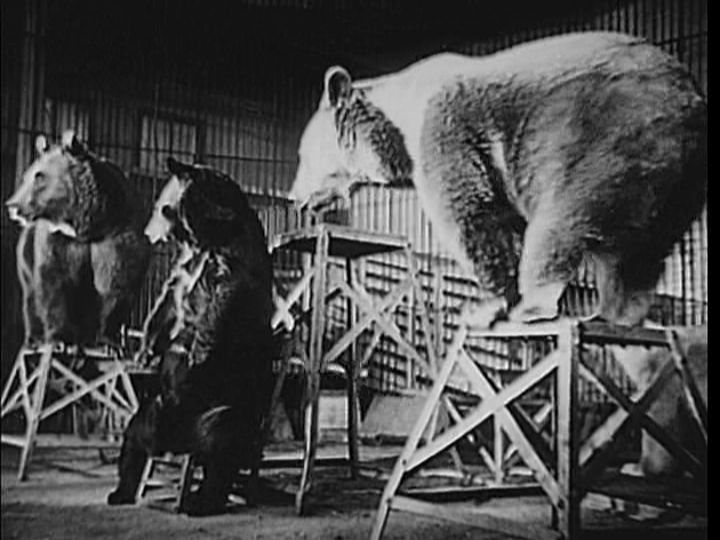
    Back in the States, a heartbroken Clyde throws his all into a new, high-risk act that adds Ursidae to the mix. This gets his publicist pal Larry (Syd Saylor) a bit twitchy --


    -- but despite Sharkey's meddling, things work out: this is a family film, after all, and could hardly bear a grisly ending for Clyde.


    Condensing 12 chapters and four hours of footage into a single feature film isn't an easy task, and truth be told, the editors did a pretty good job of it. But there are inevitably weird corners in the narrative, threads that get dropped abruptly, and set-pieces that seem to have had a disproportionate amount of attention lavished upon them --


    -- like Clyde's journey by dirigible in search of Ruth et al., who by this point have disappeared. Needle in a haystack, sure: but you'll never believe where he crash-lands!


    Ultimately everything in The Lost Jungle is a pretext for Beatty's big-cat routines -- though apparently a couple chapters involved gorillas in some way, and we're not sorry to see those get left on the cutting-room floor.

    While it doesn't end up making much sense, and the film suffers from a certain lack of charisma across the board, it has more than enough content to keep us from groaning too much as we watched.


    Colossus and the Amazon Queen (1960)
    [aka La regina delle Amazzoni]

    Grade: D-


    Oh, great, just what the world needed: a "funny" peplum. Right from the start, the soundtrack makes it clear that something is askew in this one. A fumbled fanfare in the opening scene sets the tone:


    Next comes a massive stadium fight, set to a hyperactive big-band jazz accompaniment, wherein Glaucus (Ed Fury) emerges as the last man standing.


    Alas, his victory doesn't last, as his friend Pirro (Rod Taylor) sells him out to a couple visiting merchants. They offer to pay handsomely if he can convince Glaucus to join them aboard their ship full of strong men -- a task Pirro accomplishes by clocking him on the head (we guess, since it's not shown) in the aftermath of a massive, chicken-related bar fight.


    Once Glaucus regains consciousness, he raises hell again, before Pirro sabotages the boat to convince him to calm down and go with the flow. Along the way Glaucus meets Sofo, the Egyptian, with whom he hits it off -- though Sofo clearly knows something he doesn't.


    When the ship lands, the men's mission is revealed: to guard a huge cache of treasure against pirates, in exchange for a share of said treasure (allegedly obtained from natives ignorant of the value of gold). First, though, let's have some food and wine!


    MADD (Mothers Against Drunk Derring-Do) would approve of this message, frequently seen in peplum: it never goes well when Hercules or his progeny get into the wine. And when a squadron of armed warriors arrives, things are looking grim for the unconscious big guy.


    For these first fifteen minutes, Colossus and the Amazon Queen seems like a typical peplum at heart. Sure, the gods are absent and the tone is pointedly lighthearted (how could it not be with tubas and xylophones on the soundtrack?).

    Still, we expected the usual fare -- even after the arrival of that most unwelcome of filmic abominations, an overdubbed talking parrot, who chides Glaucus as he wakes from his stupor: "Shameful! Athletes taking dope these days!"


    Instead, though, we get a tired role-reversal sex comedy, as Glaucus et al. find themselves in the clutches of the Amazons, a society where women are warriors and men are worriers. Do you like tall skinny dudes in drag, chirping in effete voices about how they "just can't understand [why] I never seem to get my wash as dazzling as yours"? Does that prospect make you laugh your sides out? If so, this is the film for you.


    For the rest of us, Colossus and the Amazon Queen doesn't really have a reason to exist. It's certain to offend some, and won't amuse the others, so who's left? People who like to watch sexually frustrated queens lounge around and drink wine? We suppose it's cheaper than doing the same thing at a Caribbean resort.


    And now, since you're not depressed enough, have a screenshot of a couple of starved-looking bears tied up outside a cave. Score one for Mr. Beatty, who would never tolerate this.


    But hey, at least the parrot almost gets it. Almost.


    Laser Mission (1989)

    Grade: C-

    OK, first of all, check out this title card, which couldn't be more of its time if it tried. We only wish we could show you the way it "lasers" onto the screen.


    Setting aside the question of how the hell a film from 1989 ended up on a Mill Creek set -- is it licensed? Public domain? Was it even possible to screw up your copyright in 1989? -- the first thing that caught our eye about Laser Mission was the presence of Brandon Lee.

    Thanks to some combination of half-remembered advertising for The Crow and a couple viewings of his father's films, we had the impression Brandon was some sort of 1990s emo kid, perennially brooding and fey, like Edward Scissorhands meets Robert Smith meets that international student who dresses like an anime character.

    Well, not exactly:


    There is a dash of Depp in there, sure, as well as his father who (how did we not know this?) had a significant amount of European ancestry. But we were reminded above all of the strong-jawed presence of Evil Dead star Bruce Campbell -- maybe with a dash of Hwil Hweaton in there too, especially around the eyes (and certain line readings). Plus, of course, dude is jacked.


    Laser Mission is quintessential late-1980s straight-to-video trash, and Lee is determined to have a hell of a lot of fun making it. Unfortunately, he doesn't get much in the way of good lines: when he falls through a ceiling and lands on someone's dinner table, he notes how he "just dropped in to say bon appetit!", if that gives you a sense of the caliber of writing we're dealing with here.


    The other "name" actor is Ernest Borgnine, who sports a threadbare Russian accent, doesn't get much screen time, and seems happy just to be there. That said, if you'd told us there was also a cameo by Michael J. Fox --


    -- we might have believed you.

    The makers of Laser Mission seem to have taken "cheap name recognition" as their watchword, as they hired David Knopfler -- the other Dire Strait -- to compose the music, but apparently didn't pay him for more than one song.

    So if you somehow fail to pick up on what Lee's character Michael Gold does for a living, the soundtrack is happy to fill you in, as almost anytime there's music in Laser Mission, you've got Knopfler's strained, Señor Cardgage-esque voice, chuntering away:

    He's a mercenary man
    Mercenary man
    Mercenary man
    Yeah, mercenary man

    It's another earworm, but only through sheer repetition, from opening credits to ending credits. We even hear the little, faux-flamenco nylon-string guitar interlude multiple times.


    The MacGuffin in Laser Mission is a huge diamond that can be used to build a superweapon, and if your brain hasn't been taken over by "Mercenary man..." you can probably guess why Borgnine has a Russian accent, and why Gold's pursuing him. Like many MMs, Gold is a master of disguise, transforming himself into Latin American stereotypes on a moment's notice:


    He soon joins forces with Alissa (Debi Monahan), an animal sanctuary worker who's unexpectedly competent with firearms and vehicles -- a fact not lost on Gold, who asks the natural question: "You carry a gun and you're not afraid to use it. You can outdrive the best of them...Who are you and who are you working for?"


    The response he gets -- "I'm hot, I'm tired, I'm hungry and I'm thirsty and I'm walking around in these high heels all day and I have blisters on my feet!" -- is petulant and defensive. Hardly the reply of a secret agent, right? (Right?)

    But the bad feelings don't last, and their brief love scene later on (oh, c'mon, that's hardly a spoiler) is, blessedly, one of the few times we hear music other than "Mercenary Man" in this film.


    Gold's merry chase takes him to Cuba -- where he nearly gets guillotined -- and ultimately to the fictional African country of Kabango, which we presume to be a stand-in for Angola. Logically enough most of Laser Mission was filmed right next door, in Namibia and South Africa. This leads to some absurd scenes in which Michael and Alissa get dumped in (we're guessing) the Namib desert without food or water --


    -- and somehow manage to amble their way to safety. One can only imagine the smell, especially since, as we assume you've noticed, Alissa wears the same blue dress from start to finish.


    Comic relief is provided by a wacky pair of conscripts, Manuel (Pierre Knoesen) and Roberta (Maureen Lahoud), who stay on Gold's trail throughout the film but never quite seem to want to pull the trigger. Roberta also has a seriously revealing wet T-shirt scene, leaving us to wonder whether Monahan refused and Lahoud was drafted to fulfill the first half of the T&A requirement.


    What's left to say? The bad guys are evil, the hero invulnerable, and the actual Africans are relegated to cannon fodder status or, at best, given brief cameos (including Ken Gampu of The Gods Must Be Crazy, as a concierge who bitterly complains about freeloading foreigners).


    It's all what you'd expect, doesn't make that much sense, and we can only hope Brandon Lee had a great time in Namibia, since he didn't get much time to begin with. Who would've thought Ernest Borgnine would outlive him by nearly two decades?