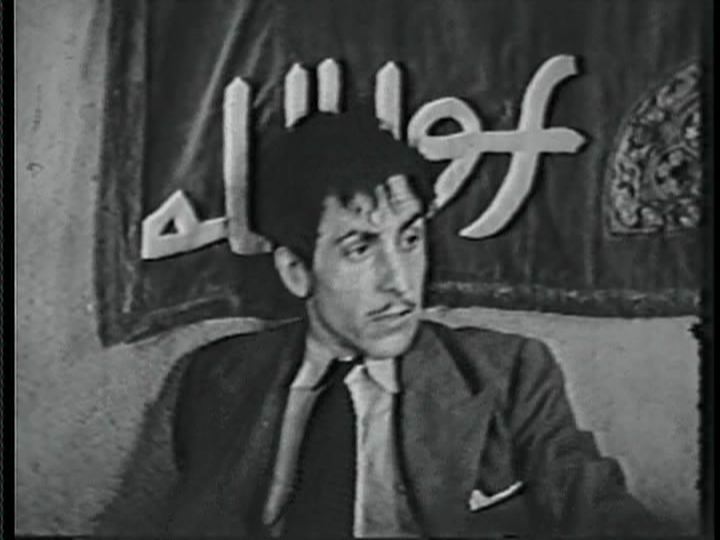
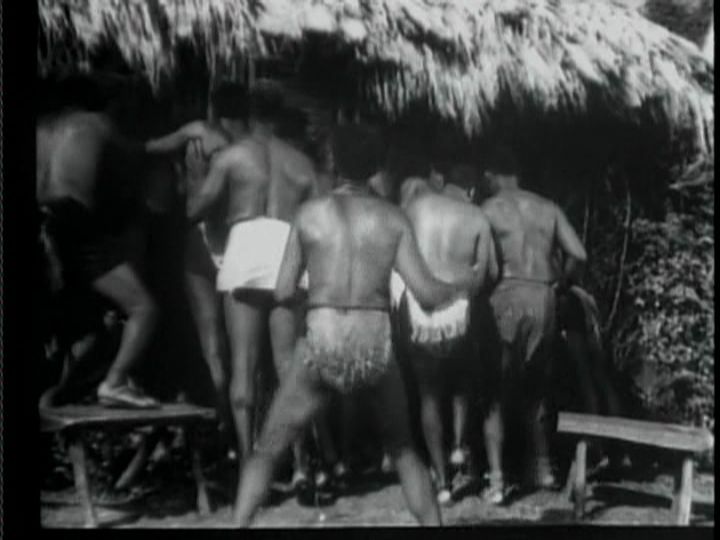
From reading the titles of these two films, you might think they have something fairly obvious in common. In fact, they do not -- at least if you're thinking of genre -- but do have at least two other shared traits:
- both are set in the past (relative to the time of filming);
- and both feature preachers tempted into sins of the flesh while in their place of worship.
Oh, and they're both on Disc 3, Side B of the Drive-In Movie Classics set from Mill Creek, and came out in 1974. So there's that too.
(aka Street Sisters)
Grade: D-


Is there anything more fundamental to human cognition than naming? As children, our entire sense of the world is built from the people and things around us we learn to name.
And we instinctively assume those names carry some sense of the underlying properties of the thing being named: how many of us would hesitate to go out on a date with someone named Cuthbert Fartington, or Ma Dong-Suk, no matter how admirable they otherwise seemed?

Thus, when you get a movie called Black Hooker, you're expecting the movie to have something to do with a sex worker of African heritage (with an outside chance of Papuan or Australian Aboriginal, we suppose). And this we do get: one of the main characters is, in fact, a "painted woman" who trades her body for money.

However, a title like Black Hooker -- especially when attached to a film dating from 1974 -- brings with it other expectations. You know the kind: pimps and wisecracks, decadence and violence.
A soundtrack with funky basslines, Fender Rhodes, and clavinet, summarized in one onomatopoeic metonym: chicka-waka-chicka-waka.
Above all, it should have a cynical, streetwise outlook, the attitude of the old iconic trickster, not often playing by the rules but always finding ways to survive in a hostile world. In other words, blaxploitation.

Black Hooker has some of those things -- but Black Hooker is emphatically not a blaxploitation film. It's no cousin to Shaft and Super Fly and Dolemite and Foxy Brown.
Instead, it's that unlikeliest of things in 1974: a spiritual descendant of the moralizing films of the 1920s, 1930s, and 1940s.
In fact it's even set in that era -- with the film's events taking place in some unspecified window between 1935 and 1955 -- though little suspension of disbelief can endure when the soundtrack's intermittent chickas and wakas abruptly return viewers to the 1970s.

We're familiar with the Sack branch of this tradition, from films like Drums O' Voodoo, Midnight Shadow, and The Devil's Daughter, but a commenter on IMDb suggests it's really an heir to the films of Oscar Micheaux, whose work we don't know.
Weirdest of all, Black Hooker stars a white man (Durey Mason, with a whiff of Bill Fagerbakke about him).

Well, OK, it's more of a Chloe, Love Is Calling You situation: the unnamed man in question -- introduced to us as a boy (Teddy Quinn) -- is the bastard child of the Painted Woman (Sandra Alexandra) and a white client.
She wants nothing to do with him, so this utterly white-passing lad is raised by his saintly grandmother (Kathryn Jackson) and strict, resentful grandfather (Jeff Burton), a preacher who may not always practice what he preaches.

It's not the plot material or character roster that knocks Black Hooker out of the blaxploitation category, though, but its tone. The opening 15 minutes feel like a Christian morality film or maybe a nostalgic 1970s TV movie.
Much of it consists of long shots of children running hand in hand through fields, accompanied by a score that's somewhere between Joe Raposo and what you'd hear in Aisle 9 at Kmart.

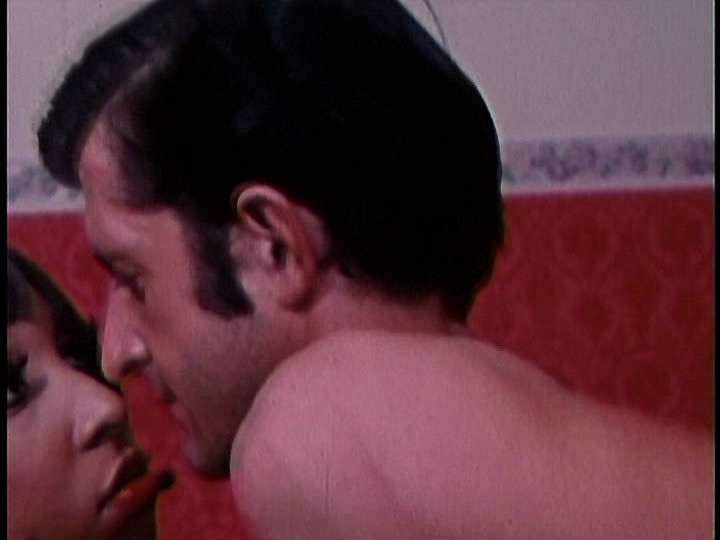
All this couldn't be more at odds with the implications of the title. And then all of a sudden we get the Painted Woman topless, screwing a john, and telling him things like:
"I want you to bite into my flesh until I can feel the pain. 'Cause that's the way I get my pleasure. There ain't no love, [but] a whole lot of hate in it. That's the way I want you to take me. I want you to take me with all the hate. I want you to bite into my flesh."
That is one holy hell of a tone shift. (As is the ensuing scene where the Painted Woman's pimp beats the crap out of her john because...reasons.)
It's about time that we acknowledged Black Hooker certainly wasn't conceived under that title, but grafted on by producers who, one imagines, were gobsmacked by the unmarketable mess they'd received. So, they chose to hoodwink audiences into thinking they were seeing a blaxploitation flick, instead getting...this.
We know the film is an adaptation of a play by director Arthur Roberson -- hardly a surprise, given the staginess of the "three characters in a room" scenes that dominate the film's running time.

Another commenter on IMDb says the working title may have been Don't Leave Go My Hand, which makes sense since it's the title of one of the songs in the soundtrack. It's also gone by the name Street Sisters (which isn't really on point either).
The same commenter has a vivid story about the film's test screening:
"When I worked with L.A. County, I knew Art Roberson fairly well...We were both social workers in the ghetto (really) in the 1970s. [...] The movie [was] premiered for friends and associates at Warner Bros. screening room in Burbank. At the end of the showing, it was greeted by dead silence, replacing excitement or applause.
I think the viewers realized that the director had blown a pretty good chance to do something worthwhile after all his work, investment and attention to this film. [...] As sort of a metaphor for that all-too-sensitive evening's experience, after the showing, as the cars were wending out of the Warner Bros. lot, I clearly recall the car of a black viewer rear-ending the car of a white viewer who had stopped short at a traffic light...an embarrassing wreck."

Watching Black Hooker, the thing we found ourselves asking over and over again was this: "Who on earth is this movie for?"
It's far too salacious for the bluenoses, and far too straitlaced for the degenerates. It's got a heavy-handed, moralizing tone that feints at themes of Christian redemption, but doesn't even begin to pay off on them: quite the contrary, as the film is relentlessly downbeat, with no redemption arc for anyone.
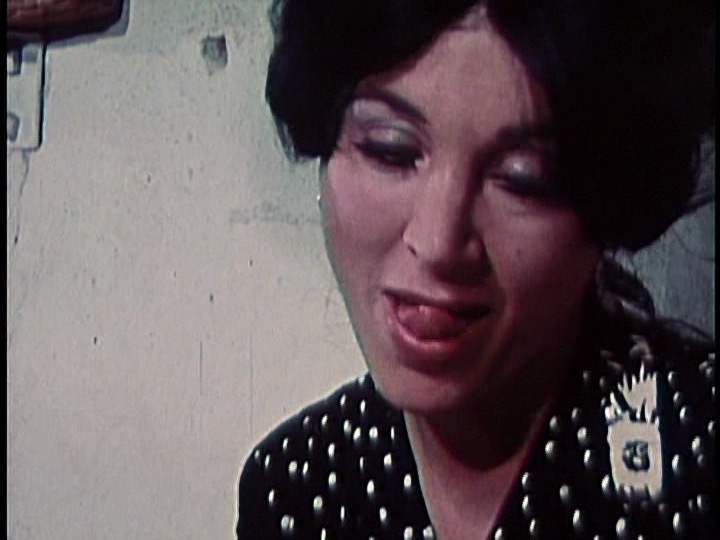
Here and there, moments of psychological insight and humanity pop out. After treating her son like garbage for the entire movie, the Painted Woman finally cracks a bit, takes a measure of pity on him, and tries to explain why she can never be the mother he needs: "What you want, I don't have to give."
There's something bracing and genuine about that moment -- wherein, much like the closing scenes of Carmen, the scheming hussy suddenly becomes a human being.

And if we can't forgive the grandfather for his betrayal and hypocrisy, we at least get some insight into his motivations when he makes a small attempt to live and love within his values, only to be rebuffed. One can only imagine what he would have posted on r/deadbedrooms.

If Black Hooker were a slightly better film it might qualify as one of those haunting, depressing movies whose atmosphere covers for its flaws. Alas, it's not: it's dull, maudlin, stagy, and tries to have its morality cake and eat it too. For every moment that rings true psychologically, ten others feel like the contrived manipulation of characters who are seldom more than cardboard cutouts.
It's a film that nobody wants -- which is too bad, since Roberson shows flashes of ability. With the right people, maybe he could have made something of value. Instead, he made a joyless, alienating film that doesn't even work as a nostalgia trip, then or now.

(aka Baby Needs A New Pair of Shoes)
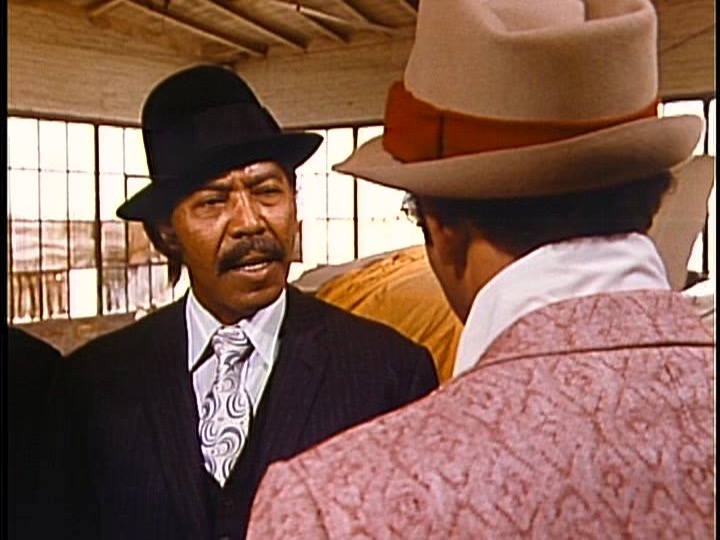
Now, if you were looking for pimps and wisecracks, decadence and violence, chicka-waka-chicka-waka, and a cynical, streetwise outlook, this film has you covered.
Jive Turkey is total grindhouse comfort food: it doesn't matter that much if it's innovative, surprising, or even good, because the film's sounds, styles, and spirit are appealing on a visceral level.

True, Jive Turkey can't embrace the chic (or the ka-waka) of the 1970s wholeheartedly, because as it repeatedly tells us, it's set in 1956.
There's a title card to that effect, but just to make sure anyone coming in late gets the point, the characters announce the fact at least twice: "Now this is 1956!" Who says that?

IMDb commenters have noted some of the anachronisms in Jive Turkey, from its cars to its baseball caps. We're sure there are plenty, but can't bring ourselves to care too much -- or at all, really -- given that the whole point is applying 1970s aesthetics in a 1950s pre-Civil Rights context.
You could sum up Jive Turkey in a couple of sentences: "When racist police and the Mafia try to shut him down, numbers kingpin needs all his wits to survive. But can he survive betrayal from the inside?" Something like that.
Our kingpin is the Pasha (Paul Harris), a smooth-talking, well-dressed man who exudes cool from every pore.

Take the best parts of Morgan Freeman and Iceberg Slim, with a tiny dash of what Jordan Peele will look like when he hits his late fifties, and you've got the right idea. One reviewer claims he lacks charisma, which is odd to say the least: to our eyes, if there's anything he's got, it's that. And having Pasha run the numbers racket makes him more sympathetic than if he were peddling dope or women.

That said -- even with Ernie Lee Banks singing "Life is a numbers game in each and every way" over the title cards -- it's not really a film about the numbers racket, which makes the original title, Baby Needs A New Pair of Shoes, seem a bit on the nose.
(Though then again...)

The revised title, Jive Turkey, does a better job of emphasizing the key point: as the film's antagonist, Big Tony (Frank DeKova), notes in an early scene, "One of your people works for me and I know everything you do." The question is, who?
Well, if a jive turkey is "someone unreliable [who makes] empty promises", or "someone who behaves in a glib and disingenuous fashion" (to quote two definitions you can find online), we meet one pretty early on in the person of DuDirty (Banks). If you want to talk nominative determinism, there's your man.

Still, looks can be deceiving, and Jive Turkey expects you'll be surprised by the inner nature of at least two characters by film's end. Some viewers will be, some most assuredly won't.
It's not really worthwhile to walk through the plot, or to introduce you to characters like the straightbacked Sweetman (Reginald Farmer) --

-- or the mad assassinatrix Serene (billed in the film under her own name) --

-- or Mama Lottie (Frances E. Williams), matriarch of the opium den.

Mama Lottie's scenes are also among the film's most visually striking, with well-placed reds and blues highlighting each character. Hardly subtle, but if you're a sucker for that sort of thing, it hits the right spot.

Jive Turkey manages to wind things up early, with the key action sequence finishing about 10 minutes before the end of its running time, leaving room for a dance sequence and a denouement (including a couple of big reveals). If this suggests we might not be dealing with a model of tight filmmaking here, well, you're not wrong.

And we don't want to oversell Jive Turkey. By any reasonable standard it's an utterly average genre piece with a few interesting twists -- on the level of a TV movie with nudity, violence, and racial slurs (including one unnamable but alarmingly catchy song describing DuDirty's state of affairs as, uh, "deeply in debt but ostentatious").

Still, it's fun, hard-edged, and never feels like it's insulting the viewer's intelligence. And it's possible we enjoyed Jive Turkey more than we'll enjoy the most famous examples of the genre, many of which we haven't seen yet. We do tend to root for the underdogs!