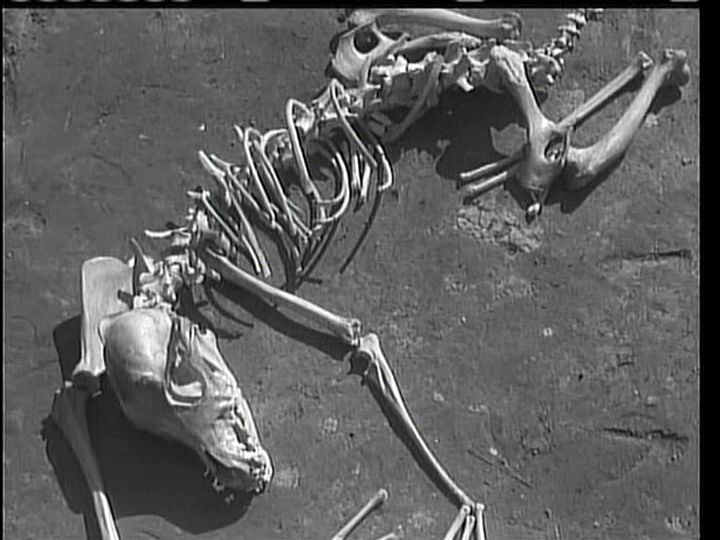
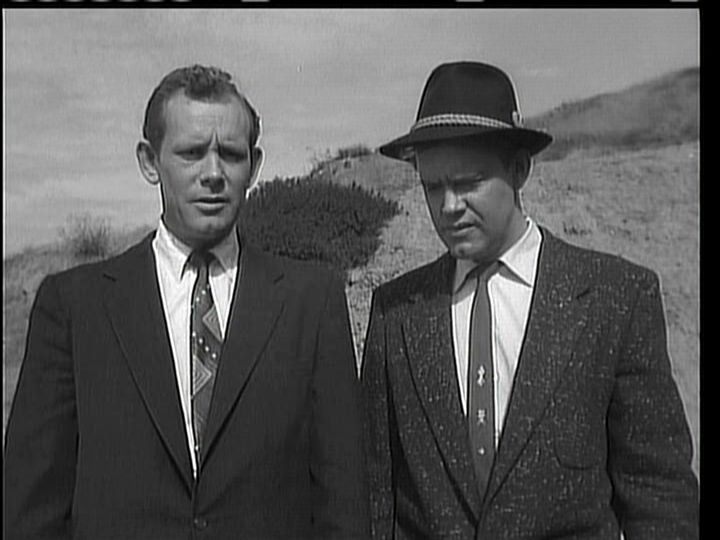
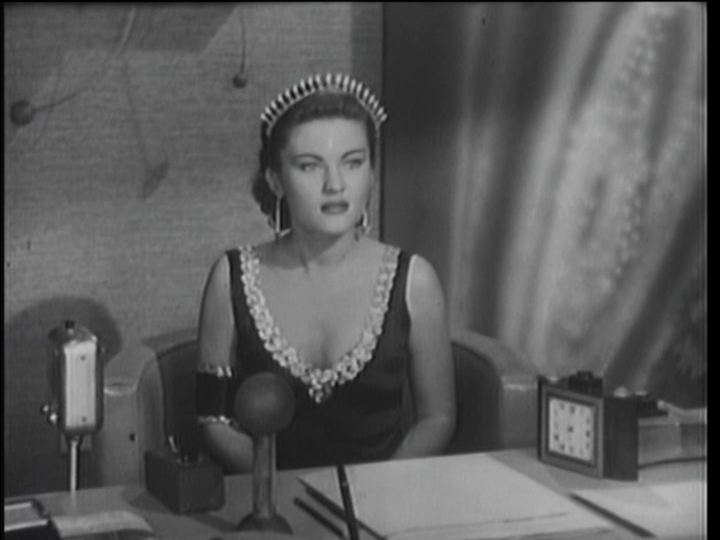
Wondering whether we deliberately watched these two films back-to-back, just to make this pun?
Yes, yes we did. One must make one's own synchronicities in life.

One of the central tenets of cinephilia is this: edited versions are always inferior.
OK, sometimes they're funny -- Mr. Falcon, a stranger in the Alps, Monday-to-Friday plane, and all that. But anyone who collects films on DVD or Blu-Ray, or seeks out legitimate or illegitimate sources for download, is generally looking out for the longest, most complete, most un-messed-with copy available.

How many films have we seen that were hacked to bits by regional censors, broadcasters, or bad splices in the only surviving copy?
How many have been robbed of their narrative cohesion? Had their dialogue rendered incomprehensible, or their climax neutered?
Had a key plot point or joke ruined?
Or just lost a couple shots that were breathtaking in their eroticism or violence (both at once if you're a sicko)?

The idea that we should be able to see a film as intended and/or issued is such a core value, it almost seems too obvious to point out. For anyone who saw the original, it's easy to resent the jarring collision between our memories and a version that's been screwed around with. (And let's not even get into TV on DVD with syndication edits...shudder.)

Or maybe we simply believe the vision of the film's creators -- scriptwriter, director, editor -- ought to be respected. True, anyone who's seen a few Director's Cuts or Extended Editions knows that the principle of "longer = better" doesn't always apply, and then there's George Lucas, dropping in a CGI Jabba the Hutt where he was never needed.
But the case of Lucas perfectly demonstrates the principle: just give us the theatrical release versions, keep them in print, and you can screw with alternate versions all you want.

Thing is, Abduction turns all that on its head. We watched the version we have on DVD (issued by Digiview Entertainment as part of a double-feature with Embryo). With no knowledge otherwise, we assumed we were getting the whole thing.
In this presentation, the film's thinly veiled retelling of the Patty Hearst story -- via Black Abductor, a pornographic novel written by James Rusk Jr. under the pseudonym Harrison James, which apparently predicted many aspects of Hearst's kidnapping -- seemed more than trenchant.
True, it offered nothing much beyond straight exploitation, and its vague attempts at satire or social commentary -- mainly by framing certain shots in a deliberately absurd manner -- fell short. But Abduction had an edge, captured the Lenin-meets-Manson-meets-Huey Newton vibe well enough, and served its purpose.

Afterward, we discovered Digiview's copy had a shorter running time than what IMDb claims for the film. So we found a version on YouTube (of all places) that was unedited -- or less-edited, it's not clear.
What does it add to the story of Patricia "definitely not Patty Hearst" Prescott (Judith-Marie Bergan), and her abduction and brainwashing by a "definitely not the Symbionese Liberation Army" group of radicals?

Graphic sex scenes, and in particular, scenes of gang rape and coerced sex. (OK, a handful of profanities were also cut from Digiview's copy, as is a sequence involving a bunch of randos who get in the way of the abductors -- probably for profanity as well. But mainly it's the sex.)
So, which is more effective: the cutaway before the event happens, as in a film like Crimes at the Dark House, leaving us to imagine the horrors that await the protagonist? Or getting to see the whole thing, as in the unedited Abduction?
This is an old question. Naturally, different creators have come up with different answers, and different works of art require different approaches.

But in the case of Abduction, we think the rape scenes really hurt the film. They don't add anything but a grotesque, exploitative spectacle that shouldn't arouse anyone -- but probably did.
Their presence collapses what could have been an intriguing spectrum of ambiguities into a single, distasteful reading. And they certainly make it much harder to view the faux-Symbionese radicals led by Dory (David Pendleton) with anything resembling sympathy.
(Not that the SLA deserved much sympathy themselves. There's a reason Donald DeFreeze inspired Stephen King's recurring villain Randall Flagg.)

It's one thing to acknowledge rape as a weapon of war, an instrument of brutality that could contribute to Stockholm Syndrome by breaking the victim down. It's another to imply that it brought about an erotic awakening in the victim -- that she joined forces with her captors because she liked it; that this stuck-up, affluent white woman could only experience her authentic self through sexual violence.
Abduction does more than imply those things, it more or less states them outright. And that doesn't even touch the racial politics of it, as in a well-known two-part phrase that ends with "...you never go back". The source novel was called Black Abductor, after all.

We should note that, in Digiview's copy, we actually do see one of the rape scenes -- sort of: footage of it is reflected in a pair of glasses as her father (Leif Erickson) watches silently, in a darkened room, without saying a word. This is actually more effective, more disturbing, when it's not just a replay of something we've already seen.
(The editors apparently had to loop a short segment of audio to keep it PG-rated, though, and the results are comical if you listen closely.)

A couple minor narrative points are harmed by the editing, including much of the tension in a key scene that -- as an IMDb commenter notes -- anticipates a fakeout sequence in Silence of the Lambs by almost two decades. Instead of cutting between a sex scene and the buildup to a police raid, the edited version just shows the raid.

And we also lose several of the movie's best lines -- including one by Lawrence Tierney, playing an FBI agent but utterly himself as always.

But, yeah, this time the edited version wins. It's hard to imagine all this ugliness wasn't in Black Abductor already, so fair cop to the makers of Abduction for including it.
Once in a while, though, it's a film's missteps or flaws that get edited out -- and in this case, the worst parts of Abduction were the ones to get the censor's axe. It's not just delicate sensibilities that are harmed by the rape scenes; it's the storytelling itself that suffers.


If you discovered Leonard Maltin's Movie & Video Guide in the 1990s -- just before the real advent of the Web and sites like IMDb -- then perhaps it gave you the same kid-in-a-candy-store feeling that P. got. Inside were endless lists of feature films and, remarkably, TV movies whose titles intrigued or triggered long-lost memories. Some reviews validated your feelings, while others (mainly negative ones) were so misguided as to be almost offensive.

It seemed as though every movie ever made had to be in there, but occasionally you'd go looking for something you'd seen and turn up empty-handed.
Nowadays everyone knows, or can know, that the scope of 20th-century cinema far exceeds what any one person could watch (even if it had all survived and could be tracked down), but back then it was easy to let yourself believe that Leonard Maltin -- like Erasmus in his day -- was the one and only man who possessed the sum total of filmic knowledge.

As ABBA knows well, landing toward the start of the alphabet has its perks. P. can still call certain movies to mind based solely on their appearance in the first few pages of the Maltin guide, like Aaron Slick from Punkin Crick, or Aaron Loves Angela -- or yes, Absolution. (Not Abduction, oddly enough, though it's in there with 1 1/2 stars.)
If we're going to invoke him, might as well quote him: Maltin describes Absolution as a "straightforward melodrama" that "loses credibility toward the end", but which benefits from Richard Burton's "commanding performance as [Father Goddard], a humorless, by-the-book priest" at a Catholic boys' school. Sure, that's all pretty accurate.

What's unmentioned by Maltin -- and a lot weirder -- is having Billy Connolly aboard in his first screen role as Blakey, an itinerant, banjo-playing bum. He rides a motorcycle (to Kathmandu apparently), steals food from the kitchens, and takes up residence in the woods adjoining the school, shrugging off a challenge from the boys: "All property is theft."
If you're from the west side of the Atlantic, and don't feel sure how you know Billy Connolly beyond that lousy Hobbit movie, he took over for Howard Hesseman on Head of the Class. (Or maybe Muppet Treasure Island is your point of reference.)

Maltin describes the plot of Absolution as "a snowballing practical joke", but it's really about the sanctity of the confessional, and how boys chafing at the rigidity of their school can weaponize that sanctity against the priests who hold power over them.
There is a prank played at Father Goddard's expense, one central to the narrative. However, "snowballing" implies a Sorcerer's Apprentice structure where -- like an errant snowball that turns into an avalanche -- things get out of control against the will of the instigator. Without spoiling anything, that's...not exactly the case here.

It's also really hard not to see Absolution through a homoerotic lens -- not just thanks to countless scandals involving priests, or even the sheer amount of debauchery invariably happening in single-sex institutions like these, but also because no film made nowadays could get away without engaging the issue.

What is the nature of Father Goddard's attachment to his favorite student, the handsome "Benjie" Stanfield (Dominic Guard)? When, early on, they meet in private to read a poem about giving our beauty to God, is there a subtext there? Does it explain any of Benjie's sudden rage against the machine, or why he takes such a shine to the free spirit Blakey, who can give him affection without desire?
Absolution doesn't answer these questions directly -- though Blakey's girlfriend comes close -- but it certainly does more with them than a comparable film would have done two decades prior.
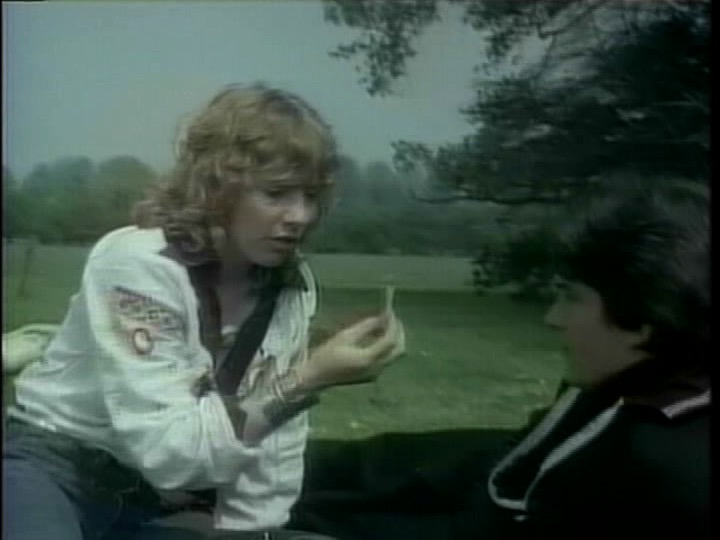
The last element in Absolution's dramatic equation is the needy, obsequious Arthur Dyson, played by Dai Bradley in leg braces (polio, one assumes).
In 1969, Bradley had played the lead role in the well-regarded film Kes, and had more recently appeared onstage as Alan Strang in Equus -- a role famously played by Daniel Radcliffe between Harry Potter films (speaking of hermetic school environments where people try to make magical things happen by uttering Latin phrases).

It's hard to fathom that Bradley was 22 here, as he's more than believable as a Hermione Granger-esque brown-noser who annoys the crap out of the not-entirely-un-Snape-like Father Goddard ("I must confess he rather makes my hackles rise").
Dyson also plays the worshipful Chester to Benjie's Spike, constantly orbiting the larger boy and peppering him with unwanted questions.

Another prominent theme in Absolution is role-playing -- not in the Gary Gygax or Xaviera Hollander sense, but the Erving Goffman sense of acting like the person people believe you to be, rather than who you are.
Once the situation between Father Goddard and Benjie starts to disintegrate, the needle gradually swings: Benjie openly refuses to play the golden-boy role he's been assigned and seems to embrace his authentic self, whereas Father Goddard is forced against his will into deeper and deeper layers of duplicity.

As Absolution grows more and more nested in its structure, with circles within circles of deception and malevolence, the tension builds to a boiling point. Few films can sustain such things all the way to the end, though, and Absolution doesn't quite make it. The final revelation is foreshadowed more than we realized at the time -- a second viewing reveals an early scene that drops a big hint -- but, as Maltin says, it still doesn't convince, still feels too sudden.
(Apparently scriptwriter Anthony Shaffer felt the same, and tried to reshape the ending during shooting -- but, in a battle of the Tonys, was shot down by the film's director Anthony Page.)

Even so, across the board -- acting, directing, script, cinematography -- this is a far higher tier of film than Mill Creek usually offers up. Well-made, well-acted films outside the mainstream are one of life's finer pleasures, and whether or not you rank Richard Burton high on your personal list, his acting chops have impact onscreen.
This is no phoned-in late-career performance, but a committed piece of work -- from all involved -- that falls just short of excellence, yet remains well worth seeing.

(However you can certainly do better than Mill Creek's copy, cropped to 4:3 from the original 1.85:1 -- though the improper matting does give us a bit more picture at the top and bottom vs. widescreen versions -- and with muted, faded colors. Plus there's a weird cut in one confessional scene that removes 10 seconds of ordinary dialogue, yet appears intentional. It's still more than watchable, but you can find cleaner copies of Absolution on the Internet.)