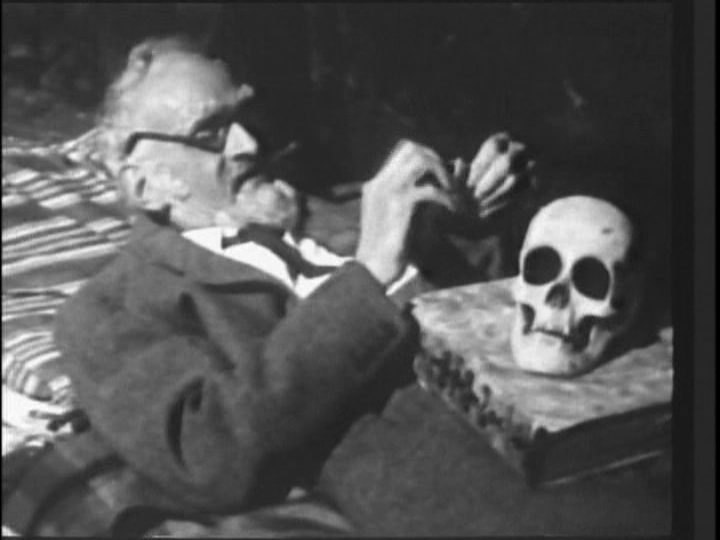
Showing posts with label au-TOP-sy. Show all posts

Friday, June 2, 2017

Telephone secrets, telephone spies

"Can you hear me? Or am I talking to myself?" - Chris Squire (RIP)

In these two killer films from Poverty Row, the folks availing themselves of Ma Bell's services surely aren't talking via satellite (or Verizon), but can still hear each other just fine.

Little do they know, though, that an eavesdropping third party is listening in close to get the information right.


I Killed That Man (1941)

Grade: C+

Anyone who's seen enough Poverty Row crime flicks has seen the devices of I Killed That Man a dozen times over already, like the spunky female reporter (Joan Woodbury) who just so happens to be dating the A.D.A. (Roger Phillips).


Or the opening sequence that depicts the final moments of a condemned man before his execution...

...until he decides to admit that he is indeed guilty (yay, justice system!), but also had a secret partner in crime -- all revealed in a long speech that, for dramatic effect, saves the identity of his collaborator for last. And what's that? Why, it's a blowgun dart that kills him instantly, just as he's about to name names!

So next we get one of those "Nobody leaves this room!" numbers, which results in a whole lot of nekkid middle-aged men (mostly implied, so no luck if you're into that sort of thing). At least they get it out of the way upfront, vs. the absurd formal contortions we saw in Midnight Phantom.

I Killed That Man also does the "the culprit can't possibly be this guy, so of course it's this guy" bit that a New York Times reviewer skewered so well in A Shot in the Dark. TVTropes calls that sort of thing "hanging a lampshade on it", but for a murder mystery it's not such a wise idea.

Around now, you're probably wondering: "So, why the C+?" Well, it's amazing how much a brisk pace, a couple of clever set-pieces, and some good one-liners can do to salvage even the most familiar plot. And that certainly applies to I Killed That Man, which somehow manages to entertain throughout its 70 minutes.

For instance, when the gentlemen are putting their clothes back on post-inspection, we get this exchange:

Reed: "Never have I been so humiliated."
Lanning: "Felt kinda foolish myself. I guess I'll have to go on a diet."
Reed (bitterly): "So I noticed."

It doesn't really come off in print, but it's a sick burn in execution.


Returning to the subject of this post, we get a bumper crop of telephone-related plot points, including mysterious numbers, ice cream sodas, and a seldom-seen 3-way split-screen shot.

Is I Killed That Man a must-watch? Hardly. But it's one of those films that pops its head above the sea of Poverty Row mediocrity, rewarding the persistent viewer who wades through this stuff in hopes of turning up a hidden gem -- or, in the present context, simply something that's competent and entertaining. And that's exactly what we have here, so let's not press our luck by demanding more than that.


The Invisible Killer (1939)

Grade: D


Mill Creek's print of The Invisible Killer has one of the lousiest and most muffled soundtracks of any film on this boxset -- not to mention a series of nasty cuts and splices near its midpoint. Half the time we struggled to make out what was being said, but that's not necessarily a dealbreaker for us: after all, we liked The Ghost Walks.

What is damn near a dealbreaker, though, is this lady right here, Ms. Sue Walker:

Played by Grace Bradley, she's a relentlessly self-interested, Machiavellian journalist who goes well past "spunky" to the point that we nearly had to introduce a "nasty female reporter" tag. There's nothing wrong with amoral characters, of course, but Walker is so irritating and pointlessly difficult, we found ourselves wishing her love interest Lt. Jerry Brown (Roland Drew) would finally make good on his repeated threat to wring her neck.

It seriously detracts from a movie that isn't so hot to begin with. Maybe it's telling that so many sources seem to misunderstand the plot of The Invisible Killer, from the Mill Creek blurb saying "an eager female reporter...ends up partnering with a homicide detective assigned to the case" (misleading) to the IMDb claim that "a fiendish killer uses sound waves to commit his murders" (flat-out wrong).

What is the means of murder? Well, that would be blabbing.

The first two-thirds of The Invisible Killer drag like hell, in part because of the perennial 1930s "too many indistinguishable white guys in hats" problem. The presence of a secondary female character, attractive socialite Gloria Cunningham (Jean Brooks), does help a bit by allowing us to triangulate the identities of the IWGIH relative to her.

Ms. Cunningham is also the fiancée of the D.A., Richard Sutton (Crane Whitley), who's trying to rein in a wave of gambling-related crime...


...so it's very embarrassing when she's nearly caught up in an investigation: only Ms. Walker's forbearance keeps her from ending up on page one.
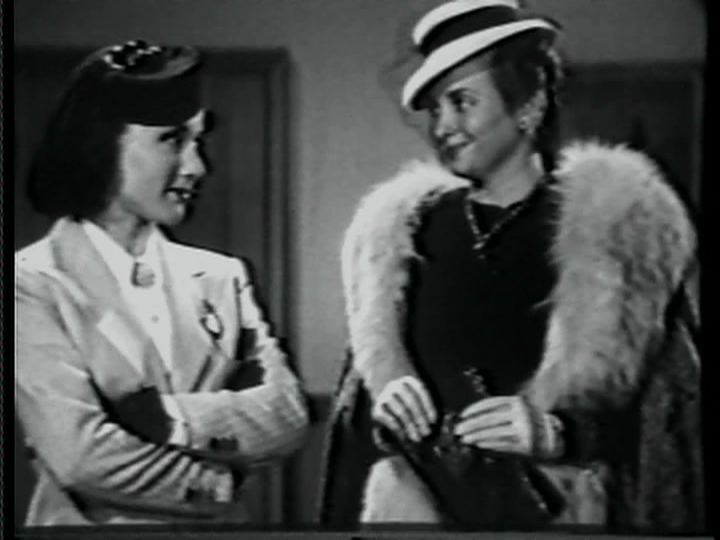
Worse yet is the fate of her father (Boyd Irwin), who fights on the side of right and justice, but discovers to his chagrin that he owns multiple properties used as gambling dens -- and once your hands are dirtied, it can be very hard to get clean.

Anyway, you can probably imagine much of the rest, but The Invisible Killer throws some weird curveballs. For example, there's Sutton's valet Worcester (David Oliver), a drunkard who spends his downtime slowly typing broadsides against "The Evils of Alcohol". We spend such a shockingly long time watching Worcester and his two-fingered technique that (we assume) he must be intended to serve as a key component of the film's comic relief -- or, perhaps, as a sardonic commentary on the hypocrisy of reformers.

But his scenes are so cut to ribbons by bad splices, and his typescript so hard to read in this print, that whatever impact the scene is meant to have is replaced instead by ennui and confusion.

Which, now that we think about it, is a pretty good description of what it's like to watch The Invisible Killer -- at least in its Mill Creek iteration.

Sunday, December 18, 2016

Süssmayr, Cooke, Cerha, and Serly

Sometimes, when someone dies and their life's work goes unfinished as a result, another person steps up to complete the job. Even if they're not quite as skillful as the original auteur, it's important to them that the job gets done.

In the case of these three films, we have not symphonies, but evil schemes that get interrupted -- only to be continued, some time later, by a newcomer's efforts.

(And if that seems like a weak theme -- well, it was either that or "All three films feature sexual assault, attempted or otherwise", and that theme's kind of a downer.)


The Ghost Walks (1934)

Grade: B


After a streak of joyless flicks, it's a treat to watch an unapologetically goofy romp like The Ghost Walks, which -- its inclusion on this "horror" box set aside -- is really a farce with a dollop of mystery and a couple of "spooky" elements.

That said, Mill Creek's print of The Ghost Walks is no treat -- not in the audio domain, at least, as the extremely muffled sound renders much of the dialogue near-incomprehensible. Even after heavy filtering in VLC, there were many lines we simply couldn't make out at all.


We were all set to tell you to watch this copy at Archive.org instead, which has far better sound -- but unfortunately, it turns out that it's missing over three minutes from a key scene early in the film. The edit is non-obvious, but the cut material still has a significant impact on the coherence of the plot, and without it the basic conceit of The Ghost Walks makes significantly less sense.


As for what that conceit is, well...rather than spoil the film with a detailed plot summary, we'll merely say that The Ghost Walks -- like so many before it and since -- revolves around that well-worn device, a dark and stormy night.

This particular DASN opens with bigshot producer Herman Wood and his milquetoast assistant Homer Erskine (played by Richard Carle and Johnny Arthur, respectively). These two New Yorkers are being chauffeured through the storm by a young playwright (John Miljan) who wants Mr. Wood to hear a reading of his new play. But naturally, something goes wrong with the car...


...and, after some kvetching in the rain, the trio end up at a spooky old mansion occupied by a bizarre cast of characters, whose personal dramas and grievances quickly ensnare the visitors.


That said it's the crotchety old Wood and, especially, his neurotic assistant who steal the show throughout. Whether Homer Erskine is meant to be a gay character per se, or simply an effete and cowardly "cream-puff", his stormy relationship with Wood -- getting fired at one moment, sharing a bed the next -- is the core of the film's comedy.

In another film, Erskine's lack of the requisite manly virtues might make him a target of overt ridicule, but here he escapes without major harm or humiliation, and gets the lion's share of the film's zingers as well, e.g.:

"It's a union clock."
"What do you mean?"
"Well, it strikes any old time."

Or:

"Say, I don't like these underground places."
"Well, you may as well get used to it -- you may spend a lot of time in one."

They don't read well in print, but his delivery makes them work.

However, Wood gets the film's best one-liner when he chokes on a cigar, gets slapped on the back by Erskine, and responds with irritation:

"What's the idea?"
"Why, you were choking terribly!"
(indignantly) "Well, can you do any better?"


Should we read anything beyond the obvious into Erskine's comment -- when offered dinner and a drink by his host -- that he likes "the cocktail part of the program"? Probably not.

But, hard not to raise an eyebrow when another character angrily tells Wood and Erskine that "There's something queer about you both. He winks at you and you wink at me. I don't like it!"

Make time for The Ghost Walks -- but if you can't make out the dialogue, switch to the Archive.org print for the first 17 minutes. Then cut over to Mill Creek from about 15:47 to 19:12, and then go back to Archive.org for the rest.

(Or we think so, at least, since the Mill Creek print runs 64:30 and the Archive.org print clocks in at 63:26. The latter has a longer opening and fewer skips, so that seems to account for the rest of the difference, but we haven't done a scene-for-scene comparison to see what else might be cut from either print.)


The She-Beast (1966) 

Grade: C-


Truth be told, we still don't like Barbara Steele. That said, not only does she have very limited screentime in The She-Beast, but in her brief appearance she's used to her best and bitchiest effect, as a snobby newlywed whose husband Philip is a pompous ass of an Englishman (Ian Ogilvy).

For whatever reason, they've opted to take their honeymoon in, all together now:


Of course, the town where they stop for the night turns out to be under an old curse, thanks to an improperly handled witch-killing two centuries prior.

They're helpfully informed of this by none other than Count Van Helsing (John Karlsen), a déclassé Transylvanian nobleman who descends directly from you-know-who. He's more than happy to join them at dinner and order a bottle of Slivovitz on their tab, while boring a thoroughly uninterested Barbara Steele with his family history.

If you know Steele is only onscreen for about 20-30 minutes at the beginning of the film, and another few at the end, you can probably guess how the rest of this one plays out. But one redeeming feature of The She-Beast is its sense of humor, which it uses to constantly poke fun at the absurdities of life behind the Iron Curtain.

These are epitomized by their corrupt and piggish innkeeper, the aptly named Groper (Mel Welles). Early on, Groper gets the living crap beaten out of him by Philip for a Peeping Tom attempt gone disastrously wrong -- which is kind of a nice change from the usual victimization routine.

The thing is, Philip is just kind of a dick in general, and any satisfaction in seeing him pummel Groper into unconsciousness is diminished by his gratingly arrogant, ungrateful behavior toward Van Helsing. Having the protagonist be less than thoroughly likable is a nice twist, but The She-Beast belabors it enough so that Philip's petulant stupidity soon becomes infuriating.

But those irritations -- and a rather gratuitous attempted rape scene -- are alleviated somewhat by a couple interesting twists in the plot, and by the film's lampoons of Romanian life (right at the start of the Ceaușescu period, no less). These give The She-Beast a much-needed infusion of black comedy...

...even if they're not altogether subtle about it.


Curse of the Headless Horseman  (1972) 

Objective Grade: F
Wavy Gravy Far-Out Grade: C

"It's almost never a good sign when a movie opens with a lengthy voice-over delivering exposition," we wrote recently, and that's no less true of Curse of the Headless Horseman.

Except, maybe, that it's an even worse sign when that VO is saturated in a delay effect that makes the speaker's words nearly incomprehensible. And then, it's paired with an image in which the color process is so clearly misaligned, it's impossible to imagine who could have looked at it and thought, "This is OK, this works, I've done a good job."

For example, feast your eyes on the image above, with bands of red, blue, and yellow appearing in places those colors have no business being, while the bottom of the frame transitions from a weird purple to a colorless gray.

Do you know what the people in that shot are doing? They're eating pizza, that's what.

All told, the first minutes of Curse of the Headless Horseman look as though they were filmed in B&W and then hand-tinted, one primary color at a time, by the lady who so nicely tidied up that fresco of Jesus some years back.

Perhaps it's Mill Creek's fault (hard to see how), but even once things calm down, we get some seriously weird color schemes in this film. In most shots, orange-reds and blues pop out with a brilliant, hyper-real intensity, while other hues are vastly muted by comparison. It's like watching a Tandy Color Computer game come to life.

Or look at the spectrum expressed in this shot. The lead actor is bounded by fields of dark green and purple, while his face looks as orange as an Oompa-Loompa's. What's happening here?

Other sites can give you a play-by-play of the events in Curse of the Headless Horseman; we won't bother. (If you've seen the excellent 1934 film Our Daily Bread, and throw in a couple episodes of Scooby-Doo, you've got the basic idea.) It hovers well past the threshold of incompetence in every way, with no real sense of pacing, thoroughly amateur acting, and a script that makes little sense.

Naturally, all that is also a big part of the film's charm -- though truthfully, despite our indulgent attitude toward it, we often found our attention drooping.

Like The She-Beast, this film has a beast on the loose, a pair of newlyweds as its (ostensible) protagonists...

...and an uncomfortable, extended scene of sexual assault, committed by a man whom another site aptly dubbed "the harmonica rapist", and made worse when he and his victim then become happily coupled: ugh. At least he eventually gets the crap beaten out of him too.

Another common trait with The She-Beast is the incongruous presence of nobility: check out the French "countess" (Ultra Violet) who abruptly shows up mid-film with her Superman lunchbox in tow, only to disappear with little explanation. She's sometimes listed as the star of the film, but Ultra Violet is barely onscreen for five minutes, if that. Billy Curtis's pop-up in Robot Pilot seems inevitable and organic when compared to this celebutante cameo.


Curse of the Headless Horseman is, let's be clear about this, an awful movie. But it's a moderately entertaining form of awful, far more engaging than the likes of Manos: The Hands of Fate, though not as rewarding as (say) Maniac.

If nothing else, its color choices and script decisions are so completely off-the-wall at times that -- despite the distinct lack of foxy in its ladies -- it's worth seeing at least once.


Sunday, October 30, 2016

Liquid solutions

Homer Simpson famously toasted alcohol as "the cause of, and solution to, all of life's problems". And as we ugly bags of mostly water know, you can't have a solution without liquid.

So while you're bobbing for apples this Halloween weekend, consider these two films in which nearly incompressible fluids play a problem-solving role:


Terror Creatures from the Grave (1965)

Grade: D+

Oh, God, not her again.

Look, we know Barbara Steele is revered among horror movie buffs, who seem thoroughly captivated by her unusual, vaguely mantis-like features. But it seems like every time she shows up in a film, it inevitably turns out to be a tediously murky effort that takes itself too seriously and doesn't make much sense.


Sadly, Terror Creatures from the Grave is no real exception. True, it manages to conjure a modestly creepy atmosphere, redolent with imagery of plagues, conspiracies, and spiritualism.

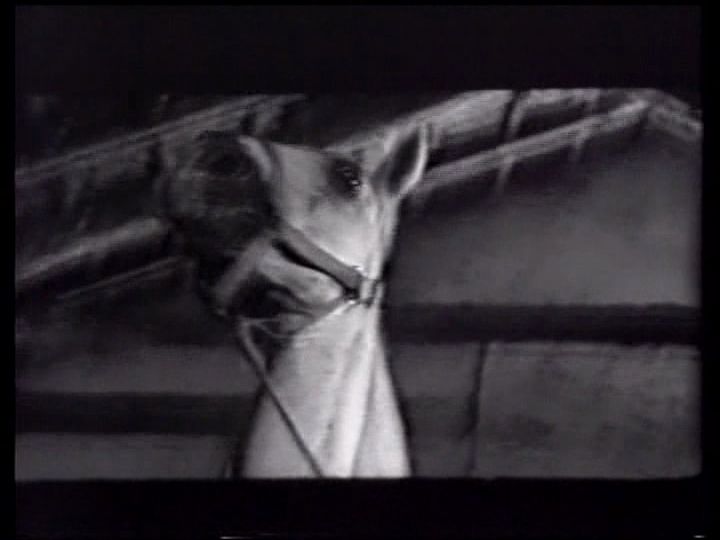
Plus the movie starts out with death by horse, always a nice touch.

But Terror Creatures suffers from the same syndrome that torpedoes -- dare we say, "plagues" -- so many similar films. Its symptoms include largely interchangeable supporting characters:

Long stretches of talky exposition:

And a protagonist who engages in lengthy voiceover soul-searching, but only figures out the meaning of the movie's biggest clue about 20 minutes after the viewer does.

In this case, that clue is an (ahem) "ancient lullaby" -- set to modal music that cribs heavily from the "two pretty children" bit in Night of the Hunter -- with the following lyrics:

Death is approaching
Approaching for you
Remember pure water
Pure water will save you
The water will save you
This warning's for you
Remember, remember, this warning's for you

Yes, the movie comes with its own walkthrough. It ain't subtle, folks.

Now, if you're looking for some barenaked ladybugs then, sure, Terror Creatures will hook you up, at least from the upper thigh down.

And the underutilized maid Louise -- Tilde Till, in her only film credit -- is sort of cute, certainly cuter than the leads (aren't they always?).

But all the practical effects or insectivorous flesh on display can't hide the fact that, for any but the most dedicated Steele fans, Terror Creatures from the Grave is a slog from which pure water can't save you: that particular salvation can only be given by the end credits.

Frankly, we're getting to the point where the only positive association we have with the word "Steele" is when it's prefaced by "Hands of".


The Devil Bat (1940)

Grade: B+

Here at the plush offices of The Umbrellahead Review, we sometimes worry. After all, this project of ours inherently means that we have to cover a whole lot of turkeys -- films that have no redeeming value, give us no pleasure, or simply blend into a sea of undifferentiated mediocrity (at best).

Inevitably, notes of snark, cynicism, or world-weariness creep into our writing. Might we be giving the impression that we've lost our love for second-tier cinema?


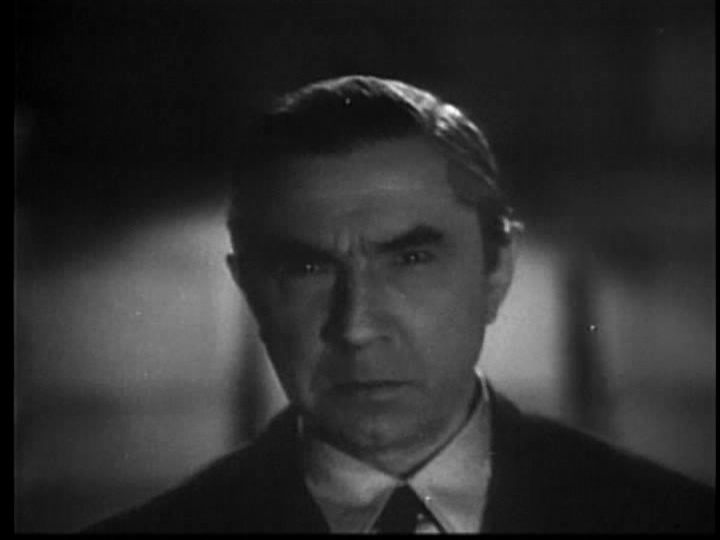
Well, if there's anyone who can cure those blues, it's Béla Lugosi. Even in the worst stinkers, his inimitable charm, unmistakable presence, and committed intensity always manage to make the experience worthwhile.

And the great news about The Devil Bat is that it represents Poverty Row at its best: filmmaking on a threadbare budget that nevertheless manages to entertain without insulting the intelligence of its viewers.

Tightly constructed, well paced, and full of amusing one-liners, The Devil Bat avoids all the usual pitfalls of low-budget filmmaking: the principals aren't idiots, the action actually follows a logical progression, and the criminal mastermind is motivated by a grievance that, whether or not it's justifiable, is certainly understandable.

(Not to mention that the other characters are kind of dicks about it. Well-meaning dicks, but still dicks.)

All the film asks in return is that you accept a single premise: that a vengeful (but brilliant) scientist can grow giant bats and train them to kill. With that in place, there are no additional leaps of faith or plausibility required -- everything else flows quite logically from that starting point.

If there's a major flaw in The Devil Bat, it's more in the vein of a missed opportunity. Before we know much of anything about Lugosi's Dr. Carruthers, he's already telling his bats that they "will strike to kill". In fact the opening text crawl specifically paints him in a sinister light:

But wouldn't it have been better -- and more tragic -- if instead of being Neutral Evil from the get-go, Dr. Carruthers started out Lawful Neutral, and his decision to seek revenge were a response to his treatment in the movie, rather than a fait accompli?

The method of dispatch in The Devil Bat is certainly novel. While in Terror Creatures from the Grave good ol' aitch-two-oh was your salvation, here it's aftershave, tinged with "an Oriental fragrance" from Tibet, that spells your doom.

Once the murders begin, a spunky male reporter -- Dave O'Brien, who famously starred in Reefer Madness -- picks up the scent of a good story and decamps for Heathville.


Accompanying him is photographer "One-Shot" McGuire (Donald Kerr), whose role as comic relief is mercifully limited to a few minor scenes, none of which overstay their welcome.

Naturally there's a beautiful young heiress (Suzanne Kaaren) on the scene, whose main suitor is quickly eliminated, leaving our correspondent to horn in on the charms of Ms. Mary Heath.

 
There's even someone for "One-Shot" -- a pretty French maid (Yolande Mallott) whom he easily persuades to show her knees for the camera. Why she takes a shine to him, one can only wonder.

Practical effects are seldom a strong point in a Poverty Row production. An uncharitable observer would probably describe the title character in The Devil Bat as a pretty laughable piece of work, and it'd be hard to argue the point.

Yet somehow it doesn't matter, perhaps because the bats are really a tool, rather than an end in and of themselves. They're not meant to be particularly horrible or terrifying; they're basically just the bat equivalent of a trained falcon.

And The Devil Bat even "hangs a lampshade on it" by having a subplot in which our hero and his sidekick, unable to snap a decent picture of the bat, decide to fake one instead...and end up getting caught, briefly making them a laughingstock (and royally pissing off Mary to boot).

Scriptwriter John Thomas Neville knew exactly how to write for Lugosi, giving him grimly funny dialogue that maps perfectly onto Béla's wry sense of humor. The most obvious example is Dr. Carruthers's habit of bidding a somber farewell to all of his intended victims:

Roy: "Good night, Doctor."
Dr. Carruthers: (pointedly) "Goodbye, Roy."

We also enjoyed this exchange when he asks his second victim to sample his (indirectly) lethal aftershave:

Tommy: "Oh, that feels great! Very soothing!"
Dr. Carruthers: "I don't think you'll ever use anything else."

Is The Devil Bat a masterpiece? Not at all, but that's hardly the point. As a showcase for what might be called "mid-period" Lugosi, it could hardly be bettered, giving him center stage without compromising his dignity (hi, The Ape Man) or wasting his talents (hello, Mark of the Vampire).

And the supporting cast pulls their weight without trying to steal the show: they know who's boss, and rightly so.

So if you too need a reminder of why you started watching these films in the first place, look no further than The Devil Bat. Karloff may crumble, Cheney may tumble, but our Béla's here to stay.

Just, uh, don't borrow his toiletries.