Showing posts with label not a horror movie. Show all posts

Friday, November 23, 2018

If you say my name, I'll know why the caged bird sings

Well, we had hoped to finish the 250-movie Horror Classics box -- and the 50-movie subset Sci-Fi Classics -- in time for the 10th anniversary of our first post.

Alas, real life interfered, as it often does, and we've still got a fair handful of films left to watch before we can call the 250-pack done.

Be that as it may, here are two peplum films that share a couple things in common. One is silly trumpets; another is a situation where saying someone's name can lead to interesting outcomes. And if you've ever heard this bizarre field recording from Sudan -- yes, it's real! -- then you know why we might associate those two things in our mind.

But if you don't like that theme, here's another: birds in cages. Satisfied?


    Hercules and the Tyrants of Babylon (1964)
    [aka Ercole contro i tiranni di Babilonia]

    Grade: C+
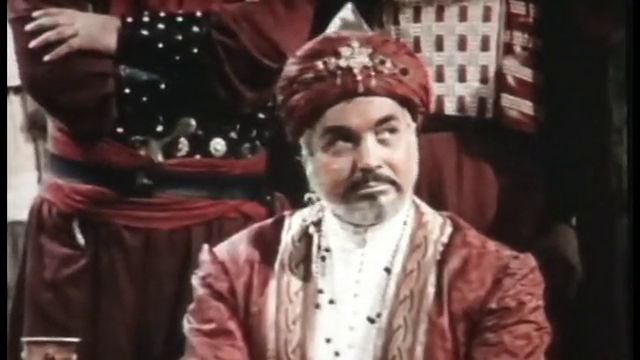
    Plot isn't typically a strong point in this genre, but Hercules and the Tyrants of Babylon is built around a tricky, multi-directional power struggle, replete with betrayals and counterbetrayals. At the center of it all are the three siblings who rule Babylon as a triumvirate, including the combative general Salmanassar (Livio Lorenzon):

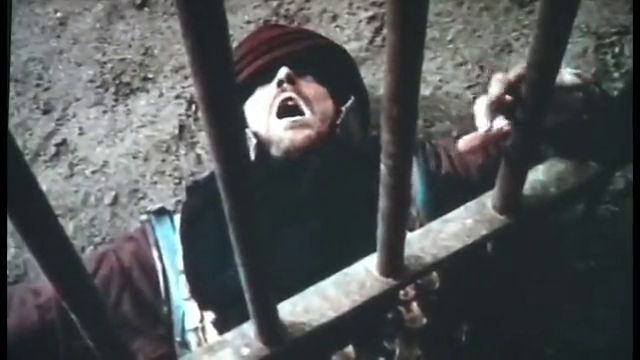
    The crafty statesman Assur (Tullio Altamura):
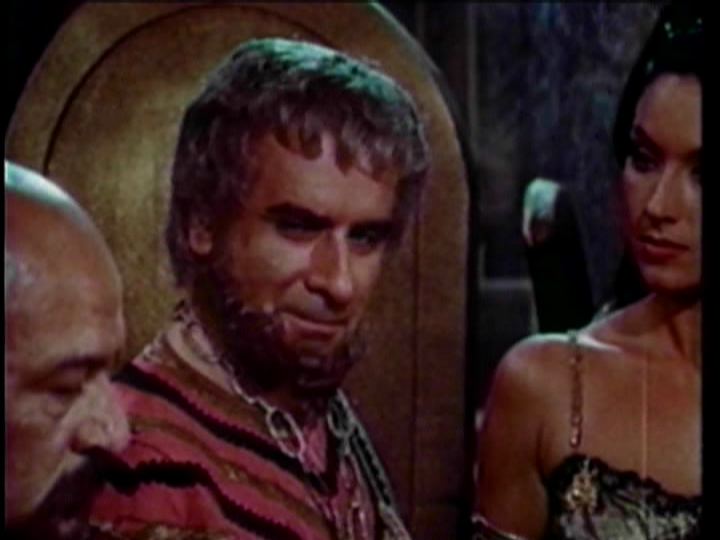
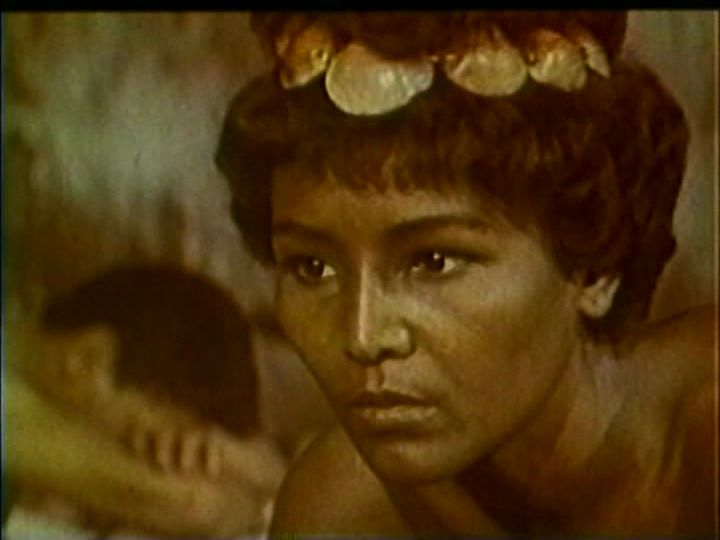
    And the treacherous Taneal (Helga LinĂ©):

    Taneal first enters the picture to stop the execution of a soldier she's been banging (Diego Pozzetto). IMDb says his name is "Bomar" but it sure sounds like "Bomir", so we'll just call him Boromir, even though he looks nothing like Sean Bean.

    Boromir's forces went out to capture Hellene slaves, but were unexpectedly routed. Salmanassar thinks him a coward, and Assur mocks his explanation about "that old myth about the giant who's able to hold off an entire army single-handed? I've heard that before!"

    No points for guessing exactly who they mean -- or for anticipating that Taneal takes a personal interest in the prospect of a big, strong man entering the picture.

    Hercules (Peter Lupus) also represents a welcome alternative to getting hit on by Malik (Mario Petri), King of Assyria, an unprepossessing fellow who vaguely resembles Dick Van Patten from Eight Is Enough.

    Malik shows up to ply the three tyrants with gifts and gold -- and Salmanassar really likes his pressie.

    All Malik asks in return is that they give him all the slaves in the city of Babylon. Since Malik might as well be wearing a baseball cap that says "I HAVE A HIDDEN AGENDA", it falls to Taneal to suss out his real plans. Hey, someone has to drink the drugged wine in these things, you want it should go to waste?

    It turns out that when the Babylonians sacked Hellas, they unknowingly captured their queen, Esperia (Anna Maria Polani, looking a heck of a lot better here than in Hercules Against the Moon Men). Malik wants to marry her to gain control over her lands, but neither he nor anyone else knows which slave is the Queen -- and the Hellenes ain't talking.

    So, they tie them all up and deny them food and water until someone talks. Seems like checkmate, but the Hellene women come up with a clever countermeasure that'd be one heck of a dramatic coup if Spartacus hadn't already done it four years earlier.

    Also, Esperia is Hercules's wife. He was away for two years, you see, doing Hercules things. Otherwise he totally would have saved her, and his country, and also he definitely didn't bang other women in the meantime.

    I said women, right? Yes, women, that's what I specifically meant.


    (He did go clubbing, though -- but don't worry, he only watched.)

    Pretty much everyone in Hercules and the Tyrants of Babylon is either Greek, or a villain, to the point where it subverts some typical filmic conventions. For instance, in most movies, if you save someone's life they become a permanent ally, steadfast and true, because they feel a gratitude that transcends all cultural or political boundaries. Not here, though!

    One really weird thing about the print used by Mill Creek: a stream of what sounds like Morse code runs quietly but steadily through the entire film. In this thread on Archive.org, one (unnecessarily combative) poster says it's unintentional bleed from time code used in TV broadcasting, which seems plausible.

    There's never that much tension in a genre where you always know who wins, and Peter Lupus isn't the most charismatic Hercules we've seen so far. But the layers of intrigue and duplicity in Hercules and the Tyrants of Babylon help keep things interesting -- even though, in a perverse way, they also make it a bit less fun.

    Still, it's a well-made film that lacks the tackiness of other pepla we've seen, has some nice set-pieces, and puts a fresh spin on old fan favorites like "drugs in the wine" and "giant wheel for some reason".


    Hercules Unchained (1959)
    [aka Ercole e la regina di Lidia]

    Grade: C-

    Now this is something else -- not quite the source of the whole genre, but only one step removed from it, with Steve Reeves reprising his role as the big man. It's probably silly to watch Hercules Unchained without having seen the original Hercules from the previous year, but we do silly things around here, like "watch poor-quality transfers of 250 mostly-bad movies".

    Filmmaking changed a lot between the end of the 1950s and the beginning of the 1960s, and Hercules Unchained hits us with one of those period conventions early on, when Herc's wife Iole (Sylva Koscina) suddenly bursts into song. It's jarring, overdubbed, and doesn't quite cross the line to "delightfully silly".


    For some reason -- no, not that reason --

    -- Iole and Hercules bring the man-boy Ulysses (Gabriele Antonini) along on their honeymoon. He seems like the quintessential third wheel, leaving one to wonder why exactly...

    ...no, not that other reason either. Sheesh.

    Hercules soon gets himself mixed up in a Theban power struggle. Yet again it's all thanks to Oedipus (Cesar Fantoni), that perennial ruiner of good clean family fun.
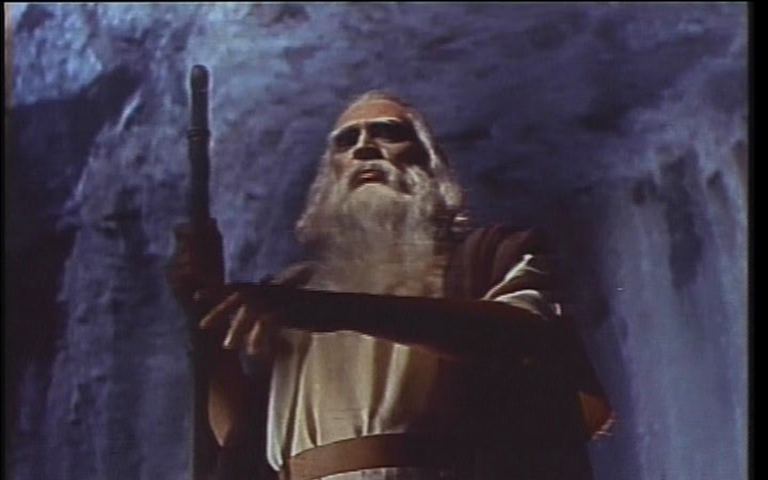
    His son Eteocles (Sergio Fantoni) is due to hand off power to his other son Polynices (Mimmo Palmara). It's the same old thing they did last year -- and every year -- but Eteocles don't wanna. But he's gotta. But he don't wanna.

    Hercules brokers a deal between the two, leaving Iole behind as a de facto hostage while he runs back and forth between camps. If things go perfectly it seems Thebes will be at peace -- but since Eteocles has borrowed Malik's baseball cap, you can probably guess what he really has in mind.

    And, of course, things don't go perfectly, because Hercules drinks from the wrong spring, loses his memory completely, and gets shanghaied by Queen Onfale of Lidia (Sylvia Lopez).

    If someone could market this, they'd make money hand over fist, since it's essentially a "get out of jail free" card for adultery: how can you remember you're married if you can't even remember your own name, right?

    The artist formerly known as Hercules seems perfectly content with the situation, but Ulysses -- who has a kind of Topher-Grace-meets-David-Faustino thing going on, if you're into that -- insists on being the stone in his shoe.


    First, that lovable trickster pretends to be Herc's deaf-mute servant boy, in an attempt at comic relief that's neither amusing nor (in a minor miracle) offensive.

    This saves him from execution by the Lidian soldiers, who are no doubt grumpy about their chronic helmet hair: if only they'd invented styling gel in the B.C. era.

    To backtrack a bit, Hercules Unchained begins with a stylized, ceremonial scene in which one man is brought in unconscious while another is murdered by soldiers, and leaves it unexplained for a while.

    When that scene repeats with different actors later on, it's clear that this is SOP for Queen Onfale, who thus avoids the problem of blocking your ex on social media. So it's Ulysses's job to remind Hercules of his real identity, before he gets thrown over for the next pretty boy...

    ...and succumbs to an even worse fate than we'd realized.

    And Ulysses has to do all this before those dweebs in Thebes kill each other -- or Iole, who's also earned the unwanted attention of a lascivious captain (Ugo Sasso). Aw, jeez.

    Once he comes back to himself, Hercules bends some things and throws some statues, and you know how the rest of this goes.

    Did you want a silly dance? Hercules Unchained has one of those, though we intend no slight to the dancer, who's popped up on YouTube to describe her experience: here's to you, Mrs. McGrath.

    Despite the abundance of pretty boys, the film seems to have a penchant for offbeat-looking women with slightly awkward screen presence. It prominently features them in ensemble shots, like here:

    Or here:

    Or here, when an earnest-looking girl in a non-speaking role suddenly pops forward for no apparent reason. The composition of the shot makes her look like an equal third in the scene, but she's not!

    Speaking of catty comments about women's appearances, if Sylvia Lopez hadn't died of leukemia so soon after the production, we'd probably have some things to say about her over-the-top look in Hercules Unchained.

    Instead, let's just say she's not our scene, and leave it at that. As for those who appreciate her and would describe her as "statuesque"? More power to you.

    Anyway, Hercules Unchained is fine, it's swell, it's mediocre, watch it or don't. It could rollick more, or maybe less. It has a high body count, but it also has that 1950s feel where everything plays out a bit like a guided tour, or a scripted amusement park ride, and there's never any sense of danger. It's a highly digestible Herculean food product. It brings along old people for no discernible reason, and then expects us to care when they can't keep up.

    Oh, here's Ulysses's girl, Penelope. Sing to me of the man, Muse, the man of twists and turns, who settled because he couldn't get Donna or Jackie, or even Kelly.

    But she'll be a faithful wife, and a good mom to his son -- which works out well because heck, he's not going to be around to change any diapers!

    Thursday, August 16, 2018

    Men as men should be

    When Embassy Pictures decided to import 14 assorted peplum films from Italy, add dubbing and narration in English, and sell the whole package to American TV as "The Sons of Hercules", they came up with one hell of an earworm to bookend the whole thing. Check it out:

    The mighty sons of Hercules
    Once thundered through the years
    These men of steel could never feel
    The curse of a coward's fears

    The mighty sons of Hercules
    Were men as men should be
    They burned with dreams,
    Then turned their dreams into history

    A hundred giants brave and bold
    They ruled the world in days of old

    The mighty sons of Hercules
    Were men as men should be
    They took the world
    And shook the world
    The sons of Hercules!

    Seriously, we walked around randomly singing this tune for days afterward. Well done, Ted Lehrman and Leonard Whitcup, even if you sorta rhymed "dreams" with "dreams".

    It turns out that we've already encountered two of the films Embassy repackaged, namely Fire Monsters Against the Son of Hercules -- back in 2009 (!!!) -- and, far more recently, Goliath and the Dragon. However Mill Creek used theatrical prints for those, so we didn't get Lehrman and Whitcup's delightful tune until now.

    In any event the three films below bring our Sons of Hercules total to five, though unlike our recent Gamera reviews, we have no plans to track down the remaining nine: we go the extra mile for giant turtles, but not giant sandals. Or swords. (Oh, be quiet, Rajah.)


    Mole Men Against the Son of Hercules (1961)
    [aka Maciste, l'uomo piĂ¹ forte del mondo]

    Grade: C+


    Is this the best peplum movie we've seen so far? It certainly has some of the strongest production values, with huge, expansive sets and wonderfully goofy costume design.


    It's also got Val from HR, who always tells you about her kids and questionable politics before signing off on your paperwork. (Get a couple drinks in her and maybe she'll have a thing or two to say about black people, too -- but who are you going to complain to? HR?)


    Speaking of folks of African descent, Hercules Jr. aka Maciste (Mark Forest) gets a companion early on when he saves Bangor (Paul Wynter) from being sacrificed by the Mole Men. Sadly, Herc was unable to rescue his brothers Portland, Caribou, and Bar Harbor.


    And speaking of the titular Mole Men, the title isn't an example of sex discrimination, as it's only males that we see with the distinctive white skin, white hair, and amazing headgear. No surprise that they're deathly vulnerable to the rays of the sun, though if it weren't for a very prominent death scene in the film's opening, the bad day-for-night cinematography might leave you confused about the details.


    In fact all the women we meet seem to be captives from the surface, like Princess Saliura/Salirah (Raffaella CarrĂ ), or the interesting-looking Tulac (Gloria Hendy) who knows Bangor from the way-back.


    Gloria's sister Janine is also in the cast as a harp-playing handmaiden; in real life, the two of them spent some time in Italian cinema before apparently becoming successful antiques dealers.


    The one non-captive woman we meet is Queen Halis Mojab (Moira Orfei), a cruel and remote monarch who likes to wear outfits that look like leftovers from a high-end musical. How is it (one wonders) that the queen of the Mole Men doesn't have the complexion of the men? Is it just that women in these movies need to be "hot", and fright wigs and white pancake makeup don't do the trick for most of us?


    We won't claim Mole Men Against the Son of Hercules isn't predictable; we were able to call certain lines outright from the script before that happened -- not that it's a feat of intuition to know the Queen will say "Who are those two [men]?" as soon as Maciste and Bangor pop into her view. After all, like George Eads, queens have needs.


    But despite being on the longer side by box standards, Mole Men trots along nicely for the most part, and those sweet, sweet production values certainly help...


    ...even if they make some off-the-wall choices -- no, scratch that, because they make some off-the-wall choices.


    OK, maybe there was one scene too many with Mark Forest straining mightily against some obstacle or other, but that's the Superman problem: how do you generate suspense when you know the strong man always wins?


    Actually, the strong man seriously screws up at one point, though he shrugs off the dozens of deaths that result. Wasn't his fault, after all. And now, have a comically oversized novelty gong:


    Son of Hercules: The Land of Darkness (1964)
    [aka Hercules the Invincible; Ercole l'invincibile]

    Grade: C-

    Hey, déjà vu, because this is damn near the same plot as Mole Men. We've got the civilization that lives underground (but keeps horses), enslaves its neighbors, and wears funny costumes. We've got the evil, power-hungry queen with a penchant for disguise, the youthful princess she intends to sacrifice -- and a lot more bad day-for-night cinematography.

    And of course we've got the usual clichĂ©s that come with the territory, like the ceremonial execution that doubles as a test of strength -- and when our Herculean offspring Argolese (Dan Vadis) unexpectedly rises to the challenge, well, that really gets Queen Etel (Carla CalĂ²) all hot and bothered:

    But despite being a bit shorter, Land of Darkness isn't as much fun as Mole Men. Many parts that didn't have a parallel in Mole Men still felt like a rehash, as in the "sack the village" scene that differed little from a similar scene in Fire Monsters (though without the red underwear). And giant wheels are in fashion, it seems.


    Argolese's early battle against the dragon also felt recycled, for good reason: apparently Embassy chose to replace all the creature shots with footage from the 1958 film Hercules. If the dragon in Ercole l'invincibile was particularly laughable, maybe it was the right call, but we can only speculate.


    Instead of a muscular hunk as his second, this son of Hercules has a middle-aged poltroon, Babar (Mario De Simone, mysteriously uncredited on IMDb). At first we feared endless scenes of "comic" relief, but after some cowering and chicken-eating, Babar soon rises to the occasion and pulls his weight, to our pleasant surprise.


    In fact we had more of a problem with Argolese himself, as Dan Vadis just didn't have the right look for the part. His weird beard is distracting, his jaw is more Ron Perlman than Buzz Lightyear, and his physique is chiseled yet somehow mooby.


    The biggest annoyance, though, was the chumbly wumbly bear that pops up in the first act and shambles behind the characters for a while. Then he attacks Argolese for no reason, has his life spared, wanders off...and never shows up again. The filmmakers squandered a perfect opportunity to bring him back at the end and have him off a bad guy or two, but instead, we get Chekhov's bear, hanging on the wall and never fired: a rookie mistake.


    Yet another issue: this print of Land of Darkness was edited to make two one-hour episodes -- which would inevitably involve a lot of repetition -- and then "un-edited" (whether by Mill Creek or someone else) with awkward results, including a couple of hard cuts. We were warned, since the opener bills itself as "Part I", but it's still bizarre when, at around the 50 minute mark, the narration suddenly kicks in again...and we get a spoiler-heavy montage of the last third of the plot, before continuing with the movie! I guess Part II must have rehashed one hell of a lot of Part I, since we were well over half done with the film by then.


    Anyway, complaints aside, there were enough fun characters, neat surprises (like opening a silly dance number with buff male dancers), silly outfits, and attractive sets to make Land of Darkness an OK watch. It's not great, but compared to some of the painful specimens on this box, "not great" is pretty decent.


    Oddly, some of the spoilers for Part II looked better than the actual scenes in context, as Mill Creek's print gets blown out in the closing minutes for whatever reason. Also, is there some sort of anamorphic widescreen going on? The default 4:3 looked squeezed and narrow, but when we told VLC to use 16:9, things clicked. It's important to view Dan Vadis's nipples in the right aspect ratio, after all.


    Devil in the Desert Against the Son of Hercules (1964)
    [aka Anthar the Invincible; The Slave Merchants; Soraya, Queen of the Desert; etc.]

    Grade: n/a


    This is a funny one, as it isn't actually on our box set! From what we understand, Devil in the Desert Against the Son of Hercules was one of four films removed from 50 Sci-Fi Classics after its initial release, along with Robot Monster, Zontar: The Thing From Venus, and Battle of the Worlds. Those were also three of the first movies we reviewed for this project, which isn't a coincidence: as we waited for our box set to be delivered, in the meantime we sought out what we knew we'd be missing.

    Logical, then, that we'd review the fourth film sooner or later, right? But Devil in the Desert has had to wait nearly a decade to get its due...and sadly, we're not actually going to do a proper review, as it didn't really get our full attention. Maybe it was peplum fatigue; maybe it was knowing the film didn't "really" count as part of the 250-pack; or maybe it was the disappointment of finding out that the titular devil wasn't a whirling tornado, or even a red-painted muscleman Ă  la Henry Rollins in "Liar", but just this guy:


    Now Zontar, Robot Monster, and that movie with Claude Rains and space intestines in a cave? They all legitimately belong on a 50 Sci-Fi Classics box set. And at least Mole Men and Land of Darkness are films where the hero fights a dragon, explores a subterranean civilization, or otherwise investigates the fantastic and supernormal.

    But Devil in the Desert is...just your average Arabian adventure. Precisely where isn't specified, though it was filmed in Algeria. OK, at one point Anthar does fight a rhinoceros for some reason (presumably credit card-related):


    Otherwise it's all camels, tents, harems, and sand, with no business being on a science fiction box set or a horror box set. True, one could say the same of Hercules and the Masked Rider, but that one replaced a film duplicated elsewhere on the 250-pack (which is why there's so much peplum in this last leg: six dupes in 50 Sci-Fi Classics got swapped out for five sword-and-sandal movies).


    So Mill Creek probably made a wise move in cutting this one, even if they only did it for copyright reasons -- and apparently, they reinstated Devil in the Desert when they reissued 50 Sci-Fi Classics back in 2009, so those reasons can't have been too pressing.


    We haven't seen Mill Creek's version, but we're guessing it looks like the ass-quality prints commonly found online. We started out with a YouTube download whose image was so unstable that, mid-viewing, we changed over to a much better widescreen copy from Archive.org that was much better (though the colors were still washed-out, and the sound rather strident).


    Though Devil in the Desert left us yawning, it has some ambitious set pieces and seems to be well-regarded among peplum fans, and apparently a high-quality DVD was released in PAL territories under the Anthar l'invincibile title. It's nice to know a clean copy exists -- who knows, maybe we'll see it someday and change our minds.

    But then again, without a male chorus singing of "men as men should be", how could it compare?