Showing posts with label pentagrams. Show all posts

Wednesday, May 31, 2017

Kaj nun por io tute malsama

Nu, Kapitano, kion vi faras en hororo filmo?


Incubus (1965)
[Inkubo]

Grade: C
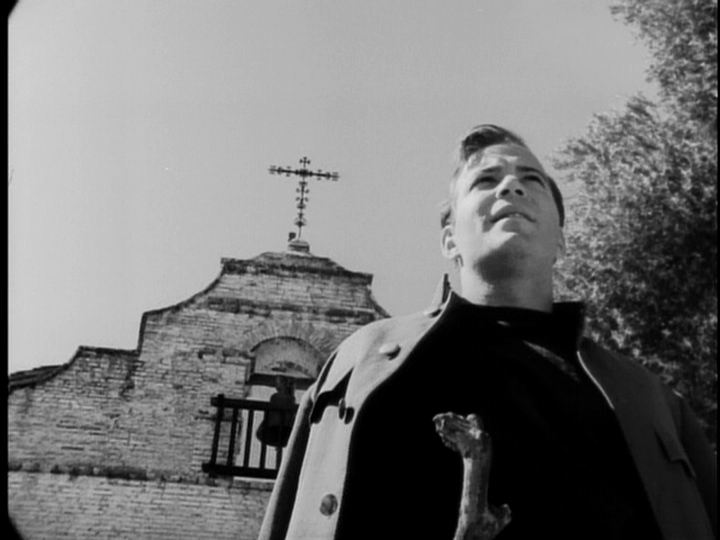


Continuing our detour from the Mill Creek box, we watched the Shat -- not to be confused with the Schach -- in Incubus, a film that manages to be infamous on multiple fronts. To wit: it was believed lost for many years, and the only surviving print has burned-in French subtitles. It allegedly carries a "curse" that, shortly after the film's completion, yielded two suicides (one of them a murder-suicide) among the cast members.

And -- oh yeah -- it's completely in Esper-fuckin'-anto. (That would be an example of an infix, for all you budding linguists out there.) Thus the burned-in subtitles, which are obscured by an ugly but necessary black box for the English-language subs.

Another site describes Incubus as "some kind of hybrid of an Ingmar Bergman film with Manos: The Hands of Fate", which is pretty much spot on -- though, at least plot-wise, you could probably throw in a dash of Night Tide too. It tells a moody tale of a succubus who drowns sinful men at the behest of an evil cult...


...until she meets a man who's not so easily corrupted. (Three guesses who.)

The movie's deliberate pace and philosophizing dialogue are certainly reminiscent of Bergman, as is the positively gorgeous cinematography by Conrad Hall (of Butch Cassidy and the Sundance Kid and American Beauty fame). For many of the films we watch, we find ourselves struggling to find a decent screenshot; Incubus presents us instead with an embarrassment of riches, with almost every frame akin to a well-composed photograph.

It's true that, by using Esperanto, the events in Incubus become weirdly unmoored from any specific time, place, or culture: we literally have no idea when or where these events are meant to be happening. It's disorienting, and certainly contributes to the film's unsettled atmosphere. 

It's also true that, even to a non-speaker of Esperanto, the dialogue in this film is painfully stilted both in its delivery and its pronunciation: most of the actors -- who allegedly learned their lines phonetically, and on short notice -- are clearly uncomfortable with the language, and their line readings suffer as a result.

The interesting exception is Shatner, who (at least in the early going) is noticeably more fluent than his colleagues. We've read that he speaks Esperanto with a pronounced French-Canadian accent, but better that than a Southern California accent, n'est-ce pas? (Dude?)


Shatner's hammy behavior in the wake of Star Trek has made it easy to overlook that he's always been a committed, disciplined actor. Whatever his personal shortcomings, his fame is at least partly the product of dues paid through years of hard work, by being damn good at his job and giving it everything he's got.

In the case of Incubus, he does what he can to make the best of a difficult situation; while he can't singlehandedly elevate the film, he's certainly not a liability -- and almost had us believing he could carry this off.
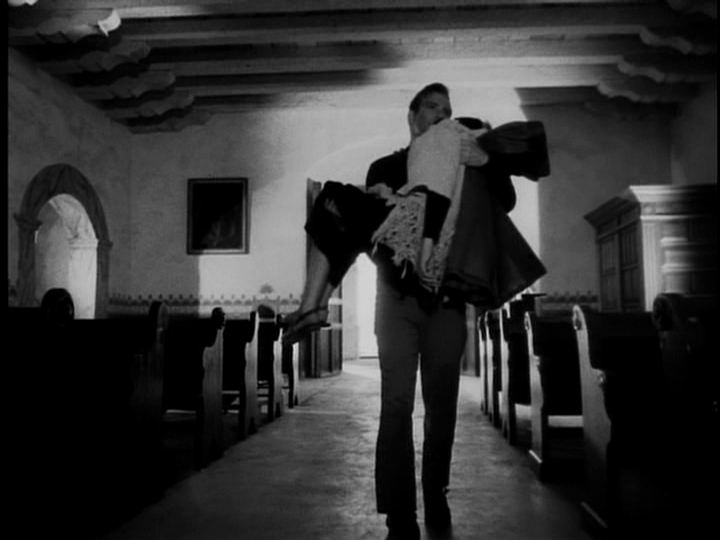

We also took notice of Milos Milos as the titular incubus. Shame he was the perp in that murder-suicide we mentioned above, as there's real menace in his leering, demonic performance -- and while some of it is attributable to good direction and cinematography, this Serb clearly had screen presence.

But ultimately it's hard to see Incubus as anything more than a beautifully filmed miscalculation. Pretentious and portentous, it nonetheless manages to conjure an atmosphere of real foreboding -- but neither its muddled narrative nor the stiff cast supply the foundation needed for Incubus's atmosphere to amount to more than just ambience. It has the visual flair and tortured quality of a Bergman film, sure, but not the intelligence or finely crafted performances characteristic of Ingmar's work.

All in all, certainly worth seeing (especially in the most literal sense), but not a good film. Sorry, Cap'n.


As a side note, Incubus is just about the last movie in our massive review backlog that, when we began chipping away at it with our most recent Ed Wood entry, dated back to August 2014. Since kicking into high gear in October of last year, we've been covering films that we initially watched between December 2014 and December 2015. With over 50 films in the backlog it seemed insurmountable when we first started, but here we are, out of the woods.

For a variety of reasons we didn't watch many movies for most of 2016, though Incubus was one of the few; others -- at least the ones potentially relevant to this blog -- include:
  • Jungle Moon Men, one of the more offensively terrible films we've ever seen from a mainstream studio;
  • The Howling and King Kong, two films far too famous to need our two cents on 'em;
  • Chandu the Magician, an amusing but threadbare romp with Béla, and One Million Years B.C., a less enjoyable (and bone-stupid) romp with Raquel.
We won't be doing formal reviews for any of these, but funny story about The Howling. We had DVR'd what we thought was The Haunting of Julia, and let that recording sit for over a year before sitting down to watch it. The first minute or so didn't get taped, so we didn't see the opening titles and were thoroughly confused for about 20 minutes until we figured out what had happened. In retrospect we're glad we got the chance to see this landmark werewolf film, even if purely by accident.

In our next entry we'll cover the only two Mill Creek box films we watched in 2016. Once that's done, we'll be fully caught up, and from that point forward, everything you read from us will be hot off our cinematic presses and fresh in our minds -- which will, in turn, spare us the experience of having to watch the likes of Frankenstein 80, A Face in the Fog, and Midnight Phantom twice.

September 2018 will also mark the approximate 10-year anniversary of this project, with the anniversary of our first blog post coming two months after that; with roughly 70 films between us and the end of the 250-pack, perhaps it's not inconceivable (hi, Wally!) that we'll finish it up in time for the site's one-decade mark? We'll see!

Saturday, January 2, 2016

Frost / Nixon

THESE movies . . . also known as films . . . don't have anything in common.


A Strange Adventure (1956)

Grade: C-


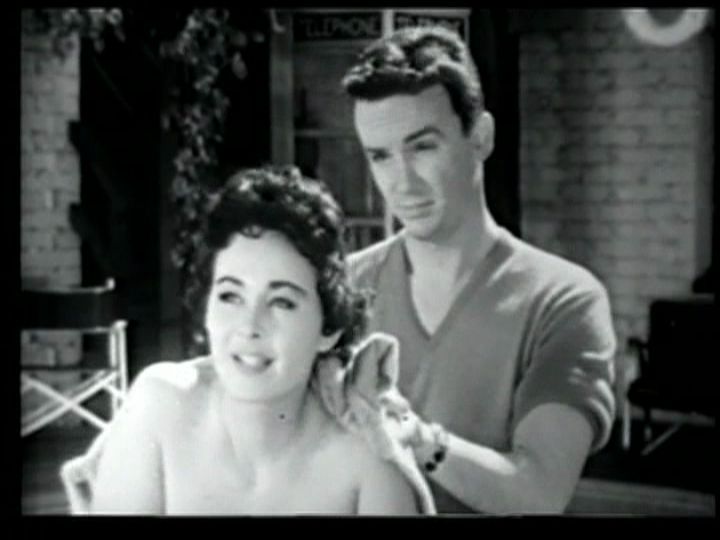
If you've seen at least one low-budget, mid-1950s noir, then you'll have a handle on the first third of A Strange Adventure, which is neither strange nor particularly adventurous. Busty Lynn (Marla English) lodges at a small-town motel and catches the eye of the owner's hot-rodding-yet-clean-cut son Harold (Ben Cooper). Backrubs and picnics ensue.


Lynne's shady associates arrive from Omaha -- the sharp-faced, short-tempered Al (Jan Merlin), and the perpetually congested Phil (Nick Adams). Harold figures out the men are bad news, but naturally still thinks Lynn is pure as the driven snow. Robbery, murder, kidnapping, and car chases ensue.


At the 30 minute mark, things take an unexpected and chilly turn, as the escaping criminals drive into the Sierra Nevadas and end up stranded at a gas company snow survey cabin staffed by brother and sister Luther and Terry (Peter Miller and Joan Evans).


A snow survey cabin! Usually we'd expect a yeti or other beast at this point, but sadly it's not that kind of movie; we're still in a noir, just one that's transitioned from heisting to hostaging. The strangest thing on offer is Phil's choice of outdoor headwear.


And if you're wondering, "Hey, how did they know to bring their winter clothes?", the film has you covered -- the crooks, arriving from Nebraska, make an off-hand comment early on about the unexpected mildness of the California winter. Take that.

As is the rule, sisters need to be someone's love interest, and dark-haired Terry fits right in where Lynne left off. And hey, Harold could do a lot worse -- Terry is much cuter, and turns out to have brains, brawn, and no shame in using either.


Between the sabotaged radio, hobby Geiger counter, and giant motorized snowmobile, the plot is full of literal devices that add interest in an otherwise by-the-numbers crime drama.


Overall not terrible, yet nothing particularly special. The ending is rushed and pat, and there's one huge loose end left dangling (Woody, anyone?) However, a few clever deceptions and the wintry setting give it a slight edge over other, less differentiated fare.


(An interesting footnote: Emlen Knight Davies, who plays the blink-and-you'll-miss-her role of motel owner/mom, is the daughter of former Soviet Union ambassador Joseph Davies, of Mission to Moscow fame. Emlen accompanied her father and stepmother -- wealthy cereal heiress Marjorie Merriweather Post -- to Moscow from 1937-38, and has published a series of photographs from her trip. Why she decided to go into acting in her mid-30s, after a young life spent globetrotting, meeting royalty, and marrying an MIT-educated Belgian engineer, the internet seems to know not.)


Держитесь подальше от плохой девочкой!


The Werewolf of Washington (1973)

Grade: B-
Quadruple Bathroom Upgrade: B


We don't get too many black comedies in the box -- our beloved Terror at the Red Wolf Inn is really it. Anything else qualifying as "funny" is either unintentionally so, or else a poverty row non-horror movie tossed in by Mill Creek as filler -- and usually, when all is said and done, not all that humorous anyway.


Now we can add The Werewolf of Washington to that short list, and it ticks all the boxes. We love the 70s aesthetic, and this has it in spades -- the whole movie is a send-up to the most laughable parts of Watergate era Nixon and his administration, right down to the Black Panther hating buffoon of an Attorney General.


Interesting protagonist? Check -- Dean Stockwell gives a wonderful off-the-rails performance as the anxious Jack, who gets himself bit by a you-know-what while stationed in Hungary, then watches his life fall apart spectacularly when he returns to D.C. as the President's new press secretary.


Life lessons? Oh sure, those too -- it's important that films be educational, as well as entertaining. We learn all about how to conduct ourselves in true 70s style, with demonstrations of bathroom etiquette...


...and home decor...


...not to mention commentary on gender roles...


"Jack, will you please stop scratching the palms of your hands? It's . . . it's just not manly."

...asserting oneself...


"This is not the thing I want! I don't want him here!"

...sports skills...


"Jack, will you throw the ball! Throw the ball down the aisle!"

...and kindness to animals.

"Are you real? Are you really real?"

The movie's strong in geometry -- eventually we'll learn to distinguish Pentagons from pentagrams -- but not so hot with astronomy. Four or five full moons within a two-week span? Who knows, maybe 1973 was an astronomical anomaly.


With the random midgets, prank phone calls, ludicrous political caricatures, eye-gouging wallpaper, and snarling aplenty, there's so much to recommend The Werewolf of Washington as the featured terrible entertainment at your next gathering. There's no gore to speak of, so even the kiddos might get a kick out of Stockwell's wacky werewolf makeup and shenanigans, though most of the Nixon satire will probably sail right over their heads. (And if it doesn't, send 'em over here -- there's a kid named Sascha Segan we'd love them to meet.)

Saturday, February 28, 2009

Pull the strings! Pull the strings!

Here at The Umbrellahead Review, we try to come up with common themes for our entries -- themes, that is, that go beyond merely saying "Well, these films were on the sixth disc of the box set." Sometimes it's very natural (as in K.'s upcoming entry about Doomsday Machine and End Of The World), sometimes it's a stretch, but we always do our best.

And the theme for this entry? Puppetmasters. In all three of these movies, someone has an evil, depraved agenda, and is secretly pulling the strings behind the scenes to make that agenda happen. And all these puppetmasters have servants who do their bidding -- though the servants in question run the gamut from willing accomplices, to unwilling accomplices, to no-thanks-sir-I'm-just-gonna-get-the-hell-out-of-here.


Fury of the Wolfman (La Furia del Hombre Lobo)

Objective Grade: F
Camp Value Bonus: D

We're not familiar with the other films in this series, nor any of the films of Paul Naschy, who's apparently a beloved Spanish cult horror icon. What we can say is that this one doesn't make any fuckin' sense. Ostensibly the story of a researcher who suffers from the titular affliction, within minutes it degenerates into a slapdash, wildly incoherent mess -- we had to rewind several scenes at the beginning just to sort things out. Terrible direction, jarring transitions (including footage that's obviously taken from a completely different movie), and stupid dialogue about chemotrodes and pentagrams, plus a score so overwrought and inappropriate that it makes those silent movies with random overdubbed classical pieces seem like masterworks of music editing by comparison.

If the stories are true, the director spent his days on set drunk as a skunk, abdicating most of his responsibilities to his teenage nephew. Based on the evidence, we believe it. There's a decent amount of camp value to be had, and we laughed a bit, but the sheer randomness of it gets oppressive after a while. Having said that, this version is apparently cut, removing several scenes with sexual content that are also integral to the plot. A longer version is around, under the title The Wolfman Never Sleeps, and is supposedly a minor improvement.


Good Against Evil

Grade:
C

Boy meets girl, boy loves girl, the devil takes her away. With the aid of Christian iconography, boy goes after her high-maintenance ass. Then he has to fight through multiple levels of demonic opposition, occasionally ending up in his underpants somehow, and when he gets to the end of the whole thing he finds out he's not even done, and it's not the real ending...wait, sorry, that's Ghosts 'n Goblins for the NES, a game that still pisses P. off to this day.

Even so, this Rosemary's Baby-meets-Exorcist knockoff is about as frustrating as playing a session of that aforementioned, godforsaken piece of junk, since about five minutes before the end, we realized that it was not merely a TV movie (that much was obvious), but actually the pilot episode for a series that never got made...and thus, it ends without any sort of resolution. Much booing at the screen ensued, but hey, at least that means we still cared.

The damsel in distress, Jessica, is a nightmare amalgam of negative female entitlement archetypes, i.e. a completely unlikable, spoiled, neurotic ice queen; P. suspects his friend S. would classify her as a quintessential example of borderline personality disorder. We have no idea what the male protagonist, played by one Dock Rambo (!), sees in her, especially given that (1) he practically has to stalk her to get a date out of her, and (2) a young, brunette Kim Cattrall is also hell-bent on getting into his pants. (Not that K.C. is all that, but from our perspective, it'd be an upgrade.)

Speaking of K.C., it has them too, though not in the Caribbean. Am I right? Or am I missing something?


House of the Living Dead

Grade: F

A nineteenth-century South African vineyard is the setting for this interminable tale depicting the last remnants of a tortured, madness-prone expat family. Son #1 tries to get Mom to assent to his marriage, while son #2 hides in the attic, conducts mysterious experiments, plays bad organ music, and generally creeps out his future sister-in-law. British accents and picturesque locations provide a veneer of respectability, but really this movie is total crap -- muddy, dull, and tedious. The pacing is ponderous at best, the score hackneyed and trite, and we're given no particular reason to give a damn about any of the characters, except for that poor baboon.

Tries to regain some ground with a "twist" ending (which K. saw coming, P. didn't), but it's the wrong twist, and the ending proper is hilariously pathetic. It surely doesn't help that the print looks pretty lousy -- fuzzy, washed-out to the point of colorlessness, and prone to some sort of automatic level control that abruptly darkens several scenes that were already dark, rendering them basically unwatchable.