Some genres offer bodies of work so self-similar that, naturally, we sometimes confuse one film with another, or get the details mixed up in our minds. Take, for instance, the archetype of the spunky female reporter, saved from grisly death by (poison flowers/murderous lunatics/toxic gas/hired goons) thanks to the well-timed intervention of her love interest, a (policeman/ADA/reporter/detective), whom she marries at the end of the film. Can you fill in those blanks for a movie like A Shriek in the Night or The Fatal Hour without Googling? We sure can't.
It gets weirder, though, when we find ourselves confronted with pairs of unrelated films that don't have much in common with each other but, when considered as a duo, bear a striking resemblance to another couple of films.
Such is the case with these two flicks. There's very little connection between The Dungeon of Harrow and The Devil's Sleep, except that they're both on Disc 39, Side B of the Mill Creek 250-pack, and so we watched them consecutively. But as a pair, they have a freakishly large amount in common with the two films we wrote about here, Bloody Pit of Horror and City of Missing Girls. Some examples:
- Brooding nobleman in isolated castle engages in sadistic behavior towards visitors while living under the shadow of a lethal, disfiguring plague? Well, that's The Dungeon of Harrow and Bloody Pit of Horror.
- Hoodlum, threatened with prosecution for leading young folk into iniquity, engineers compromising photograph in order to blackmail high-ranking officer of the court into resigning? And then, girlfriend of court officer goes sexily undercover to thwart blackmail plot, but has cover immediately blown? Why, that's City of Missing Girls and The Devil's Sleep.
- Film prominently features famous real-life strongman as major character? Huzzah, it's Bloody Pit of Horror and The Devil's Sleep.
- How about a captain -- played by a well-known "name" actor whose fame exceeds that of anyone else in the cast -- who offers a much-needed voice of sanity and competence in the midst of chaos, and treats his junior partner with kind respect? Look no further than The Dungeon of Harrow and City of Missing Girls.
Clearly, these four have their cross to share: what a perfect mess! But let's pull out our torch, wooden sword, and superfluous apostrophes for our descent into:
The Dungeon of Harrow (1962)
Grade: D

What on earth to make of this moody, messy affair? How do you parse a movie that clearly plans to live or die by the virtues of its dialogue, but is chock full of line readings stiff enough to make Faith Clift blush?

How, exactly, to take a movie seriously that mispronounces the name of its own antagonist? (Yes, the bad guy is "duh Sayd", it seems, and Donatien Alphonse François is spinning in his grave.)

Or that thinks you can turn an ordinary middle-aged man into a convincing facsimile of the devil, simply by inverting the colors of the shot?

And yet there's something vaguely endearing about The Dungeon of Harrow, whose flaws aren't, one imagines, the product of mercenary cynicism or Woodian half-assery. For such an obviously cheap film, it manages to conjure an impressive degree of atmosphere; even when the props and costumes look to be borrowed from the local summer stock theater -- or simply made from whatever the 1962 equivalent of the local dollar store had on hand -- it's somehow forgivable.

We're guessing this was a labor of love for Pat Boyette, who wrote and directed the film, serves as its narrator, and even gets credit for the soundtrack (though from the sound of it, we'd guess he was just bringing up the faders on various snatches of library music). He was also a well-known comic book artist, though a claim on IMDb that he was associated with Howard the Duck appears to be completely false.

Thing is, The Dungeon of Harrow isn't stupid, just amateurish. And it's got a real edge to it too, with whips, chains, décolletage that reveals a bit more than usual for 1962, graphic deaths at the hands of piercingly-thrown swords, and -- hey, speaking of piercings -- female characters who'll never again have the chance to say "Hey, Mom, look what I did!"

Also, we can't overlook Matches -- de Sade's towering (and fiercely loyal) black servant -- whose bizarre getup and platinum blond dye job evoke nothing so much as a Santa Claus/Dennis Rodman mashup (as one site aptly noted). Somehow Maurice Harris brings a certain dignity to a part that, let's face it, is only one or two notches above the likes of The Lost City on the racism-o-meter.

What else can we say? It's The Dungeon of Harrow. It's low-budget, ham-fisted regional filmmaking. It's ponderous voice-over narration. It's "Oh my God, no!" said with an inflection more suitable to discovering that you put the wrong mustard on your turkey sandwich, and you really wanted the Dijon but I guess you'll have to live with the yellow because it's not as if you're going to clean that off, I mean you could but it's a hassle and a waste and why didn't you pay more attention? Now your sandwich isn't good and it's the only sandwich you get to have today, so there.
It's a print that looks like ass (go for the Vinegar Syndrome release, we figure, if you want to see this one at its best). And it's...well, it's pretty decent makeup, actually! Good job, Henry (or is it Enrique?) Garcia.

The Devil's Sleep (1949)
Grade: D+

"Mr. America, walk on by / Your supermarket dream"?

"Mr. America, walk on by / The liquor store supreme"?

"Mr. America, try to hide / The product of your savage pride"?

But -- sorry, Frank -- Mr. America, aka George Eiferman, doesn't do any of those things. He's scrupulously honest and humble, hides nothing, and is entirely drug- and alcohol-free. And naturally, he only gets about ten minutes of screen time, which is all well and good since he can't act his way out of a paper bag. (Dude sure was jacked, though.)
No, The Devil's Sleep may talk a big game when it comes to its featured celebrity, but the vast preponderance of the film is devoted to the naive teens, pill-pushing hoods, and upstanding citizens affected one and all by the scourge of prescription drug abuse: mainly uppers, but some downers too.

It even casts a shadow over The Honorable Rosalind Ballantine (Lita Grey), who's refreshingly portrayed as a judge first, woman second. And when she has a come-to-Jesus moment late in the film, wondering if she hasn't erred by putting her career before her maternal duties, her daughter Margie (Tracy Lynne) shuts her right down, and there's no more said about that. Nice!

Ballentine is one of several public servants who, alarmed by growing episodes of drug-fueled juvenile delinquency, decide to take the fight to local hood Umberto Scalli (Timothy Farrell). Naturally, Scalli -- who, as villains go, is nearly interchangeable with King Peterson from City of Missing Girls -- won't take this lying down. He's not nearly as genteel about it as Peterson, but then again he doesn't seem to murder people routinely, so that's a plus in his column.

Then there's Sergeant Dave Kerrigan (William Thomason), whose girlfriend is Margie's boyfriend's sister. (We literally stopped the DVD to work this out.) And he does the things these guys do in all these movies: do you really need us to tell you what?

Especially for a 1949 film, The Devil's Sleep has a surprising amount of T&A. Some of this revolves around the reducing clinic that's one of Scalli's rackets, where plump aspirants are fed dangerous stimulants to get the pounds dropping off (but don't tell Mr. America!). Cue sideboob, natch, and even more beneath the frosted glass.

The plumpest of those aspirants is Tessie T. Tesse (Mildred Davis). Her considerable girth doesn't go unremarked upon, but the expected jokes have an unexpected lack of nastiness. They wouldn't pass muster on Tumblr -- and what does, really, except the self-righteous spleen-venting of bourgeois brats whose entitled whining so materially and categorically contributed to the election of the unelectable that one might reasonably think them agents provocateurs? -- but (ahem, don't mind us) it's still remarkably gentle for the time, or for such a lightweight movie (no pun intended).

Davis's ownership of her own size -- and witticisms at her own expense -- are the poised responses of a seasoned comedienne. But with no other IMDb credits, her experience must have been on the vaudeville circuit. Too bad; she's pretty good, and could've shined in bit parts on I Love Lucy and so forth.

On a different note, creeped out by Gary Crosby on Adam-12? Well, here's a prototype:

Short, jacked men with domestic violence haircuts and fetal alcohol faces: they just feel like snakes in-a-gadda-da-vita, somehow. So, guess that means Stan Freed is well cast as Hal Holmes, Scalli's liaison to the hungry mouths of teens who just want to loosen up a little.
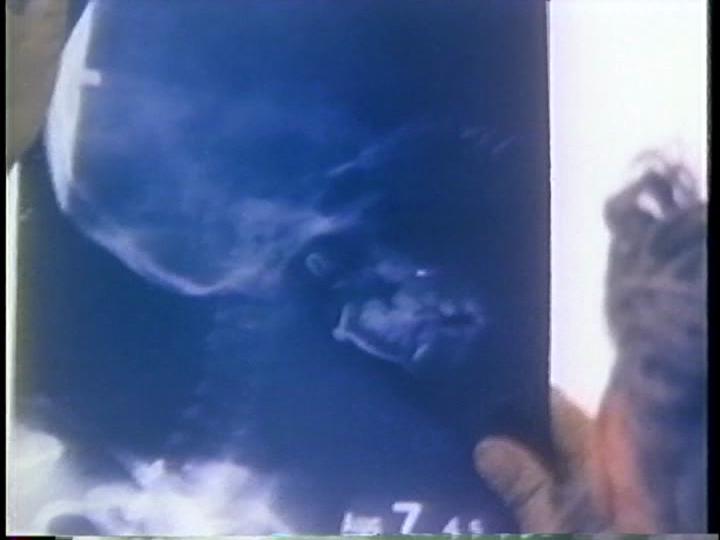
Holmes is also instrumental in getting Margie in trouble, yielding even more teh und ah in photographic form:

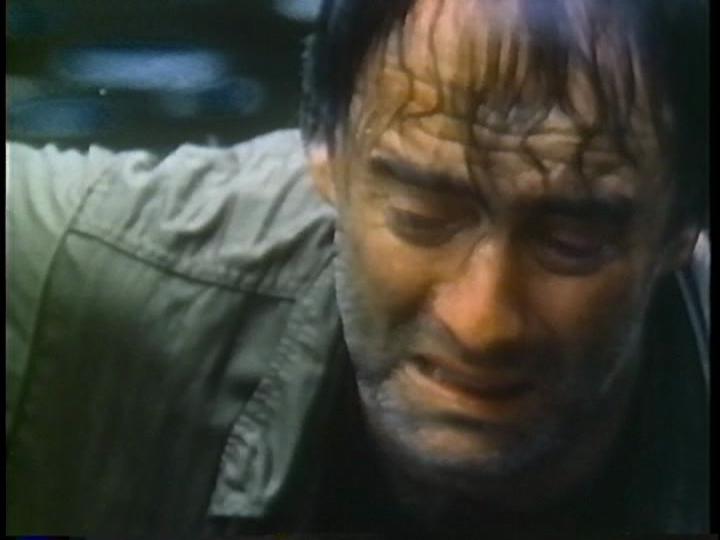
Anyway, to get to the point, The Devil's Sleep is inoffensive but preachy mediocrity, with several scenes that could plausibly have been co-written by Ed Wood if the timeline allowed for it. Then again, amphetamines are scary stuff -- so a bit of moral panic is, for once, hard to fault. After all, you could end up like this guy: