Saturday, January 2, 2016

Frost / Nixon

THESE movies . . . also known as films . . . don't have anything in common.


A Strange Adventure (1956)

Grade: C-


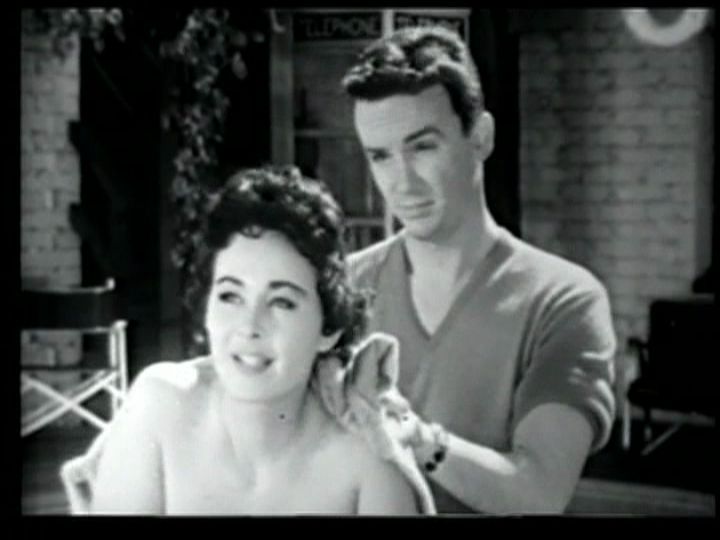
If you've seen at least one low-budget, mid-1950s noir, then you'll have a handle on the first third of A Strange Adventure, which is neither strange nor particularly adventurous. Busty Lynn (Marla English) lodges at a small-town motel and catches the eye of the owner's hot-rodding-yet-clean-cut son Harold (Ben Cooper). Backrubs and picnics ensue.


Lynne's shady associates arrive from Omaha -- the sharp-faced, short-tempered Al (Jan Merlin), and the perpetually congested Phil (Nick Adams). Harold figures out the men are bad news, but naturally still thinks Lynn is pure as the driven snow. Robbery, murder, kidnapping, and car chases ensue.


At the 30 minute mark, things take an unexpected and chilly turn, as the escaping criminals drive into the Sierra Nevadas and end up stranded at a gas company snow survey cabin staffed by brother and sister Luther and Terry (Peter Miller and Joan Evans).


A snow survey cabin! Usually we'd expect a yeti or other beast at this point, but sadly it's not that kind of movie; we're still in a noir, just one that's transitioned from heisting to hostaging. The strangest thing on offer is Phil's choice of outdoor headwear.


And if you're wondering, "Hey, how did they know to bring their winter clothes?", the film has you covered -- the crooks, arriving from Nebraska, make an off-hand comment early on about the unexpected mildness of the California winter. Take that.

As is the rule, sisters need to be someone's love interest, and dark-haired Terry fits right in where Lynne left off. And hey, Harold could do a lot worse -- Terry is much cuter, and turns out to have brains, brawn, and no shame in using either.


Between the sabotaged radio, hobby Geiger counter, and giant motorized snowmobile, the plot is full of literal devices that add interest in an otherwise by-the-numbers crime drama.


Overall not terrible, yet nothing particularly special. The ending is rushed and pat, and there's one huge loose end left dangling (Woody, anyone?) However, a few clever deceptions and the wintry setting give it a slight edge over other, less differentiated fare.


(An interesting footnote: Emlen Knight Davies, who plays the blink-and-you'll-miss-her role of motel owner/mom, is the daughter of former Soviet Union ambassador Joseph Davies, of Mission to Moscow fame. Emlen accompanied her father and stepmother -- wealthy cereal heiress Marjorie Merriweather Post -- to Moscow from 1937-38, and has published a series of photographs from her trip. Why she decided to go into acting in her mid-30s, after a young life spent globetrotting, meeting royalty, and marrying an MIT-educated Belgian engineer, the internet seems to know not.)


Держитесь подальше от плохой девочкой!


The Werewolf of Washington (1973)

Grade: B-
Quadruple Bathroom Upgrade: B


We don't get too many black comedies in the box -- our beloved Terror at the Red Wolf Inn is really it. Anything else qualifying as "funny" is either unintentionally so, or else a poverty row non-horror movie tossed in by Mill Creek as filler -- and usually, when all is said and done, not all that humorous anyway.


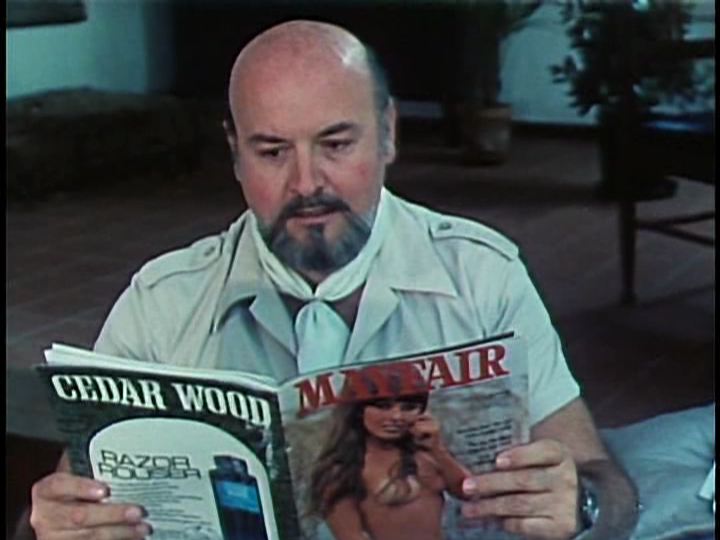
Now we can add The Werewolf of Washington to that short list, and it ticks all the boxes. We love the 70s aesthetic, and this has it in spades -- the whole movie is a send-up to the most laughable parts of Watergate era Nixon and his administration, right down to the Black Panther hating buffoon of an Attorney General.


Interesting protagonist? Check -- Dean Stockwell gives a wonderful off-the-rails performance as the anxious Jack, who gets himself bit by a you-know-what while stationed in Hungary, then watches his life fall apart spectacularly when he returns to D.C. as the President's new press secretary.


Life lessons? Oh sure, those too -- it's important that films be educational, as well as entertaining. We learn all about how to conduct ourselves in true 70s style, with demonstrations of bathroom etiquette...


...and home decor...


...not to mention commentary on gender roles...


"Jack, will you please stop scratching the palms of your hands? It's . . . it's just not manly."

...asserting oneself...


"This is not the thing I want! I don't want him here!"

...sports skills...


"Jack, will you throw the ball! Throw the ball down the aisle!"

...and kindness to animals.

"Are you real? Are you really real?"

The movie's strong in geometry -- eventually we'll learn to distinguish Pentagons from pentagrams -- but not so hot with astronomy. Four or five full moons within a two-week span? Who knows, maybe 1973 was an astronomical anomaly.


With the random midgets, prank phone calls, ludicrous political caricatures, eye-gouging wallpaper, and snarling aplenty, there's so much to recommend The Werewolf of Washington as the featured terrible entertainment at your next gathering. There's no gore to speak of, so even the kiddos might get a kick out of Stockwell's wacky werewolf makeup and shenanigans, though most of the Nixon satire will probably sail right over their heads. (And if it doesn't, send 'em over here -- there's a kid named Sascha Segan we'd love them to meet.)

Monday, December 28, 2015

Can I see some ID?

Sometimes, friends, people aren't exactly who they say they are.


The Devil with Seven Faces (Il diavolo a sette facce) (1971)


Grade: C+

Stylish but muddled thriller about a woman living in the Netherlands and working as a translator for an airline. Sounds like a nice life, but problem is that Julie (Carroll Baker), à la Rockwell, always has the feeling that somebody's watching her.


As it turns out, Julie's identical twin sister, Mary, was involved in a London jewel heist that went wrong. And now a bevy of nefarious characters have Julie in their crosshairs: either they think she is Mary, or want to use her to get to Mary, neither option being good for Julie.

And soon enough, the police -- and other meddlesome types -- start sniffing around too.

"I'm doin' detective stuff. I'm dee-tect-ing."

To whom can she turn? Well, she does have two handsome men good-naturedly competing for her affections. One is her attorney, Dave Barton, played by Steven Boyd, who looks like an upscale version of Kurt Loder. The other is the mysterious Tony Shane (George Hilton), a race car driver and friend of Dave's.


If your antennae went up as soon as you read "identical twin sister", well, you've figured out the main dramatic axis around which The Devil with Seven Faces revolves. To the film's credit, it seems to realize its viewers aren't complete naïfs, and -- since it plays the twin card very early on -- the ensuing 80+ minutes of plot don't depend on the audience's stupidity or lack of short-term memory.

If anything, the plot is overburdened with multiple threads that don't really go anywhere. Jump scares turn out to be subtly-cued dream sequences, with no further relevance; characters emerge from the woodwork, then disappear, with no lingering sense of purpose or personality.


And speaking of multiple threads, check this specimen out:


Seldom has a film employed its wigs so gratuitously as The Devil with Seven Faces. A character will have one hair color and style in one scene --


-- and then, with no explanation, sport a completely different look in a second --


-- only to later re-emerge with yet another hairstyle.


Again, the makers of The Devil with Seven Faces show some wise self-awareness and hang a lampshade on it: as Carroll Baker notes when reminiscing about her childhood antics with her twin, "Often, we used to swap wigs."

But we're still not sure whether the movie intends to play some Italianate game with narrative and identity...or is just the work of a trichophiliac mourning what he's lost.


The print Mill Creek uses for the Drive-In Movie Classics box set looks uncharacteristically nice, and The Devil with Seven Faces is certainly easy on the eyes and ears. But it amounts to little more than a confection, pleasant enough to watch but not especially satisfying on a narrative or aesthetic level.


One Frightened Night (1935)

Grade: C-


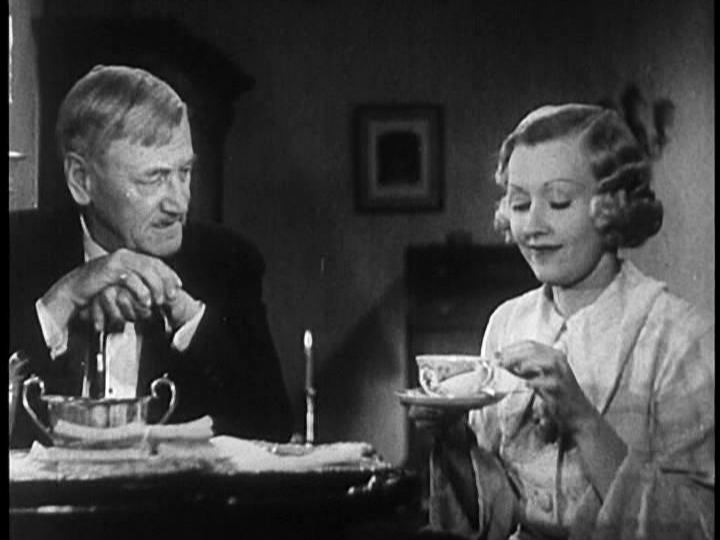
Cantankerous old man (Charley Grapewin) plans to give away most of his fortune to friends and family right before a new inheritance tax takes effect. Naturally, they're overjoyed.


Oh, and just for reference, he wouldn't have given them a dime if only his granddaughter were there. And look who shows up on this stormy night, just in time!


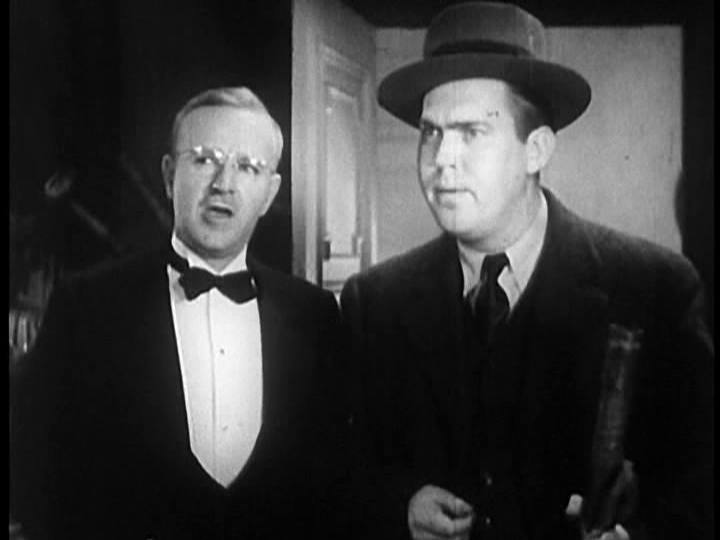
Bye-bye, dollars. And right about now you're expecting someone to try to kill the granddaughter, right? You're probably imagining the rest already: after a hair's-breadth escape or two for the protagonista, and some collateral damage over whom no 1930s cinematic tears are shed -- maids, butlers, minorities, that sort of thing -- we find out who the real killer is.

But no, that's not how things play out, at least not right away. Instead we get...


...a second, very-similar-looking-but-not-the-same-actress granddaughter? OK, didn't see that coming. So now the operative question of the day becomes "Who's the impostor?" first, "Whodunit?" second.


Still, you've seen this movie before, in one of its countless guises, so don't expect anything particularly novel from One Frightened Night: it's standard fare from Poverty Row, with your comic relief, bumbling cops, greedy relatives, ne'er-do-wells with a heart of Bakelite, etc.


But what we can say is that what The Devil with Seven Faces is to wigs, One Frightened Night is to candles and candelabras. Sometimes it seems as if there's one in every shot...


...maybe it's the same one in every shot, at that.


So if you like natural lighting and interchangeable blondes, then One Frightened Night is your cup of poisoned tea. Drink up!


The Vampire's Night Orgy (1974)

Grade: C-


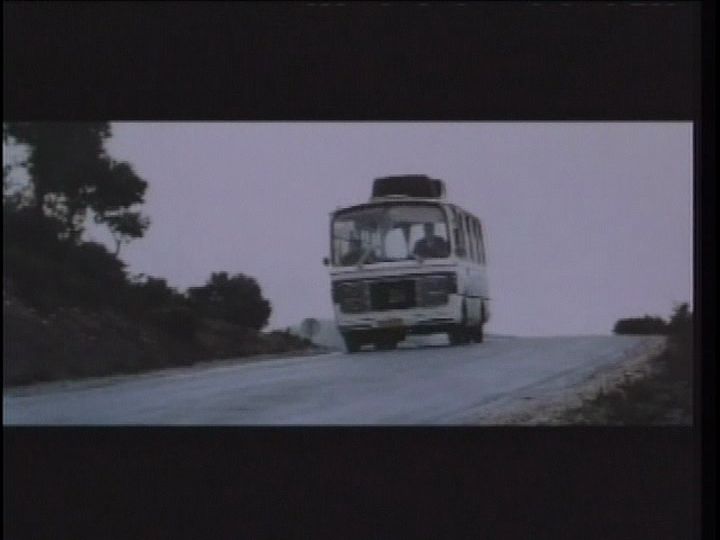
Tour bus takes wrong turn, ends up in creepy village with a countess and a meat shortage, where all is not as it seems. And it doesn't seem that great to begin with.


Between that and the title, do we really need to tell you the rest?


One or two unexpected twists in Vampire's Night Orgy help enliven the (otherwise turgid and labored) proceedings. But this kind of film isn't really in our wheelhouse; while some will credit it with "atmosphere" and so forth, we'd rather watch Terror at the Red Wolf Inn again, frankly.


It's always nice to find a movie that does something for the kids, though. You know, like Jurassic Park.


Sunday, December 27, 2015

Getting out of the Woods

The first step to getting caught up with our enormous backlog is to get through the Woods. The Ed Woods, that is.

And fortunately -- as the old riddle says -- once you've walked halfway in, you're already getting out. Ergo:


Trick Shooting with Kenne Duncan (1953)


Grade: N/A

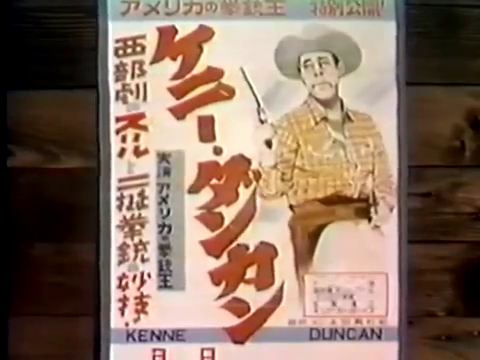
This is...pretty much what it says on the package, i.e. 9 minutes of trick shots by the perennially tired-looking Duncan, aka Dr. Acula from Night of the Ghouls, who clearly knew his way around a rifle.


There's nothing particularly Woody about the production, though the incongruous background music -- and an odd Japanese interlude -- add a hint of that freezer-burned flavor we associate with Ed's work. But maybe that's just the 1950s, which were weird enough on their own.


Otherwise, what's to say? It's, uh, trick shooting. With Kenne Duncan.


The Sun Was Setting (1951)


Grade: D-

Pointless tearjerker about a terminally ill woman who wants to go clubbing and, after 13+ minutes of conversational platitudes, almost does.

Other than serving as an interesting footnote to Wood's biography, the existence of this unreleased short contributes nothing to the world.


The Violent Years (1956)


Grade: C-

Now this is more like it. Scripted by Wood and directed by other, more capable hands, this trashy exploitation romp could be summed up as "poor little rich girl turns bad, thanks to parental neglect".


Or as the protagonist's mother says, the blame is all theirs for giving her "a new dress, instead of a caress". Ah, millinery, that well-known path to juvenile delinquency.


And as you might expect from Akdov Telmig, it's got long stretches devoted to hand-wringing, soul-searching, stern lectures, and other forms of "socially conscious" moralizing.


All this, no doubt, to justify all the sex and violence on display -- right? Well, neither nudity or blood is on the menu, nor anything else particularly graphic...


...but then again, can you name another movie with a 4-on-1 gang rape scene where all the perps are women? (No, that one episode of Law & Order doesn't count.) Well, OK, they don't actually show it, but there's zero doubt as to what that cutaway is, er, cutting away from.


One peak of absurdity comes thanks to the delinquent girls' liaison to the underworld -- the type of woman who wears high heels and tight belts while lounging around on the couch, and who serves as one part fence, one part criminal mastermind, one part Madame Blavatsky, one part cream of tartar.


She assigns them the task of trashing the local high school. Why, you might wonder -- what profit is to be had? Maybe an insurance payout?

No, instead we learn that "a certain organization" is behind the operation and, if "a few flags get destroyed in the process", they'd be more than pleased: "Let's just say it's part of a well-organized foreign plan."

Yes, friends, it's those damned Commies behind juvenile delinquency. Who knew?


Anyway, it's talky and not terribly titillating, and despite running under an hour it manages to include a montage of itself near the end of the film. But it's entertaining enough to watch once, and then watch again at double speed for the sake of getting a review done.