Friday, October 28, 2016

Those dogs? Still dead now.

And so are the "exotic" brunettes with arched eyebrows -- no dogs, they -- who constitute the other common thread in this pair of movies.


The Rogues' Tavern (1936)

Grade: C-

With apologies to Lemmy.
So, a detective (Wallace Ford) and his also-a-detective fiancée (Barbara Pepper) decide to get hitched one dark and stormy night --

"Suddenly I'm feeling lactose-intolerant."
-- but end up stranded at a foreboding inn, to which a cast of sketchy characters have all been summoned for purposes unknown even to them.

Most of these folks are utterly indistinguishable, with the exception of haunted fortuneteller Gloria Robloff -- portrayed by perennially panicky (and perfectly plucked) Joan Woodbury, who overplays her cards in more ways than one, but sure gets a lot of attention from the camera.

I'm "Mexican".
But before our protagonists even get a chance to settle in to their (grudgingly provided) rooms, the body count begins to pile up, and at first the culprit appears to be -- horror! -- a Very Bad Dog.

Why they say "Good boy!" when I act like bad boy?
They capture him soon enough, and things look grim for Fido, but canicide is not on the menu at The Rogues' Tavern. Pity, since that would have been a novel (if unsettling) twist.

"Now where's my Spicy Bold?"
Instead, we soon start seeing the kind of tactics you always get in these "I've gathered you all here because..." films: sudden power outages, scream queens, and murderous props that creepily approach, Dr. Tran-like, from the side of the frame.

This cheese is burning me too.
We'd like to say The Rogues' Tavern is a fun romp (heck, Shadows_Girl does exactly that), but it's too dull and muddled to qualify. With neither a coherent plot nor crisp dialogue, the film has little to offer beyond a short and painless experience, plus a couple of campy death scenes.

"Shmeh."
In fact the most intriguing thing about The Rogues' Tavern is an audio dropout about 23 minutes into the film, just as Barbara Pepper starts talking about "practicing [to be] the dutiful wife". During those twelve seconds, while the cast make horrified faces at the camera for some unknown reason, a fragment of conversation -- clearly unrelated to the film -- can just barely be heard in the background:

"I won't be going long enough...there or not...I'm gonna...by tomorrow morning..."
"All right!"

What fragment of human experience was accidentally preserved, and when? Who knows!

"Shmeh?"
But a few memorable shots aside, The Rogues' Tavern is nothing more or less than a half-assed effort designed to fill up sixty-odd minutes of your time. When we finally learn the villain's identity (which comes with a generous helping of maniacal laughter), it's hard to muster up more than a shrug of "Sure, whatever", with barely enough time to lower our shoulders before the predictable denouement.

And unless you have a thing for smoldering Woodbury, you'll probably do much the same.

"Shmeh!"


The Island Monster (1954)

Grade: D-

...but not his voice.
Italian policeman (Renato Vicario) travels to island to bust drug-smuggling ring. Upon arrival, who does he meet at the local bar but noted philanthropist Don Gaetano (Boris Karloff), who's all smiles and welcome.

Hail fellow, well met.
But is there a dark side to this friendly old gentleman?

You're a mean one, Mr. Grinch.
Soon enough our intrepid policeman attracts the attention of the local vamp (Franca Marzi), with whom he shares oceanside chats whilst they dine on the "fruits of the sea".

"She called me gallant!"
Meanwhile his wife and daughter, whom he left behind on the mainland, brilliantly decide to come visit -- because there's nothing a policeman working undercover needs more than a surprise visit from his family. His meddling, cockblocking, less-attractive-than-what-he's-already-got-going-so-why-couldn't-you-just-stay-home-and-let-me-have-some-fun family.

But at least they brought the dog.

"The soft parade / Has now begun..."
Sure enough, his cover is soon blown, and with the help of a not-so-clever ruse that fools his not-so-clever wife, the criminals take his daughter hostage.

Suffering from APOS (Acute Post Oom Syndrome).
What to do? Why, it's Wonder Dog to the rescue! He bravely swims:

Banzai!
He craftily stows away on boats:

Not a bathtub, but it'll do.
He carefully spies from rocky promontories:

"Ras I rotched..."
Our canine friend, who doesn't even get a credit, is probably the only real redeeming feature of The Island Monster -- which, under normal circumstances, would merely be a tedious, turgid movie whose decent nautical cinematography can't compensate for its plodding plot.

"Do you own another game system, besides your Sega Dreamcast?"
But the nail in the film's coffin is the English dubbing. First off, the policeman's daughter is voiced by the single most irritating "adult woman trying to be a little girl" voice actress you'll ever hear. It's a bit reminiscent of June Foray's work in "The Bewitchin' Pool", aka the last episode of The Twilight Zone, but ten thousand times worse.

The only time she's onscreen and not actively annoying us.
This turns The Island Monster from an unremarkable experience to an intermittently unpleasant one. But to top it all off, the film doesn't use Boris Karloff's real voice, but instead -- no joke -- overdubs him with a Karloff impersonator.

SRSLY?
In fairness it appears the English dub may have been done after Karloff died, so if the original sound elements weren't available (or didn't have a clean capture of Karloff's English-language dialogue), it's possible there was no alternative. But still.

He seems unaware that Ms. Marzi is totally over it.
It's not like The Island Monster is totally worthless, nor is it remotely close to being the worst movie we've ever seen. But all in all, it's easy to believe that Boris had the exact same thought while making this film as we did while watching it:

"I'm getting too old for this shit."

Wednesday, October 26, 2016

Hope everybody's ringing on their own bell this fine morning

Hope everyone's connected to that long distance phone, just like all these characters in this so-late-let's-just-consider it-early holiday twin pack.


Don't Open Till Christmas (1984)

Grade: C-


Typical '80s slasher that would likely be utterly forgotten were it not for the Christmas motif. Substitute the ten slain Santas with any other category of person -- taxi drivers, clowns, bucktoothed gingers (this is British, after all) -- and it would essentially be the same exact movie, albeit with a lot less cheap red velour.


But, since the theme guarantees it a spot on everyone's IMDB list of "101 Xmas horror films" (good thing they put "Christmas" in the title -- 1984 and already thinking about SEO), at least a few people will likely screen it each December as part of a holiday movie marathon (ahem).


Festive!

As for horror, there's the typical blood and gore -- nothing terribly exotic, but extra credit for the wide variety of methods, including car battery electrocution, shoe knife to the groin, and spear through the head.

Though sometimes nothing beats a good ol' fashioned bullet in the mouth.

The killer isn't revealed until about 3/4 of the way through, and there's a weak attempt to keep the audience guessing among the various suspects, be it the not-all-that-mysterious Inspector, or the kind-of-a-huge-jerk fiance — who not only tries to coerce his girl to pose nude for his photographer friend, but also has her hold out the hat as he busks with his flute in the street. His flute!

Ian would approve.

And of course, it's inevitably revealed that the murderer was scarred for life and driven to kill by something witnessed in childhood.

Which involves sex, natch.

So, besides that silly flute, what does set this film apart? Nothing much, except for what seems like a serious telephone fetish. Phones in booths, phones in hallways, on coffee tables, in dramatic close-up -- it's all about the rotary dial.

All dressed up and nowhere to go.

In particular, two fetching models in red and white play a star role in the "experience booth" scenes.


Hey, she's not bad!

The propmasters must have liked them so much, they show up again in the interrogation room.

(Wait, aren't those . . .)

And AGAIN in the detective's office. He mostly uses the black one . . .

(Why don't you like us? We're just trying to be good phones.)

. . . but occasionally picks up the red one if he's feeling particularly merry, or presidential.

(YAAAAAY!)

Bottom line, nothing much to see here folks. Well, unless you're lonely on Christmas Eve, and might like to fantasize about what could have happened had peep show Santa coughed up that extra fiver before being so rudely interrupted.

If you go that route, just make sure to stop playback before 1:05:00


New Year's Evil (1980)

Grade: C-


(YAAAAAY!)

Another movie whose title gives the impression that the filmmakers had residuals on the brain; what better way to get trotted out annually than to use the one play on words that makes any sense for this holiday?


(OK guys, just tossin' these out there: Boo Year's Eve? New Year's Eerie? Fine, I'd like to see you do better.)

Though unlike the last one, New Year's Evil depends on the festivities for its schtick to make sense. The hours leading to midnight are a metronome by which our villain commits his murders -- or attempts to, at least.


A major redeeming factor for this movie is that the murderer himself has a few unplanned oh-shit-oh-shit-oh-shit moments that are rather refreshing in this age of Criminal Minds and the insane-yet-completely-omniscient unsub.


True, a countdown-to-zero series of slashings could happen on some other not-as-special night, but then you wouldn't have an aging Pinky Tuscadero ticking off the year's greatest hits and serving as New Wave Casey Kasem on Hollywood Hotline, an LA punk concert cum call-in show.

(Wasn't I already too old for this in Happy Days?)

Yup, I said call-in. The phones are out in force again right from the get-go.

White phones.


Black phones.


Nostalgic phones.

That TV is dead now.

Suicidal phones.


Phones disappointed that the murderer-protagonist misses the obvious opportunity for a Superman nod.


Besides the calling, there's a bit of chasing, a bit of killing, and a bit of blood -- unfortunately, not really enough of any of those last three to really satisfy a true horror aficionado. The music's OK -- a mix of horror-synthesizer and punky stuff -- but nothing lastingly memorable.


Bottom line, nothing much to see here folks. Well, unless you're lonely on New Year's Eve, and might like to fantasize about what could have happened had drive-in dude gotten to third base before being so rudely interrupted.


Eh, no thanks. We're cool.


proving that the blood is strong

Saturday, January 2, 2016

Frost / Nixon

THESE movies . . . also known as films . . . don't have anything in common.


A Strange Adventure (1956)

Grade: C-


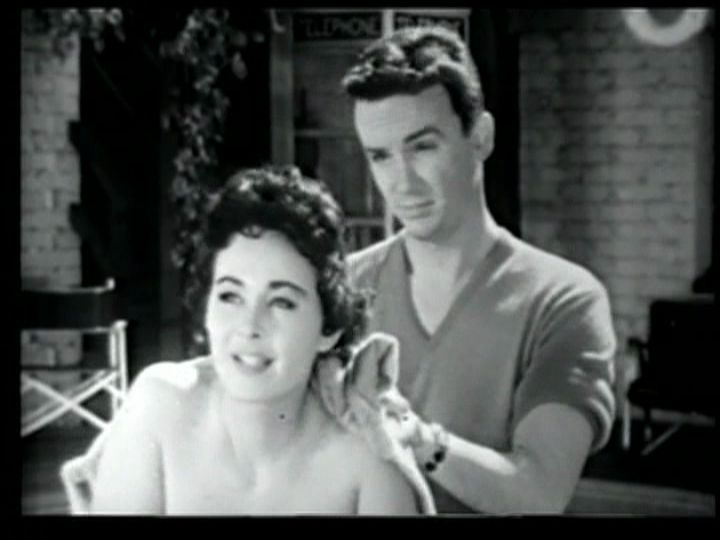
If you've seen at least one low-budget, mid-1950s noir, then you'll have a handle on the first third of A Strange Adventure, which is neither strange nor particularly adventurous. Busty Lynn (Marla English) lodges at a small-town motel and catches the eye of the owner's hot-rodding-yet-clean-cut son Harold (Ben Cooper). Backrubs and picnics ensue.


Lynne's shady associates arrive from Omaha -- the sharp-faced, short-tempered Al (Jan Merlin), and the perpetually congested Phil (Nick Adams). Harold figures out the men are bad news, but naturally still thinks Lynn is pure as the driven snow. Robbery, murder, kidnapping, and car chases ensue.


At the 30 minute mark, things take an unexpected and chilly turn, as the escaping criminals drive into the Sierra Nevadas and end up stranded at a gas company snow survey cabin staffed by brother and sister Luther and Terry (Peter Miller and Joan Evans).


A snow survey cabin! Usually we'd expect a yeti or other beast at this point, but sadly it's not that kind of movie; we're still in a noir, just one that's transitioned from heisting to hostaging. The strangest thing on offer is Phil's choice of outdoor headwear.


And if you're wondering, "Hey, how did they know to bring their winter clothes?", the film has you covered -- the crooks, arriving from Nebraska, make an off-hand comment early on about the unexpected mildness of the California winter. Take that.

As is the rule, sisters need to be someone's love interest, and dark-haired Terry fits right in where Lynne left off. And hey, Harold could do a lot worse -- Terry is much cuter, and turns out to have brains, brawn, and no shame in using either.


Between the sabotaged radio, hobby Geiger counter, and giant motorized snowmobile, the plot is full of literal devices that add interest in an otherwise by-the-numbers crime drama.


Overall not terrible, yet nothing particularly special. The ending is rushed and pat, and there's one huge loose end left dangling (Woody, anyone?) However, a few clever deceptions and the wintry setting give it a slight edge over other, less differentiated fare.


(An interesting footnote: Emlen Knight Davies, who plays the blink-and-you'll-miss-her role of motel owner/mom, is the daughter of former Soviet Union ambassador Joseph Davies, of Mission to Moscow fame. Emlen accompanied her father and stepmother -- wealthy cereal heiress Marjorie Merriweather Post -- to Moscow from 1937-38, and has published a series of photographs from her trip. Why she decided to go into acting in her mid-30s, after a young life spent globetrotting, meeting royalty, and marrying an MIT-educated Belgian engineer, the internet seems to know not.)


Держитесь подальше от плохой девочкой!


The Werewolf of Washington (1973)

Grade: B-
Quadruple Bathroom Upgrade: B


We don't get too many black comedies in the box -- our beloved Terror at the Red Wolf Inn is really it. Anything else qualifying as "funny" is either unintentionally so, or else a poverty row non-horror movie tossed in by Mill Creek as filler -- and usually, when all is said and done, not all that humorous anyway.


Now we can add The Werewolf of Washington to that short list, and it ticks all the boxes. We love the 70s aesthetic, and this has it in spades -- the whole movie is a send-up to the most laughable parts of Watergate era Nixon and his administration, right down to the Black Panther hating buffoon of an Attorney General.


Interesting protagonist? Check -- Dean Stockwell gives a wonderful off-the-rails performance as the anxious Jack, who gets himself bit by a you-know-what while stationed in Hungary, then watches his life fall apart spectacularly when he returns to D.C. as the President's new press secretary.


Life lessons? Oh sure, those too -- it's important that films be educational, as well as entertaining. We learn all about how to conduct ourselves in true 70s style, with demonstrations of bathroom etiquette...


...and home decor...


...not to mention commentary on gender roles...


"Jack, will you please stop scratching the palms of your hands? It's . . . it's just not manly."

...asserting oneself...


"This is not the thing I want! I don't want him here!"

...sports skills...


"Jack, will you throw the ball! Throw the ball down the aisle!"

...and kindness to animals.

"Are you real? Are you really real?"

The movie's strong in geometry -- eventually we'll learn to distinguish Pentagons from pentagrams -- but not so hot with astronomy. Four or five full moons within a two-week span? Who knows, maybe 1973 was an astronomical anomaly.


With the random midgets, prank phone calls, ludicrous political caricatures, eye-gouging wallpaper, and snarling aplenty, there's so much to recommend The Werewolf of Washington as the featured terrible entertainment at your next gathering. There's no gore to speak of, so even the kiddos might get a kick out of Stockwell's wacky werewolf makeup and shenanigans, though most of the Nixon satire will probably sail right over their heads. (And if it doesn't, send 'em over here -- there's a kid named Sascha Segan we'd love them to meet.)